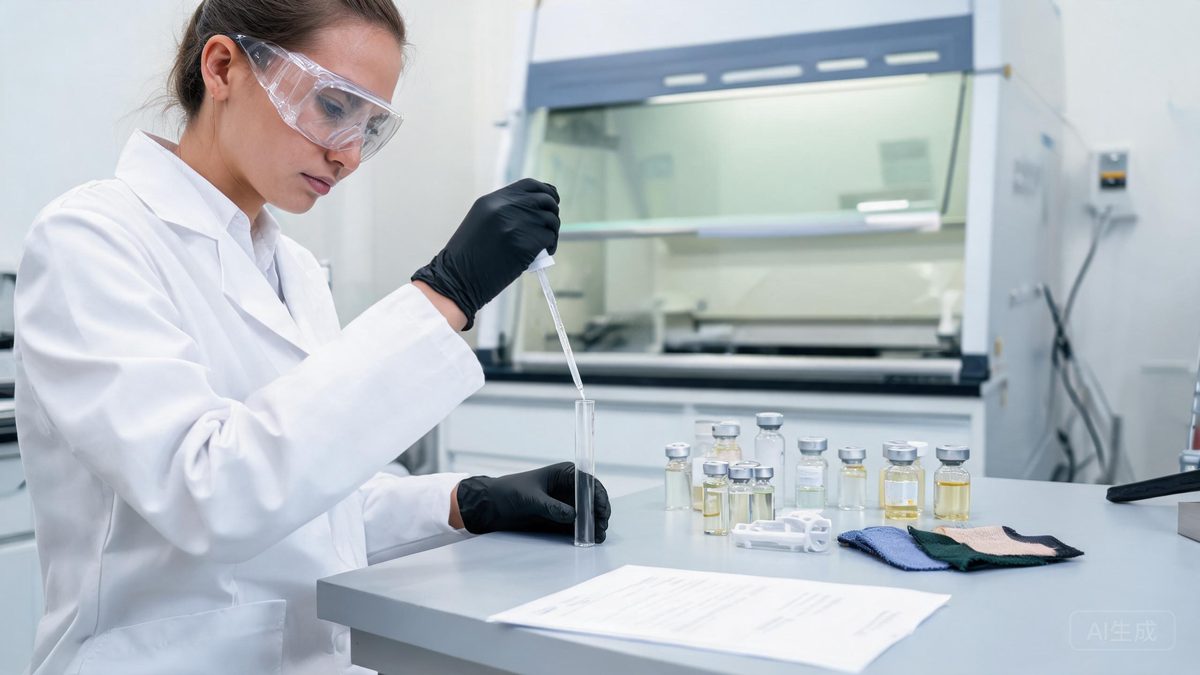
What Is REACH?
REACH — Registration, Evaluation, Authorization and Restriction of Chemicals (EC No 1907/2006) — is the European Union's comprehensive chemical regulation. It applies to nearly every product placed on the EU market, from toys and textiles to electronics and industrial machinery. REACH works through four mechanisms: registration of substances manufactured or imported above 1 tonne per year; evaluation by ECHA and member states; authorization for high-concern substances; and restriction (Annex XVII) of substances deemed too dangerous. For importers sourcing from China, the practical obligations boil down to declaring SVHCs above 0.1% w/w, ensuring restricted substances stay below Annex XVII limits, and providing Safety Data Sheets where required. It is enforced at the EU border by customs and post-market by member-state surveillance authorities.
REACH Obligations for Importers: SVHC, Registration & Restrictions
Most China importers never need full REACH registration, but they must handle SVHC communication and Annex XVII restrictions. Here is how the three main obligations compare.
| Obligation | Threshold | Action Required | Typical Cost |
|---|---|---|---|
| SVHC communication | Any SVHC > 0.1% w/w in an article | Inform recipient within 45 days of request; publish in SCIP database if article | $300–$800 (SVHC screen test) |
| SVHC notification to ECHA | SVHC > 0.1% w/w AND > 1 tonne/year/importer | Submit ECHA notification within 6 months of import | €350–€1,500 filing fee |
| REACH registration | Substance > 1 tonne/year/importer into EU | Register substance with ECHA (or use Only Representative) | €2,000 – €100,000+ |
| Annex XVII restriction | Varies by entry (e.g. lead 0.05%, phthalates 0.1%) | Ensure substance below limit; test at accredited lab | $200–$1,500 per substance test |
| Safety Data Sheet (SDS) | Hazardous substances/mixtures; articles releasing hazards | Provide 16-section SDS in destination language | $100–$400 to draft/update |
The SVHC list is updated twice a year by ECHA and now exceeds 240 substances. A product tested against the 2024 list may fail against the 2026 list, so re-test before each production run if the formulation or supplier changes.
How Chinese Suppliers Provide REACH Compliance
A compliant Chinese supplier should give you three documents before shipment:
- Material Declaration / SVHC Declaration — a signed statement from the factory listing all SVHCs present above 0.1% w/w, by article. Best practice is a full Bill of Substances (BoS) down to the homogeneous-material level.
- SVHC test report — from an ISO 17025-accredited lab (SGS, Bureau Veritas, Intertek, CTI, CMA) using GC-MS, ICP-MS, and LC-MS to screen the 240+ SVHCs. Report must name your product model, not a generic sample.
- Safety Data Sheet (SDS) — 16 sections, in the language of the destination EU country (e.g. German for Germany, French for France), for any substance or mixture, or for articles that release hazardous substances.
Additional ask: if a substance is above 1 tonne/year, ask whether the manufacturer has appointed an Only Representative (OR) under REACH Article 8 — if yes, you avoid registration yourself. For restricted substances, request an Annex XVII compliance test specific to your category.
Worked Example: Children's Toy Import Fails SVHC on Phthalates
A German buyer imports 5,000 plastic bath toys (50 g each = 250 kg total) from a Guangdong factory. The factory provides a "REACH-compliant" declaration but no test report. The buyer runs an SVHC screen at SGS Shanghai before mass shipment.
Test result: DEHP (a phthalate SVHC) detected at 0.3% w/w in the PVC body — above the 0.1% SVHC threshold.
- SVHC status: above 0.1% → must inform recipients & notify ECHA if >1 t/y
- Tonnage: 250 kg toys × 0.3% = 0.75 kg DEHP → below 1 tonne/year → no ECHA notification needed, but communication required
- Annex XVII: DEHP, BBP, DBP, DIBP are restricted to 0.1% in toys and childcare articles under Entry 51/52 → product is banned from the EU market
- Action: factory must reformulate to a phthalate-free plasticizer (e.g. DINCH) and re-test
- Reformulation cost: +$0.15/unit ($750 for 5,000 pcs) + re-test $500
Without the pre-shipment SVHC test, the container would have been seized at Hamburg port and the buyer would face a recall plus a fine of up to €100,000 under Germany's ChemG. See children's product compliance for the equivalent US rules.
REACH vs RoHS: Which Applies When?
REACH and RoHS are often confused but cover different scopes. A single product can require both.
| Dimension | REACH | RoHS |
|---|---|---|
| Scope | All goods (articles, substances, mixtures) | Electrical & Electronic Equipment (EEE) only |
| Substances | 240+ SVHCs + Annex XVII restrictions | 10 restricted substances (lead, Hg, Cd, Cr VI, PBB, PBDE, DEHP, BBP, DBP, DIBP) |
| Limit | 0.1% w/w per SVHC; Annex XVII varies | 0.1% (0.01% cadmium) per homogeneous material |
| Test method | GC-MS, ICP-MS, LC-MS screening | XRF screening + ICP/GC-MS confirmatory |
| Documentation | SVHC declaration + SDS + ECHA notification | RoHS test report + DoC |
Example: a consumer electronic device needs RoHS for its PCB and solder, and REACH for its plastic housing, paint, and cables. Yeatru runs both tests in one lab session to save time and cost.
Consequences of REACH Non-Compliance
REACH enforcement is getting stricter, especially with the SCIP database (Substances of Concern In articles as such or in complex objects (Products)) mandatory since 2021 for articles containing SVHCs above 0.1%.
- Customs detention — the shipment is held until the importer proves compliance; storage costs $50–$150/day.
- Product recall — member-state authorities order withdrawal from the market and online platforms (Amazon EU, Zalando) suspend listings.
- Fines — up to €100,000 in Germany (ChemG), €150,000 in France (Code de l'environnement), and criminal liability in some states for intentional violations.
- Import ban — repeat offenders can be placed on ECHA's non-compliance registry.
Always verify the SVHC test report's lab accreditation number and match the sample photo to your product — a report for a different model is worthless.
How Yeatru Handles REACH Compliance
Yeatru Sourcing manages REACH for EU-bound consumer products out of Yiwu and Guangzhou. Our service includes:
- SVHC and Annex XVII gap analysis per product category before tooling starts
- Coordination with ISO 17025 labs (SGS, BV, Intertek, CTI) for SVHC screening and restricted-substance tests
- Collection of Material Declarations, SDS, and REACH compliance statements from the factory
- SCIP database entry support for articles containing SVHCs above 0.1%
- Only Representative (OR) referral when a substance exceeds 1 tonne/year
For apparel and textiles specifically, we pair REACH with apparel OEM chemical-management audits. Browse our full product certifications guide for CE, UKCA, FCC, and FDA comparisons.
Frequently Asked Questions
1. What is REACH?
REACH (Registration, Evaluation, Authorization and Restriction of Chemicals) is the EU's chemical regulation (EC No 1907/2006). It applies to almost all products imported into the EU and regulates substances through registration (for volumes ≥1 tonne/year/importer), SVHC communication (for substances above 0.1% w/w), and restrictions under Annex XVII.
2. What is an SVHC and what is the 0.1% threshold?
SVHC stands for Substance of Very High Concern — substances that are carcinogenic, mutagenic, toxic to reproduction, persistent/bioaccumulative, or otherwise of equivalent concern. The SVHC candidate list has 240+ substances. If an SVHC is present above 0.1% w/w in an article, the supplier must inform recipients and (if >1 tonne/year) notify ECHA.
3. Do I need REACH registration for my import?
Only if you import a single substance at ≥1 tonne per year into the EU. Registration is expensive (thousands to over €100,000 depending on tonnage band and data requirements) and is typically done by the substance manufacturer or an Only Representative, not by the finished-goods importer. Most importers of consumer products only need SVHC compliance and Annex XVII checks.
4. How do I get an SVHC test from China?
Send 1–2 samples to an ISO 17025-accredited lab in China (SGS, Bureau Veritas, Intertek, CTI, CMA). The lab screens for the 240+ SVHCs using techniques like GC-MS and ICP-MS. A typical SVHC screen costs $300–$800 and takes 5–10 business days. Ask for the test report plus a signed Material Declaration from the factory.
5. What is the difference between REACH and RoHS?
REACH applies to all goods (not just electronics) and covers all chemical substances, with the SVHC list of 240+ substances. RoHS applies only to Electrical and Electronic Equipment (EEE) and restricts 10 specific substances (lead, mercury, cadmium, hexavalent chromium, PBB, PBDE, DEHP, BBP, DBP, DIBP). A product can need both: e.g. an electronic toy needs RoHS for its electronics and REACH for its plastic and paint.
6. Does REACH apply only in the EU?
REACH applies to the 27 EU member states plus the EEA countries (Norway, Iceland, Liechtenstein) through EEA REACH. The UK has its own UK REACH post-Brexit. Switzerland has its own Chemicals Ordinance aligned with REACH. Other countries have similar but separate rules, so REACH compliance alone does not cover the US, UK, or Asia.
Conclusion
REACH compliance for China imports is less about registration (which most importers avoid) and more about the 0.1% SVHC threshold, Annex XVII restrictions, and the documentation (Material Declaration, SDS, test report) that proves them. A single missed phthalate or lead test can turn a profitable container into a seized shipment, a recall, and a five-figure fine. The safest approach is to screen at an ISO 17025 lab before mass production, collect the three key documents before shipment, and re-test whenever the formulation changes. Ask Yeatru for a REACH gap analysis and lab referral — we'll tell you exactly which tests your product needs before you place the order.