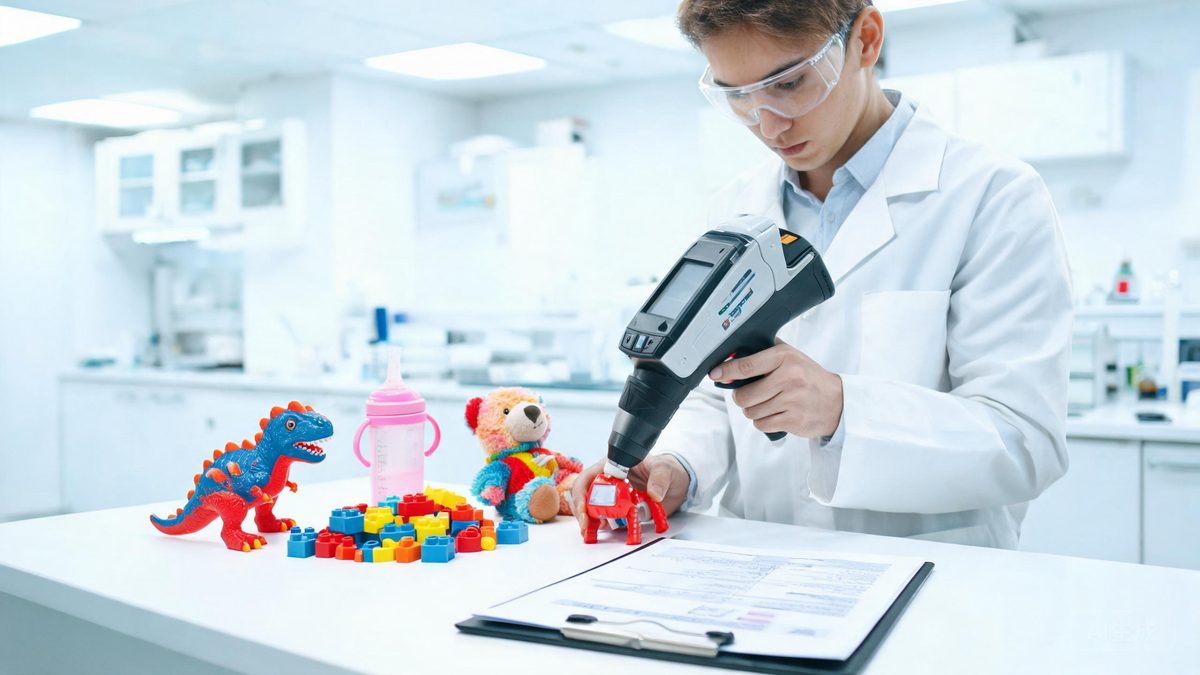
What Is a CPC (Children's Product Certificate)?
A Children's Product Certificate (CPC) is a written declaration issued by the U.S. importer or domestic manufacturer certifying that a children's product complies with all applicable CPSC (Consumer Product Safety Commission) rules and the CPSIA (Consumer Product Safety Improvement Act of 2008). A "children's product" is defined as a consumer product designed or intended primarily for children 12 years of age or younger. Unlike a CE Declaration of Conformity, the CPC is not a test report — it references passing test results from a CPSC-accepted third-party laboratory. The certificate must accompany each shipment and be provided to retailers and distributors on request. Without a valid CPC, U.S. Customs may refuse the shipment, and Amazon will suspend the listing.
Applicable Children's Product Safety Rules
The exact rules your product must meet depend on its type, material, and intended age group. Here are the CPSC rules most commonly triggered by children's products sourced from China.
| Rule | Limit / Requirement | Applies To |
|---|---|---|
| Lead in substrate (CPSIA Sec. 101) | ≤ 100 ppm (0.01%) total lead | All children's products |
| Lead in paint (16 CFR 1303) | ≤ 90 ppm (0.009%) lead | Paint & surface coatings |
| Phthalates (16 CFR 1307) | 8 phthalates ≤ 0.1% each | Toys & childcare articles |
| ASTM F963-17 (toy safety) | Mechanical, flammability, chemical | All toys (mandatory) |
| Small parts (16 CFR 1501) | No small parts for under 3 | Toys for children < 3 yrs |
| Tracking label (CPSIA Sec. 103) | Permanent mark with batch/lot info | All children's products |
| Warning labels (FHSA) | Choking hazard warnings | Toys for ages 3–6 |
A single product can trigger multiple rules. A plastic building-block set, for example, must pass lead, phthalates, ASTM F963, and small-parts testing simultaneously.
Lead & Phthalate Limits in Detail
Lead and phthalates are the two chemical limits that fail most often in Chinese children's products, usually because factories use recycled plastic or cheap pigment.
Lead — CPSIA Section 101 set the total lead limit in accessible parts at 300 ppm in 2009, lowered it to 100 ppm in 2011, and the CPSC could lower it further to 40 ppm if technically feasible. Paint and similar surface coatings have a separate, stricter limit of 90 ppm (16 CFR 1303). XRF is used for screening; ICP-MS is used for confirmation.
Phthalates — Under the Consumer Product Safety Improvement Act and the 2017 Phthalates Ban Rule, eight phthalates are permanently restricted to 0.1% in children's toys and childcare articles:
| Phthalate | Full Name | Status |
|---|---|---|
| DEHP | Di(2-ethylhexyl) phthalate | Permanently banned |
| DBP | Dibutyl phthalate | Permanently banned |
| BBP | Benzyl butyl phthalate | Permanently banned |
| DINP | Diisononyl phthalate | Permanently banned (2017+) |
| DIDP | Diisodecyl phthalate | Permanently banned (2017+) |
| DNOP | Di-n-octyl phthalate | Permanently banned (2017+) |
| DnHP | Di-n-hexyl phthalate | Permanently banned (2017+) |
| DCHP | Dicyclohexyl phthalate | Permanently banned (2017+) |
The phthalate test uses GC-MS and typically costs $200–$500 per material. For a multi-material plush toy (fabric, stuffing, plastic eyes, paint), each material must be tested separately, which can push the total to $1,000–$2,000.
Required Content of a CPC
A CPC is issued by the importer or manufacturer, not by the lab, but it must list every applicable rule and the test results proving compliance. A valid CPC must include the following elements:
- Product identification — name, model/SKU, and a description sufficient to identify the product covered by the certificate.
- List of applicable CPSC rules — each rule the product is certified to (e.g. CPSIA Sec. 101 lead, 16 CFR 1307 phthalates, ASTM F963-17).
- Importer / domestic manufacturer identification — name, full mailing address, and telephone number.
- U.S. importer's contact for compliance records — name, address, email, phone of the person maintaining test records.
- Production date and location — month/year and city/country where the product was manufactured.
- Testing laboratory info — name, full mailing address, and phone number of the CPSC-accepted lab that performed the tests, plus the test report number(s) and date(s).
- Certification statement — a signed declaration that the product complies with all listed rules.
The CPC must be in English and can be a paper or electronic document. It must be made available to CPSC and customs within 48 hours of request. CPSC provides a free CPC template on its website; many labs also provide a draft CPC as part of the testing package.
CPCS-Accepted Labs in China & Testing Costs
Third-party testing for a CPC must be performed by a lab that CPSC has accepted as accredited to the relevant test method. Common CPSC-accepted labs operating in China include:
| Lab | Headquarters | China Offices | Typical CPC Test Cost |
|---|---|---|---|
| SGS | Switzerland | Shanghai, Guangzhou, Shenzhen, Yiwu | $500–$2,500 |
| Intertek (ITS) | UK | Shanghai, Guangzhou, Shenzhen | $400–$2,000 |
| BACL | USA | Shenzhen, Dongguan, Shanghai | $300–$1,500 |
| Bureau Veritas (BV) | France | Shanghai, Guangzhou, Shenzhen | $500–$2,200 |
| TÜV SÜD | Germany | Shanghai, Guangzhou, Shenzhen | $500–$2,300 |
| CTI | China | Shenzhen, Shanghai, Suzhou | $250–$1,200 |
A typical plush toy CPC test (lead in substrate, lead in paint, 8 phthalates, ASTM F963 mechanical) costs $600–$1,200 and takes 7–10 business days. A full children's furniture test (lead, phthalates, ASTM F963, ASTM F2057 furniture tip-over) can exceed $2,500. Always confirm the lab's CPSC acceptance number on the CPSC lab list before placing samples.
Worked Example: Plush Toy CPC Certification
A U.S. Amazon seller imports 10,000 plush teddy bears (30 cm, $3.20 EXW each) from a Yangzhou factory for ages 3+. The factory has no existing CPC. The seller tests at BACL Shenzhen.
Test scope and results:
- Lead in substrate (fabric, stuffing, plastic nose): all below 100 ppm ✓
- Lead in paint (eye print): 12 ppm (below 90 ppm) ✓
- 8 phthalates (plastic nose/eyes): all below 0.1% ✓
- ASTM F963-17 mechanical (small parts, seams, tensile): passed ✓
- Flammability (ASTM F963 Clause 6): Class 1 (normal) ✓
Cost & timeline:
- Total lab fee: $850 (lead + phthalates + ASTM F963)
- Testing turnaround: 9 business days
- CPC drafting: $0 (lab provided template, importer signed)
- Tracking label printing: $0.03/unit = $300 for 10,000 units
- Total compliance cost: $1,150 ($0.115/unit)
The CPC allowed the seller to list the toy on Amazon without suspension. Without the CPC, Amazon would have suppressed the listing and CPSC could have imposed a civil penalty of up to $100,000 per violation (maximum $16 million for a series of violations). See Amazon FBA sourcing for platform-specific listing requirements.
Amazon & Marketplace CPC Requirements
Amazon requires a CPC for all children's products sold in the U.S. marketplace, and increasingly for EU and UK storefronts. The enforcement path is:
- Pre-listing — Amazon asks for a CPC and test report at the time of listing creation for gated categories (toys, baby products, children's clothing).
- Periodic audit — Amazon's compliance team may request the CPC and test report for any children's product listing, with a 7-day response window.
- Suspension — Failure to provide a valid CPC (with a CPSC-accepted lab report) results in listing suppression, ASIN removal, and potential account suspension.
The CPC must name the product exactly as listed (matching ASIN/title) and the test report must be from a CPSC-accepted lab. A Chinese factory's self-declared "CPC" with no third-party test report will be rejected.
How Yeatru Handles CPC Compliance
Yeatru Sourcing manages CPC and CPSIA compliance for U.S.-bound children's products sourced from Yiwu, Yangzhou, and Shantou factories. Our service includes:
- Rule-gap analysis — identifying which CPSC rules apply to your product (lead, phthalates, ASTM F963, small parts, tracking label)
- Referral to CPSC-accepted labs (BACL, SGS, Intertek, BV, TÜV) with competitive pricing and 7–14 day turnaround
- Factory material declaration and formulation review before mass production to avoid lead/phthalate failures
- CPC drafting and review against CPSC's required elements
- Tracking label verification and sampling during pre-shipment QC
For toys, we combine CPC testing with CE/EN 71 testing for the EU and UKCA for the UK, so one sample run covers all three markets. Browse our product certifications guide for the full comparison.
Frequently Asked Questions
1. What is a CPC and who needs it?
A Children's Product Certificate (CPC) is a written declaration required under the CPSIA for every product designed or intended primarily for children 12 years old or younger. It is issued by the U.S. importer or domestic manufacturer and certifies that the product complies with all applicable CPSC safety rules, based on passing test results from a CPSC-accepted third-party lab. Retailers, Amazon, and U.S. Customs may all request the CPC.
2. What are the lead limits for children's products?
The total lead limit in accessible parts of children's products is 100 ppm (0.01%) under CPSIA Section 101. Lead in paint and surface coatings has a stricter limit of 90 ppm (0.009%) under 16 CFR 1303. XRF is used for rapid screening, and ICP-MS is used for confirmatory testing. Anything above the limit is banned from the U.S. market and subject to recall.
3. Which phthalates are banned in children's products?
Eight phthalates are permanently restricted to 0.1% in children's toys and childcare articles: DEHP, DBP, BBP (banned since 2009) and DINP, DIDP, DNOP, DnHP, DCHP (added by the 2017 CPSC Phthalates Ban Rule). Testing uses GC-MS and each material in the product must be below 0.1% for each phthalate.
4. Do I need a CPSC-accepted lab for CPC testing?
Yes. CPSIA requires that children's products be tested by a third-party laboratory accepted by CPSC as competent to perform the specific test method. A factory's in-house test or a non-accepted lab's report cannot support a valid CPC. You can verify a lab's acceptance on the CPSC Laboratory Recognition database. Common CPSC-accepted labs in China include SGS, Intertek, BACL, Bureau Veritas, and TÜV.
5. What information must be on a CPC?
A valid CPC must include: (1) product identification (name, model/SKU, description), (2) the list of applicable CPSC rules, (3) importer/domestic manufacturer name, address, and phone, (4) contact for compliance records, (5) production date and location, (6) testing lab name, address, phone, and test report numbers/dates, and (7) a signed certification statement. The certificate must be in English and available within 48 hours of CPSC or customs request.
6. How much does CPC testing cost in China?
CPC testing costs depend on the number of materials and tests. A simple plush toy (lead, phthalates, ASTM F963 mechanical) costs $600–$1,200. A multi-material product (furniture, ride-on toy) can cost $1,500–$2,500. Turnaround is typically 7–14 business days at CPSC-accepted labs (SGS, Intertek, BACL, BV, TÜV). The CPC drafting itself is usually free with the test package.
Conclusion
A CPC is not a nice-to-have for children's products — it is a legal requirement backed by CPSC enforcement, Amazon listing gates, and the risk of six-figure civil penalties. The compliance pathway is straightforward but unforgiving: determine the applicable rules (lead 100 ppm, phthalates 0.1%, ASTM F963, small parts), test at a CPSC-accepted lab, issue a CPC with all seven required elements, and apply a tracking label. The biggest savings come from screening the factory's materials before mass production — a failed lead test after 10,000 units are made costs far more than a pre-production material check. Contact Yeatru for a CPC rule-gap analysis and CPSC-accepted lab referral before you place your children's product order.