What Are AI Tools for China Sourcing Payment & Verification?
AI tools for China sourcing are software that automates the repetitive, data-heavy parts of vetting suppliers and payments: scanning product listings for compliance risks, analyzing supplier messages for fraud patterns, reading (OCR) business licenses and invoices, cross-checking registry data, classifying HS codes, and calculating landed cost. They do not replace a human sourcing agent — they act as a fast first-line filter that catches obvious scams and mistakes before you spend time or money. The biggest wins are in document verification (catching fake/revoked licenses) and fraud detection (flagging scam-pattern messages), which together prevent the majority of payment fraud.
The 6 AI Sourcing Tools for Payment & Verification
| AI Tool | Function | Accuracy | Cost |
|---|---|---|---|
| AI Compliance Scanner | Checks product text against FCC/CE/REACH/RoHS rules, flags restricted materials | 70–85% | Free – $30/mo |
| AI Fraud Detection | Analyzes supplier messages & website for scam patterns (fake reviews, pressure tactics) | 70–85% | $0 – $50/mo |
| AI Document Verification (OCR) | Extracts license/invoice data, cross-checks with gsxt.gov.cn registry | 85–95% | $0.10 – $2/check |
| AI Negotiation Assistant | Translates WeChat, suggests counter-offers, analyzes quote consistency | High (translation) | $10 – $100/mo |
| AI HS-Code Classifier | Maps product description to the most likely HS code | 80–90% | Free – $20/mo |
| AI Landed-Cost Calculator | Computes EXW + freight + duty + VAT from product & destination | 90%+ (if data right) | Free – $40/mo |
1. AI Compliance Scanners
Paste a product description (or an Alibaba listing URL) into an AI compliance scanner, and it checks the product against FCC, CE, REACH, RoHS rules, flags restricted materials (phthalates, lead, BPA), and suggests the certifications you need. It takes 30 seconds and catches the most common beginner mistake: ordering a product that cannot legally be sold in your market. For example, scanning a children's plastic toy instantly flags the need for EN71 (EU) or CPSC/CPC (US) and a REACH SVHC check.
2. AI Fraud Detection
AI fraud-detection tools analyze supplier messages, websites, and review patterns for known scam signals: pressure-tactics language ("pay today or price goes up"), copy-pasted website text shared across multiple domains, fake Alibaba reviews, and bank-account details that don't match the company name. They score the supplier from low to high risk. Accuracy is ~70–85% on high-confidence signals — good enough to filter out the obvious scams from a list of 20 suppliers down to 3–5 that deserve manual review.
3. AI Document Verification (OCR + Registry Check)
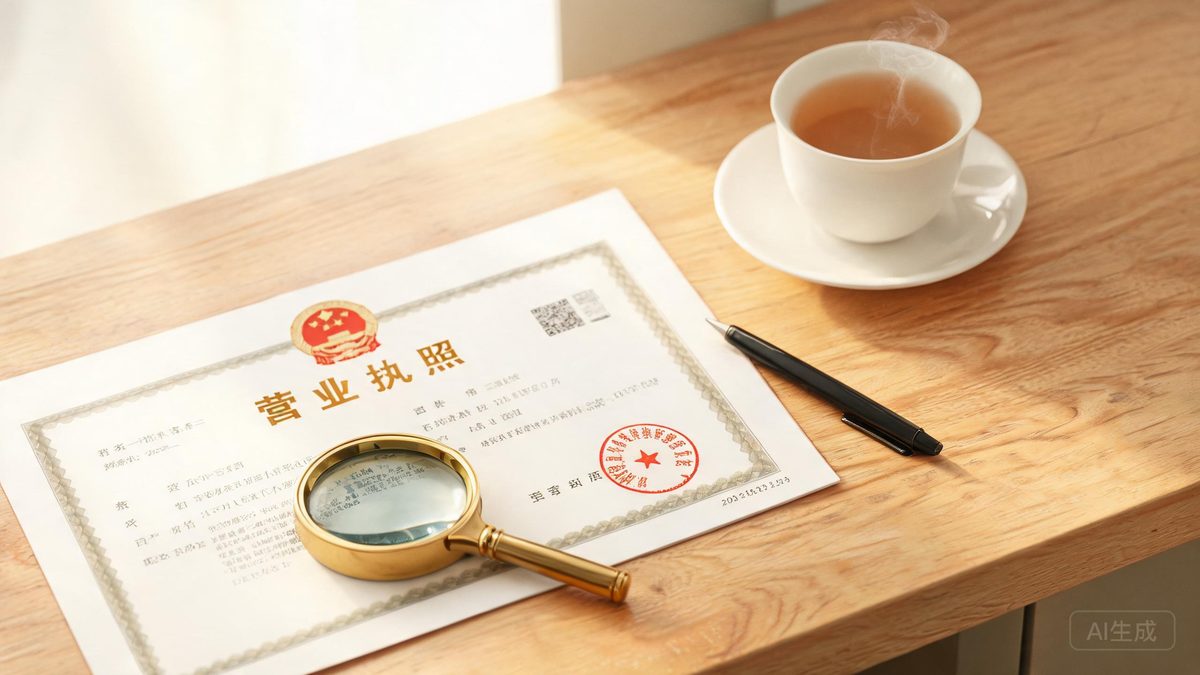
This is the most valuable AI tool for payment safety. Upload a supplier's business license and proforma invoice; the AI OCRs the license number, company name, registered address, and bank account. It then:
- Cross-checks the license number against the official gsxt.gov.cn registry (status: active/revoked, scope, dates).
- Confirms the bank account holder on the invoice matches the company name on the license.
- Flags fake invoices where the bank account belongs to an individual, not the company.
This catches the single most common payment scam: a "supplier" with a real-looking license whose bank account actually belongs to a personal account controlled by the scammer.
4. AI Negotiation Assistants
These tools translate WeChat/Alibaba messages in real time, suggest counter-offers based on market data, and flag quote inconsistencies (e.g. a quote with a unit price far below the material cost). They are especially useful for buyers who don't speak Mandarin, because they catch nuance that generic translators miss — for example, distinguishing a firm "no" from a "let's discuss more later."
5. AI HS-Code Classification
AI reads the product description, materials, and function and maps it to the most likely HS code (usually the top 2–3 alternatives). Accuracy is ~80–90% for common products, lower for composite or regulated goods. The wrong HS code means the wrong duty rate — and sometimes a seized shipment. Always validate the AI-suggested code with a customs broker or freight forwarder before shipping. See HS code lookup from China.
6. AI Landed-Cost Calculators
AI landed-cost calculators take the EXW price, product weight/volume, HS code, and destination and compute the full landed cost: EXW + freight + duty + VAT + fees. This solves the classic mistake of comparing unit prices without freight and duty. A $3.00 EXW product can land at $6.50/unit after DDP shipping, duty, and VAT — and the AI shows you that in 10 seconds. See landed cost calculator from China.
Worked Example: AI Catches a Revoked License
A buyer received a quote of $2.80/unit for 5,000 plastic toys from a supplier on Alibaba. Before paying the 30% deposit ($4,200), they ran the supplier's business license through an AI document-verification tool. The AI OCR'd the license number, checked gsxt.gov.cn, and returned "REVOKED — license cancelled 8 months ago". The supplier's Alibaba page still showed an "active" badge because Alibaba hadn't updated. The buyer walked away. Cost of the AI check: $0.50. Loss avoided: $4,200 deposit + 5,000 units that would never have shipped. This is exactly the scenario AI handles well — a document check that a human might skip but that catches a fatal fraud signal.
How Yeatru Uses AI
- AI compliance scan on every product RFQ before we contact factories — ensures we only source compliant products.
- AI document verification (OCR + gsxt.gov.cn check) on every new supplier's business license and invoice.
- AI HS-code classification (then validated by our logistics team) and AI landed-cost modeling for every quote.
- AI translation for WeChat/Alibaba communication with factories.
- Human oversight on all payments: a Yeatru team member confirms bank details by phone and approves every transfer over $1,000.
What AI Cannot Do (Limitations)
- Cannot visit a factory — AI can't walk the production floor or count machines. For that you need a factory audit.
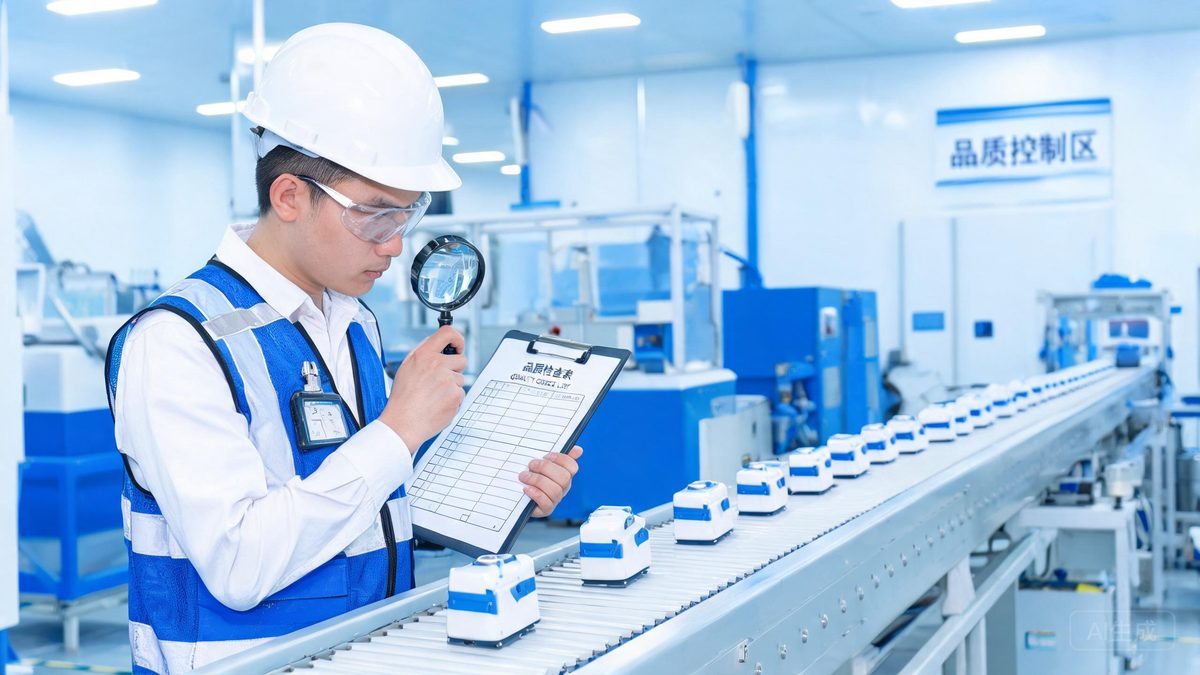
- Cannot verify physical quality — AI can't inspect a product for defects. You need AQL 2.5 pre-shipment QC.
- Cannot approve a payment — never let an AI authorize a wire transfer. A human must confirm bank details by phone.
- Cannot detect sophisticated scams — a supplier with a real license but no production capability will pass AI document checks.
- Cannot take legal responsibility — if the AI gives a wrong HS code or misses a fraud signal, you (not the AI) bear the loss.
Frequently Asked Questions
1. Can AI help verify Chinese suppliers and payments?
Yes. AI can scan product listings for compliance risks, analyze supplier messages and websites for fraud patterns, OCR business licenses and invoices, cross-check the license number against the official gsxt.gov.cn registry, classify the HS code, and calculate landed cost. It is a fast first-line filter that catches obvious scams before you spend time or money.
2. How accurate is AI fraud detection for China suppliers?
AI fraud detection is good at catching obvious red flags (copy-pasted website text, fake review patterns, mismatched company names, revoked licenses) with roughly 70–85% accuracy on high-confidence signals. It cannot detect sophisticated scams where the supplier has a real license but no production capability. Always pair AI with a real factory audit and a small trial order.
3. Can AI verify a business license and invoice?
AI uses OCR to extract the license number, company name, registered address, and bank account from the business license and proforma invoice. It then cross-checks the license number against the official gsxt.gov.cn registry (status, scope, dates) and confirms the bank account holder matches the license name. It can catch a revoked license or a personal bank account used in a company invoice.
4. How does AI classify HS codes?
AI reads the product description, materials, and function, then maps it to the most likely HS code (and often the top 2–3 alternatives). It is 80–90% accurate for common products but can be wrong for composite or regulated goods. Always validate the AI-suggested HS code with a customs broker or the freight forwarder before shipping, because the wrong code means the wrong duty rate or a seized shipment.
5. AI vs human sourcing agent — which is better?
Both. AI excels at speed and scale: scanning hundreds of suppliers, OCR-ing documents, and running cost models in seconds. A human sourcing agent excels at judgment, factory visits, negotiation, and handling exceptions. The best workflow is AI for first-line filtering and document checks, then a human agent for supplier selection, QC, and payment approval.
6. What can AI NOT do in China sourcing?
AI cannot visit a factory, inspect physical quality, negotiate a price in person, approve a wire transfer, or take legal responsibility for a decision. It also cannot verify whether a factory is secretly sub-contracting to an un-audited plant. For any payment over $1,000, always have a human review the AI's findings and confirm the supplier's bank details by phone.
Common Pitfalls to Avoid
- Wiring to a personal account instead of the company account. Always confirm the PI beneficiary name matches the supplier's business license. A personal account = red flag for fraud or tax evasion, and you lose all payment protection.
- No bank-detail re-verification before the balance transfer. Hackers infiltrate supplier email and send a 'new account' notice mid-order. Re-confirm bank details by phone or WeChat call before every wire over $5,000.
- Paying 100% upfront without a QC gate. Structure 30/70 or 50/50 with an AQL 2.5 pre-shipment inspection before the balance. Once the full amount is paid, you have zero leverage over defects.
- Ignoring SWIFT cost-sharing (SHA vs OUR). SHA splits fees ($25–$45 total) but the supplier receives $15–$25 less. OUR costs you ~$55–$60 upfront but guarantees the full amount arrives. For deposits over $10k, OUR avoids short-payment disputes.
- No written payment terms in the contract. Specify due dates, currency, bank charges, and late-payment penalties. Verbal agreements are unenforceable in Chinese courts.
Conclusion
AI tools make China sourcing faster and safer by automating the data-heavy checks: compliance scanning, fraud detection, document/OCR verification of business licenses and invoices, HS-code classification, and landed-cost calculation. A $0.50 AI document check can catch a revoked license and save a $4,200 deposit. But AI has limits — it cannot visit a factory, inspect quality, or approve a payment. The winning formula is AI for filtering + human for judgment: AI narrows the supplier list and flags risk, then a sourcing agent does the factory audit, QC, and payment approval. Ask Yeatru how we combine AI and human verification on every order we manage. Related: 50/50 deposit payment terms.