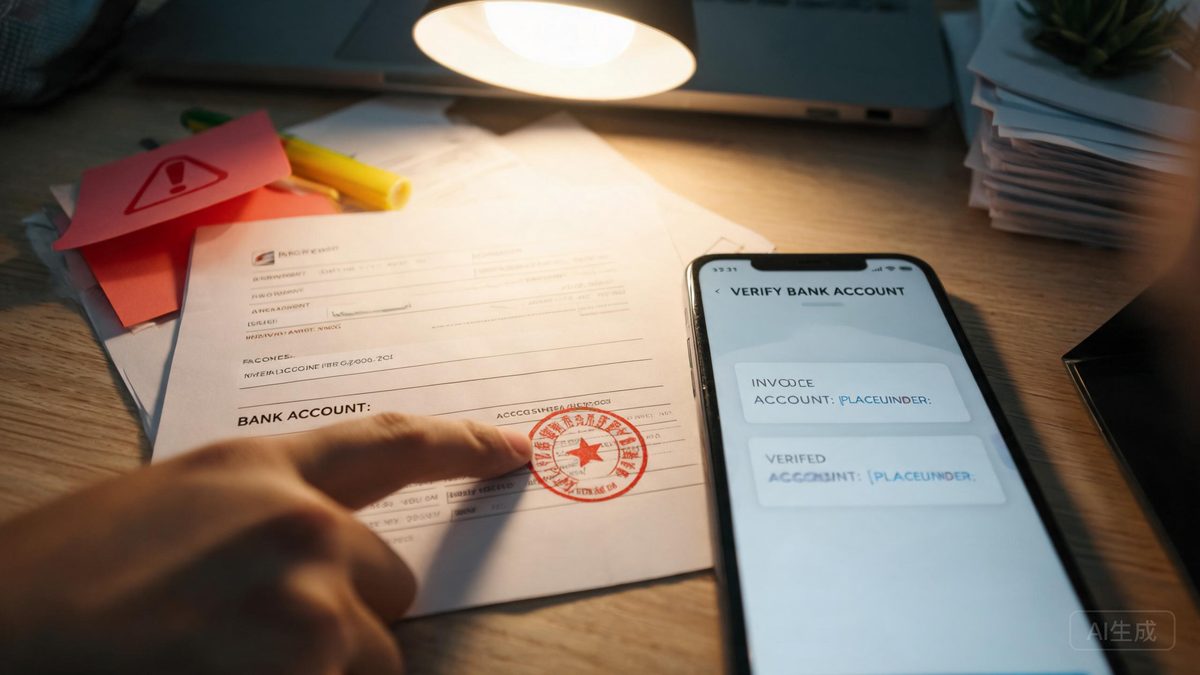
Fake invoices and bank account fraud cost international buyers an estimated $300-700 million per year in China sourcing, with the typical single-incident loss running $5,000-$50,000. The single most common vector is the "invoice swap" — a supplier (or a scammer using a lookalike email) emails a "revised Proforma Invoice" with a different bank account, citing audit, tax, or system upgrade. The buyer wires to the new account — usually a personal name or shell company — and the funds are gone within hours. This guide walks through the 5 most common fake-invoice patterns, a 5-step bank account verification checklist, a cost-of-fraud table, and a worked example of a $35,000 invoice swap Yeatru intercepted in 2025.
The 5 Most Common Fake Invoice & Bank Account Patterns
These five patterns cover roughly 90% of the fake-invoice cases we review. Any one is a stop-and-verify signal.
| # | Pattern | How It Works | Typical Loss |
|---|---|---|---|
| 1 | The Invoice Swap | "Revised PI" emailed with a new bank account, citing audit / tax | $5k-$50k, <10% recovery |
| 2 | The Personal Account | PI lists a personal name as account holder, not the company | Full wire gone |
| 3 | The Lookalike Domain | Scammer uses abc-co.com vs supplier's real abc-co.cn email | $5k-$30k, unrecoverable |
| 4 | WU / Crypto Insistence | Supplier demands untraceable payment for "fast processing" | Full wire gone, <5% recovery |
| 5 | Mid-Stream Account Change | After 50% deposit, supplier says "we changed banks, send balance to new account" | Balance gone, goods never ship |
The 5-Step Bank Account Verification Checklist
Run these five checks before any money moves. Total time: 1-2 business days per supplier.
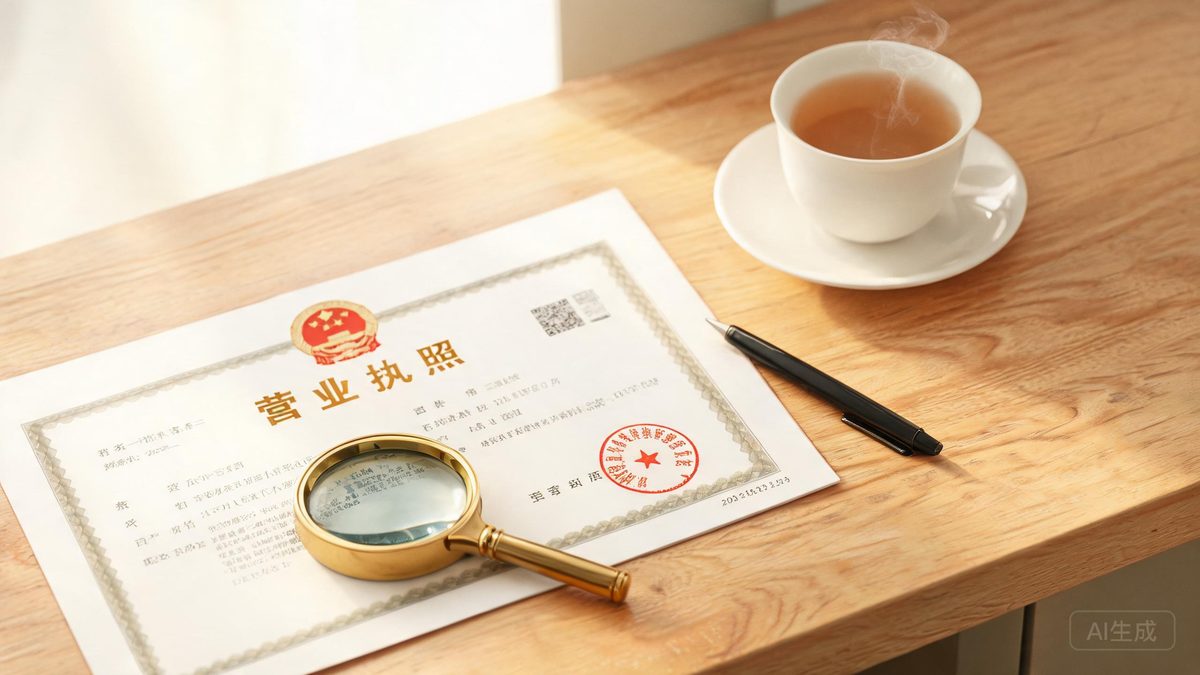
- Match the bank account name to the gsxt.gov.cn entity name. Get the supplier's USCC and the bank account holder name; cross-check on the State Administration for Market Regulation registry. The registered entity name must match the bank account holder name exactly. A personal name on the account (vs. a company name) is the #1 fraud signal. See our Chinese supplier license verification guide for the full license check.
- Request the Bank Account Opening Permit (开户许可证). This PBC-issued document confirms the account belongs to the registered company. Legitimate factories have it on file and can send a redacted scan within 24 hours. Refusal to share is a hard red flag.
- Run a ¥100 test transfer. Before the main deposit, wire ¥100 to the company account and ask the supplier's finance team (not the sales rep) to send a screenshot of the bank's incoming notice showing the company name. A scammer with a shell account cannot produce this; the test costs under $15 and takes one business day.
- Cross-check the SWIFT/BIC code against the bank branch address. Look up the SWIFT/BIC on the bank's official website and confirm it routes to the branch city the supplier claims. A mismatch — SWIFT points to a different city or branch — signals an invoice swap or shell account.
- Use Trade Assurance or company-account T/T. For first orders, route payment through Alibaba Trade Assurance (escrow) or bank wire to the verified company account. Never wire to a personal account, never Western Union, never crypto — these leave no recovery path. See our how to pay Chinese suppliers safely guide for the full payment hierarchy.
The Cost of Invoice Fraud
Invoice fraud cost is not just the lost wire — it is the time, the lawyer, and the missed launch window. Below is what a typical $20,000-50,000 invoice scam looks like in dollars and time.
| Cost Component | Range | Notes |
|---|---|---|
| Lost wire (single) | $5,000-$50,000 | Gone to personal account in hours |
| Average loss per incident | ~$12,000 | Industry estimate 2025 |
| Recovery via WU / crypto | <10% | Effectively zero |
| Recovery via company T/T (with lawyer) | 30-50% | Slow, expensive, low rate on small claims |
| Recovery via Trade Assurance | 70-90% | 30-60 day dispute window |
| Lawyer fee to chase in China | $5,000-$15,000 | Low recovery rate under $30k |
| Time to recover (best case) | 60-120 days | Missed selling season |
How to Read a Chinese Commercial Invoice (PI)
A legitimate Proforma Invoice has eight verifiable fields. Cross-check each against the supplier's gsxt.gov.cn record before wiring.
| Field | What to Verify |
|---|---|
| Company name | Matches gsxt.gov.cn registered entity name exactly |
| USCC (统一社会信用代码) | 18-digit code; matches the registry record |
| Bank account holder name | Matches company name (not a personal name) |
| Bank name + branch address | Cross-check on the bank's official website |
| SWIFT / BIC code | Routes to the claimed branch city |
| Amount + currency | Matches the agreed PI (no decimal swap, no currency switch) |
| Payment terms | Matches agreement (30/70, T/T to company account) |
| Signature / chop | Red company seal (公章) — not a personal stamp |
Worked Example: The $35,000 Invoice Swap We Stopped
A UK buyer ordered $35,000 of silicone kitchenware from a Shenzhen supplier. After the 30% deposit (paid to the original company account, verified), the supplier emailed a "revised PI" for the 70% balance citing "audit reasons" — with a new bank account. Pre-balance verification:
- Original account holder: Shenzhen ABC Plastics Co. Ltd. — matches gsxt.gov.cn entity name.
- "Revised" account holder: Liu Wei (personal name) — no entity match on gsxt.gov.cn.
- Bank Account Opening Permit: refused — "confidential".
- ¥100 test transfer to new account: rejected by supplier — "just send the full balance".
- SWIFT/BIC cross-check: new SWIFT routed to a different city than the registered address.
- Email header: reply-to domain was abc-co.com — supplier's real domain is abc-co.cn.
The buyer refused, demanded the original account, and the supplier went silent within 48 hours. Two weeks later the same "supplier" scammed two other buyers for a combined $48,000 using the same invoice-swap pattern. The difference: 1-2 business days of bank account verification versus a $35,000 loss.
For the broader scam typology and red flags, see our 12 China sourcing scams red flags guide.
How Yeatru Verifies Supplier Bank Accounts
Yeatru Sourcing is a Yiwu-based China sourcing agent with 14+ years handling international orders. We close most fake-invoice vectors before money moves: USCC verification on gsxt.gov.cn, Bank Account Opening Permit request, ¥100 test transfer to the verified company account, SWIFT/BIC cross-check, email-header domain check, and Trade Assurance routing. Our transparent 3-8% commission covers supplier discovery, verification, price negotiation, AQL 2.5 pre-shipment QC, export declaration, and DDP shipping — no hidden fees.
- Free sourcing quotation within 24 hours, 3 verified factories compared side-by-side.
- USCC + bank account name match on gsxt.gov.cn before any wire.
- Bank Account Opening Permit (开户许可证) request and ¥100 test transfer.
- SWIFT/BIC cross-check and email-header domain verification.
- AQL 2.5 pre-shipment QC with photo and video evidence.
- Trade Assurance routing and DDP shipping worldwide with 15-day free warehousing.
Frequently Asked Questions
1. How common is fake invoice / bank account fraud in China sourcing?
Industry estimates put fake-invoice and bank-account fraud at $300-700 million per year in China sourcing, with the typical incident between $5,000 and $50,000. The highest-risk categories are electronics, kitchenware, and apparel — high-volume orders where a single wire is large enough to be worth stealing.
2. What is the average dollar loss from a fake invoice scam?
The average single-incident loss is roughly $12,000, with the range running $5,000-$50,000. Recovery depends on payment method: Trade Assurance recovers 70-90% within 30-60 days; bank wire to a verified company account recovers 30-50% via a Chinese lawyer; WU and crypto recover under 10% — effectively zero.
3. Is Alibaba Trade Assurance safe against invoice fraud?
Yes, when payment stays inside Trade Assurance. The fraud vector is the invoice swap that pulls payment off-platform — once you wire outside Trade Assurance, the escrow no longer applies. The rule: if a supplier asks to take payment off Trade Assurance citing audit, tax, or faster processing, treat it as a fraud signal and stay on-platform.
4. How can I tell if a Chinese commercial invoice is real?
Cross-check eight fields: company name and USCC on gsxt.gov.cn, bank account holder name (must match company, not personal), bank name + branch address on the bank's website, SWIFT/BIC routing to the claimed city, amount + currency (no decimal swap), payment terms (30/70 to company account), and a red company seal (公章) — not a personal stamp. One mismatch is a stop.
5. What should I do if the supplier changes bank accounts mid-order?
Stop. Mid-stream account changes — citing "audit", "tax", or "system upgrade" — are the #1 fake-invoice vector. Re-verify the new account against gsxt.gov.cn and the Bank Account Opening Permit, run another ¥100 test transfer, and confirm by phone (not email) with a known contact. If the supplier pushes, switch to Trade Assurance or walk.
6. Can a sourcing agent verify the supplier's bank account for me?
Yes. A licensed Yiwu-based agent verifies the USCC on gsxt.gov.cn, requests the Bank Account Opening Permit, runs a ¥100 test transfer to the company account, cross-checks the SWIFT/BIC, and routes payment through Trade Assurance — all before the main wire moves. The agent's local presence and license access close most fake-invoice vectors before money leaves your account.
Conclusion
Fake invoices and bank account fraud share a small fingerprint — "revised PI" with a different account, citing audit / tax / system upgrade. Run the 5-step bank account verification (USCC match on gsxt.gov.cn, Bank Account Opening Permit, ¥100 test transfer, SWIFT/BIC cross-check, Trade Assurance), refuse mid-stream account changes, and never wire to a personal account. A ¥100 test transfer beats a $35,000 loss every time. Get a free, no-obligation sourcing quote from a verified Yiwu agent within 24 hours.