What Is Price Negotiation with Chinese Suppliers?
Price negotiation with Chinese suppliers is the process of bargaining the unit price, MOQ, payment terms, lead time, and inclusions (packaging, certification, freight) of a purchase order down to a level that works for both buyer and factory. Unlike Western negotiation, which is often direct and contract-focused, Chinese negotiation is relationship-driven and indirect: suppliers care about mianzi (face), guanxi (relationship), and long-term repeat business as much as the immediate price. The goal is not to squeeze the supplier to zero margin — a supplier who loses money will cut corners on quality — but to find a price that is fair for both sides and locks in quality and reliability.
The 12 Negotiation Tactics That Work with Chinese Factories
These 12 tactics are ranked by typical saving potential vs. effort and risk. Combine 2–3 of them per negotiation for the best result.
| # | Tactic | Saving Potential | Effort | Risk |
|---|---|---|---|---|
| 1 | Anchor with volume (mention larger future orders) | 5–15% | Low | Low |
| 2 | Get 3+ competing quotes | 5–15% | Low | None |
| 3 | Ask for tiered pricing (100/500/1k/5k) | 10–25% | Low | None |
| 4 | Negotiate total landed cost, not unit price | 3–10% | Medium | None |
| 5 | Offer faster payment for discount | 3–8% | Low | Low |
| 6 | Bundle multiple SKUs into one order | 3–8% | Low | Low |
| 7 | Use off-season timing (Jan–Feb, Jul–Aug) | 5–10% | Low | None |
| 8 | Ask for free samples or free tooling | $30–$500 | Low | None |
| 9 | Reference a real competitor quote | 3–10% | Low | Medium |
| 10 | Negotiate MOQ down (pay slightly more/unit) | MOQ −30–50% | Medium | Low |
| 11 | Long-term relationship angle | 3–8% | Medium | None |
| 12 | Have a walk-away price | 5–15% | Low | Low |
Tactics 1–4 are the highest-leverage and should be in every negotiation. For private-label or OEM orders, tactic 8 (free tooling) can save mold costs of $500–$5,000 if the order is large enough. For small orders, tactic 10 (lower MOQ) matters more than unit price — see low-MOQ sourcing.
Tiered Pricing Example
A factory quotes a plastic phone case. Here is how the unit price drops with volume (typical for injection-molded goods):
| Quantity | Unit Price (FOB) | Discount vs 100 pcs |
|---|---|---|
| 100 pcs | $5.00 | — |
| 500 pcs | $4.50 | −10% |
| 1,000 pcs | $4.20 | −16% |
| 3,000 pcs | $3.95 | −21% |
| 5,000 pcs | $3.80 | −24% |
Always ask for tiered pricing in your RFQ. Even if you only order 1,000 pcs now, knowing the 5,000-pcs price tells you the factory's real floor and gives you a target for future orders.
Cultural Considerations in Chinese Negotiation
Understanding Chinese business culture prevents costly missteps:
- Save face (mianzi) — never demand more than a 20% price cut in public, never humiliate the supplier, and never say "you are too expensive" bluntly. Say "the price is a bit higher than our target; can we find a way to meet in the middle?"
- Indirect yes/no — "we will consider it" or "maybe" usually means no. A real yes is "we will send the PI today."
- Guanxi (relationship) — invest time in small talk (family, weather, your business) before discussing price. Suppliers give better prices to buyers they feel a relationship with.
- Patience — negotiation often takes 3–5 rounds of emails over 1–2 weeks. Pushing for an answer in 24 hours signals desperation and weakens your position.
What NOT to Do When Negotiating
- Never demand more than a 20% cut — a supplier who accepts an impossible price will cut material quality to survive.
- Never compare to a fake low quote — suppliers share price intelligence; if your "competitor quote" is fake, you lose all credibility.
- Never be rude or aggressive — Chinese suppliers will simply stop replying rather than argue.
- Never pay 100% upfront for a discount — use 30/70 or 50/50 with QC before the balance (see safe payment).
Worked Example: Negotiating a $5.00 Quote Down to $4.20
A buyer gets an initial quote of $5.00/pc FOB for 1,000 plastic phone cases. Here is how the 12 tactics combine:
- Starting quote: $5.00/pc × 1,000 = $5,000
- Tactic 3 (tiered pricing): supplier quotes $4.50 at 500, $4.20 at 1,000, $3.80 at 5,000 → now $4.20/pc
- Tactic 5 (faster payment): offer 50% deposit instead of 30% → supplier takes $0.10 off → $4.10/pc
- Tactic 6 (bundle): add a second SKU (tempered glass) to the same order → another $0.05 off → $4.05/pc
- Tactic 9 (reference quote): show a real competitor quote of $3.90 → supplier matches at $3.95/pc
Final: $3.95/pc × 1,000 = $3,950 — a $1,050 saving (21% off) from the original $5,000, while keeping quality and terms intact.
Even without the competitor reference, tiered pricing + faster payment + bundling gets you to $4.05/pc — a 19% reduction. This is the power of combining tactics rather than haggling on one number.
How Yeatru Handles Negotiation
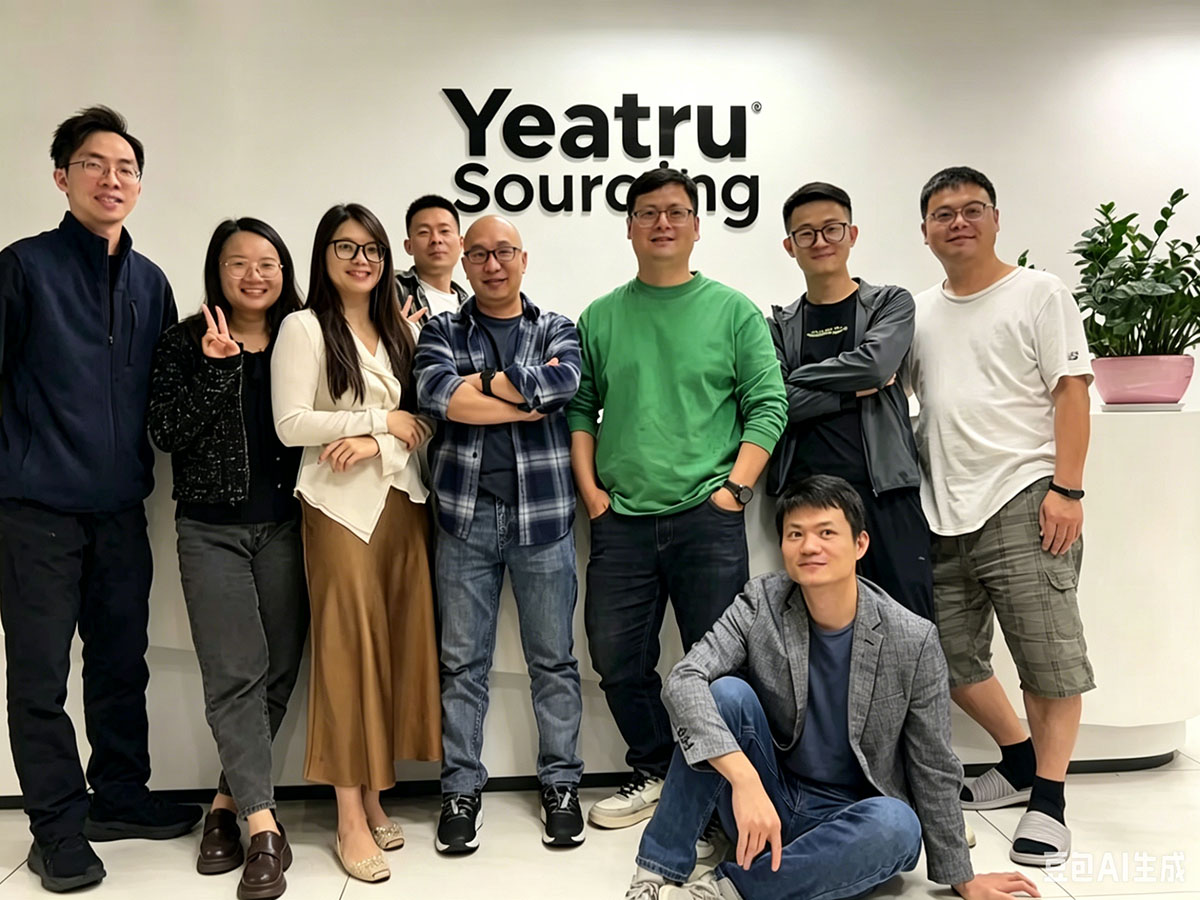
Yeatru negotiates with Chinese factories daily in Mandarin, with cultural fluency and volume leverage. We:
- Send your RFQ to 5–10 verified factories and collect 3+ comparable quotes
- Negotiate tiered pricing, MOQ, payment terms, and free tooling on your behalf
- Verify that any price reduction does not come with hidden material or quality downgrades
- Lock the agreed price in a written PI with the essential contract clauses
For OEM/private-label orders, we also negotiate mold ownership and free tooling amortization.
Frequently Asked Questions
1. How do I negotiate a better price with a Chinese supplier?
Get 3+ competing quotes, ask for tiered pricing at 100/500/1,000/5,000 pcs, anchor with larger future volume, offer faster payment (50% deposit) or bundle 2–3 SKUs, and negotiate total landed cost not just unit price. Expect a 5–15% reduction on a typical order.
2. What is tiered pricing and how do I ask for it?
Tiered pricing is when a supplier quotes a lower unit price for larger quantities. Ask in your RFQ: "Please quote unit price at 100, 500, 1,000 and 5,000 pcs." Typical drops: $5.00 at 100 pcs, $4.50 at 500, $4.20 at 1,000, $3.90 at 5,000.
3. Can I negotiate the MOQ down?
Yes. Offer to pay 5–10% more per unit in exchange for a lower MOQ, or combine two similar products to hit the factory's minimum run. Most factories will accept 30–50% of their stated MOQ for a small unit-price premium.
4. How do I negotiate payment terms?
Standard is 30% deposit / 70% balance before shipment. To get a discount, offer 50% deposit or 100% T/T upfront for a 3–5% price cut. To reduce risk, negotiate balance after pre-shipment QC inspection (T/T 30/70 with QC photos before balance).
5. What if a supplier's price is too high?
Show them a real competitor quote (not a fake one) and ask them to match or beat it. If they cannot, ask what they can change to reduce cost (simpler packaging, standard material, larger quantity). If still too high, walk away and use the cheaper verified supplier.
6. What are the cultural rules for negotiating with Chinese suppliers?
Save face (mianzi) — never demand more than a 20% cut publicly or humiliate the supplier. Build guanxi (relationship) over time. Expect indirect yes/no — "we will consider it" often means no. Be patient; negotiation may take 3–5 rounds of emails.
Common Pitfalls to Avoid
- Wiring to a personal account instead of the company account. Always confirm the PI beneficiary name matches the supplier's business license. A personal account = red flag for fraud or tax evasion, and you lose all payment protection.
- No bank-detail re-verification before the balance transfer. Hackers infiltrate supplier email and send a 'new account' notice mid-order. Re-confirm bank details by phone or WeChat call before every wire over $5,000.
- Paying 100% upfront without a QC gate. Structure 30/70 or 50/50 with an AQL 2.5 pre-shipment inspection before the balance. Once the full amount is paid, you have zero leverage over defects.
- Ignoring SWIFT cost-sharing (SHA vs OUR). SHA splits fees ($25–$45 total) but the supplier receives $15–$25 less. OUR costs you ~$55–$60 upfront but guarantees the full amount arrives. For deposits over $10k, OUR avoids short-payment disputes.
- No written payment terms in the contract. Specify due dates, currency, bank charges, and late-payment penalties. Verbal agreements are unenforceable in Chinese courts.
Conclusion
Negotiating with Chinese suppliers is not about haggling the lowest possible price — it is about combining the right tactics (volume anchoring, tiered pricing, faster payment, bundling, competitor references) with cultural respect (saving face, building guanxi) to reach a fair price that locks in quality. A typical buyer can cut 15–21% off the initial quote by combining 2–3 tactics, and even more by negotiating total landed cost rather than unit price. The keys are: always have 3+ quotes, never demand more than 20% off, never use fake competitor prices, and always have a walk-away price. If you want Yeatru to negotiate with factories on your behalf in Mandarin, send us your target product and budget and we'll get you the best verified factory price within 48 hours. Related: 50/50 deposit payment terms.