What Is a China Sourcing Contract?
A China sourcing contract (or purchase contract) is a legally binding agreement between a buyer and a Chinese supplier that defines the product, quantity, price, payment, delivery, quality, and what happens if things go wrong. For small stock orders, a signed Proforma Invoice (PI) is often sufficient; for OEM, private-label, or high-value orders, a formal contract with detailed clauses (IP, QC, penalties, dispute resolution) is essential. The contract is your only real protection if the supplier ships defective goods, delays, or steals your design — verbal agreements and chat logs alone are hard to enforce in China.
13 Essential Clauses of a China Sourcing Contract
Each clause closes a specific risk. A contract missing clauses 9, 10, or 13 leaves you with no recourse for IP theft, defects, or disputes.
| # | Clause | What It Protects | Sample Wording |
|---|---|---|---|
| 1 | Parties | Legal identity | Buyer: [full legal name, address]; Supplier: [full legal name, address, contact] |
| 2 | Product description & specs | Exact product | "Product per Annex A (spec sheet + approved sample)" |
| 3 | Quantity & price | Order size & cost | "1,000 pcs at $5.00/pc, total $5,000 USD, FOB Ningbo" |
| 4 | Payment terms | Cash flow & risk | "30% deposit by T/T; 70% balance after PSI approval" |
| 5 | Delivery terms & incoterm | Shipping responsibility | "FOB Ningbo, lead time 25 days from deposit" |
| 6 | Quality standard | Defect tolerance | "AQL 2.5 major, AQL 4.0 minor; per approved sample" |
| 7 | Packaging & labeling | Retail/Amazon requirements | "Retail box + FNSKU label per buyer artwork" |
| 8 | Certification | Market access | "Supplier provides CE, RoHS, FDA test reports" |
| 9 | IP protection | Design & trademark | "All designs, molds, tooling owned by Buyer; no third-party sales" |
| 10 | Inspection & acceptance | QC before payment | "Buyer's PSI final; rework at Supplier cost if fail" |
| 11 | Penalty for delay/defect | Non-performance | "0.5% of order value per day delay, cap 10%" |
| 12 | Force majeure | Unforeseeable events | "Natural disaster, war, government action" |
| 13 | Dispute resolution | Enforcement | "Arbitration at CIETAC Shanghai, PRC law" |
For deeper IP protection, read IP protection in China sourcing.
PI vs Formal Contract: When to Use Which
| Document | Use When | Clauses Included | Order Value |
|---|---|---|---|
| PI (Proforma Invoice) | Stock goods, repeat orders, trusted supplier | Product, qty, price, payment, delivery | < $10,000 |
| Formal purchase contract | OEM, private label, new supplier, high value | All 13 clauses (IP, QC, penalties, dispute) | > $10,000 |
A signed PI is legally binding under Chinese contract law, but it lacks the detail to enforce quality or IP. If you are doing OEM/private label, always use a formal contract.
Key Clauses in Detail
Quality & Inspection Clause
This is the most important clause for avoiding defects. Specify:
- AQL level — AQL 2.5 for major defects, AQL 4.0 for minor defects (the standard for consumer goods).
- Approved sample — the contract references a sealed approved sample kept by both parties.
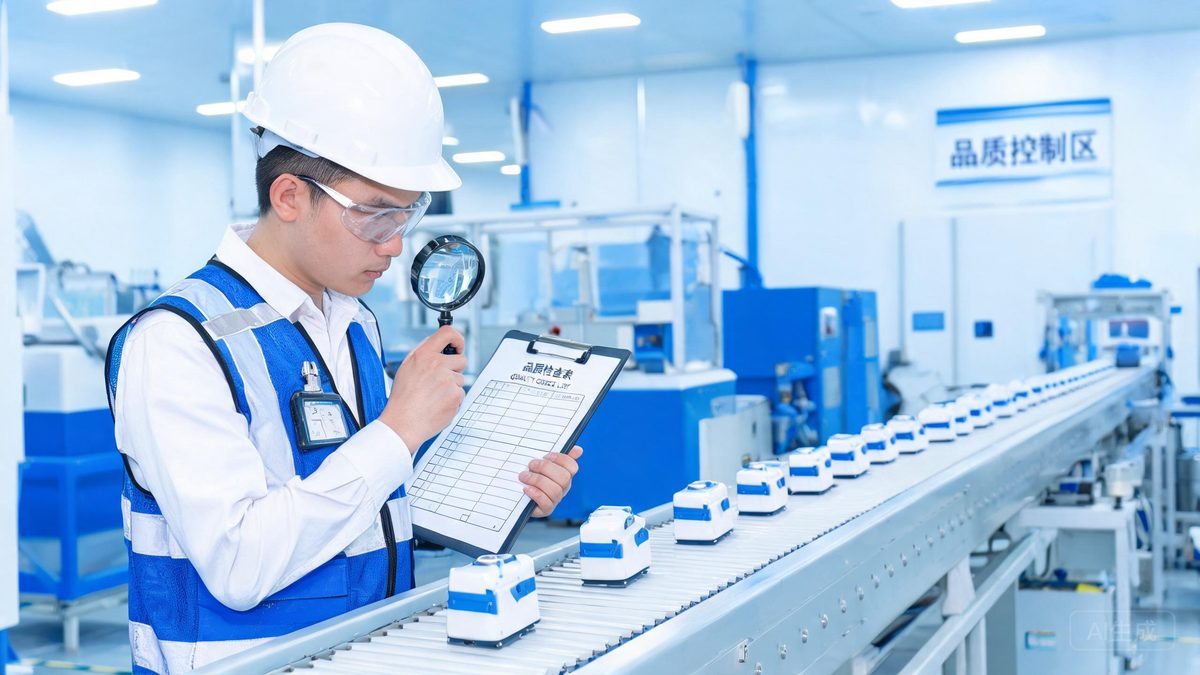
- Pre-shipment inspection (PSI) — the buyer (or a third-party inspector) inspects before the balance is paid. If QC fails, the supplier reworks at its own cost or refunds the deposit.
Without this clause, you pay the balance and then discover defects with no recourse.
IP Protection Clause
For OEM/private-label orders, include:
- The buyer owns all designs, drawings, molds, and tooling.
- The supplier may not sell the product (or a copy) to any third party.
- The supplier may not use the buyer's trademark without written permission.
- An NDA (non-disclosure agreement) signed before sharing designs.
Pair this with a registered Chinese trademark — see IP protection and mold ownership.
Penalty & Dispute Clauses
- Delay penalty: 0.5% of order value per day of late shipment, capped at 10% (suppliers will not accept uncapped penalties).
- Defect penalty: if defect rate exceeds AQL, the supplier reworks or replaces; if rework is impossible, refund the value of defective goods.
- Dispute resolution: CIETAC (Beijing/Shanghai/Shenzhen) or HKIAC (Hong Kong) arbitration. Arbitration awards are enforceable in China under the New York Convention; foreign court judgments are not.
Worked Example: A $30k Contract with IP + QC + Penalty Clauses
A buyer places a $30,000 OEM order for a private-label blender with a Shenzhen factory. The contract includes clauses 9 (IP), 10 (inspection), 11 (penalty), and 13 (CIETAC). What happens when things go wrong:
- Scenario A — late shipment: factory ships 12 days late. Penalty = 12 × 0.5% = 6% of $30k = $1,800 deducted from the balance.
- Scenario B — defects: PSI finds 8% defect rate (above AQL 2.5). Supplier must rework the lot at its own cost; 5-day rework, then re-inspection passes.
- Scenario C — IP theft: factory sells the buyer's blender design to another customer. Buyer files at CIETAC; the contract's IP clause + Chinese trademark registration win the case; factory pays $15,000 in damages and stops selling.
Without the contract: the buyer has no leverage — the factory keeps the deposit, ships late with defects, and copies the design with zero consequences. The contract turns an unenforceable handshake into a $30k-protected order.
How Yeatru Handles Contracts
Yeatru provides a bilingual (English/Chinese) contract template for all orders over $5,000, including:
- All 13 essential clauses adapted to your product and order
- Bilingual version with Chinese prevailing for enforceability
- IP and mold-ownership clauses for OEM orders
- PSI-before-balance payment terms (30/70 or 50/50) — see deposit terms
- CIETAC/HK arbitration clause
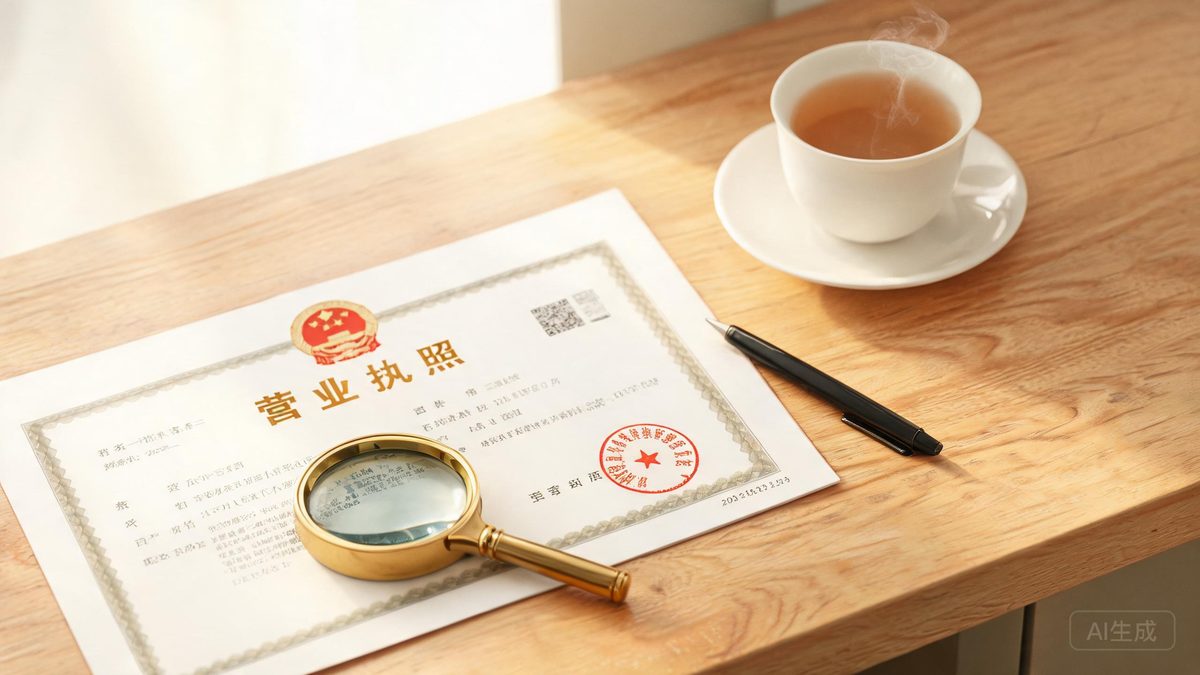
We also review the supplier's business license to confirm the contracting party is the real factory.
Frequently Asked Questions
1. Do I need a formal contract to source from China?
Yes. For orders above $1,000 you should have at least a signed Proforma Invoice (PI) with key terms. For OEM, private label, or orders above $10,000, a formal purchase contract with IP, QC, penalty, and dispute clauses is essential to protect your money and IP.
2. What is the difference between a PI and a formal contract?
A PI (Proforma Invoice) is a simple quote/invoice with product, price, quantity, and payment terms — legally binding if signed. A formal contract adds detailed clauses for quality (AQL), inspection, IP, mold ownership, penalties, and dispute resolution. Use a PI for stock orders and a full contract for OEM/private-label.
3. What are the essential clauses in a China sourcing contract?
13 clauses: (1) parties, (2) product specs with annex, (3) quantity & price, (4) payment terms, (5) delivery terms & incoterm, (6) quality standard (AQL 2.5), (7) packaging & labeling, (8) certifications, (9) IP protection, (10) inspection & acceptance, (11) penalty for delay/defect, (12) force majeure, (13) dispute resolution (CIETAC/HK arbitration).
4. How do I protect my IP in a China sourcing contract?
Include an NDA clause, state that all designs, molds, and tooling are owned by the buyer, forbid the supplier from selling your product to third parties, and register your trademark in China before production. Sign the contract under Chinese law so it is enforceable.
5. How should disputes be resolved in a China sourcing contract?
Choose arbitration at CIETAC (Beijing/Shanghai/Shenzhen) or HKIAC (Hong Kong), governed by Chinese or Hong Kong law. Arbitration awards are enforceable in China under the New York Convention, unlike foreign court judgments which are usually not enforceable in China.
6. Should the contract be in Chinese or English?
Ideally bilingual (English and Chinese) with a clause stating which language prevails in case of conflict. If only one language, use Chinese for enforceability in Chinese courts/arbitration, but always get an accurate English translation for your records.
Conclusion
A China sourcing contract is not optional paperwork — it is the only thing standing between your money and a defective, delayed, or IP-infringing order. For orders over $1,000 use a signed PI; for OEM/private-label or orders over $10,000 use a formal contract with all 13 clauses, especially quality (AQL 2.5 + PSI-before-balance), IP ownership, delay/defect penalties, and CIETAC/HK arbitration. A $30k order protected by these clauses can save you $15k+ in IP theft, defects, and delays. If you want a bilingual contract template reviewed and adapted to your order, send Yeatru your order details and we'll draft it within 24 hours.