What Is Injection Mold (Tooling) Cost?
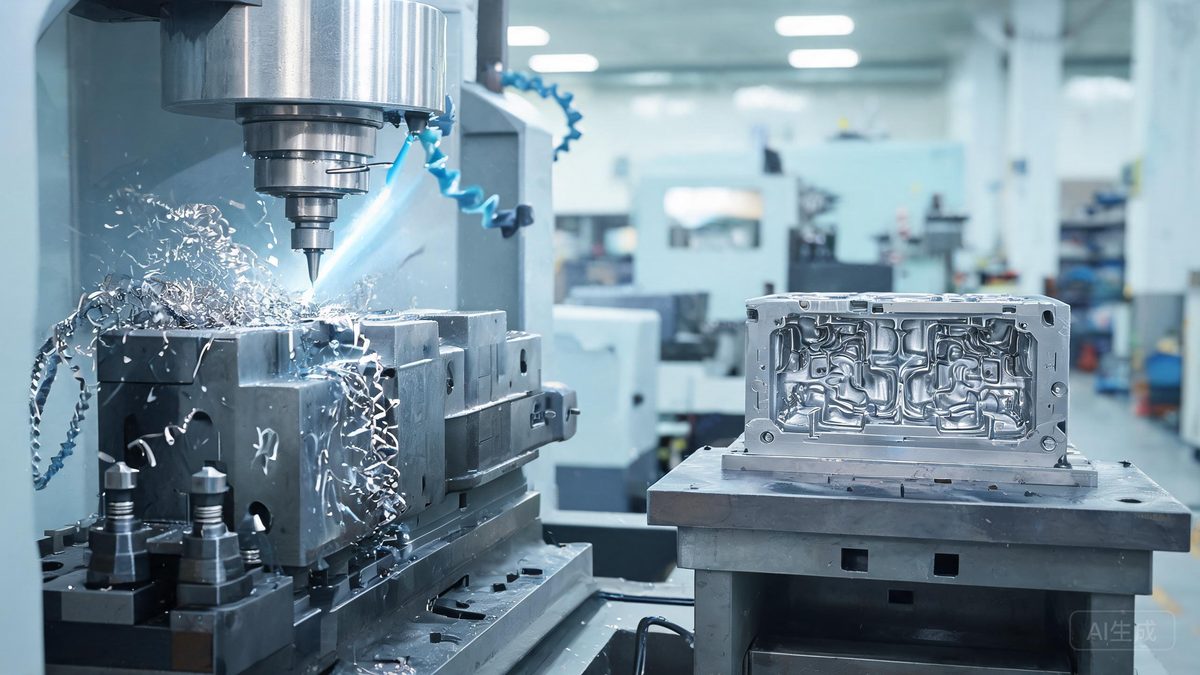
An injection mold (also called tooling) is a precision steel tool with a hollow cavity in the shape of your part. Molten plastic is injected under pressure, cooled, and ejected — repeating every 10–60 seconds. The mold is the single biggest one-time cost in plastic product manufacturing, and its quality determines your part's dimensional accuracy, surface finish, and production speed. Mold cost ranges from $500 to $50,000+ in China, and it's amortized over the total production volume. For the full product journey, see custom product manufacturing from China.
Factors That Drive Mold Cost
- Part size — larger parts need bigger mold bases and more steel; a 100mm part is 3–5× cheaper than a 300mm part.
- Complexity — undercuts require slides or lifters ($500–$3,000 each); thin walls, deep ribs, and tight tolerances increase machining time.
- Surface finish — SPI standards (A-2 mirror polish, B-3 matte, D-3 textured) cost more for higher polish; texture etching adds $200–$1,000.
- Cavitation — single-cavity is cheapest; 2-cavity costs ~1.7×, 4-cavity ~2.8× but multiplies output.
- Mold steel — P20 (cheapest), 718H (+30–50%), S136 stainless (+50–100%, required for clear/corrosive plastic).
- Tolerance — ±0.05 mm requires high-precision CNC + EDM; ±0.2 mm is much cheaper.
- Expected shot count — higher volume justifies harder, more expensive steel that lasts longer.
Mold Cost by Complexity
| Complexity | Cost Range | Lead Time | Typical Steel | Cavitation | Example |
|---|---|---|---|---|---|
| Simple | $500 – $2,000 | 15 – 20 days | P20 | 1 cavity | Bottle cap, simple clip, flat cover |
| Medium | $2,000 – $8,000 | 20 – 30 days | P20 / 718H | 1 – 2 cavities | Consumer housing, kitchen gadget, toy part |
| Complex | $8,000 – $30,000+ | 30 – 45 days | 718H / S136 | 2 – 8 cavities | Multi-part enclosure with undercuts, threaded parts, clear lens |
Mold Steel Comparison
| Steel | Hardness (HRC) | Mold Life (shots) | Cost vs P20 | Best For |
|---|---|---|---|---|
| P20 | ~28–32 | ~500,000 | 1.0× (base) | Prototypes, low volume, simple parts |
| 718H | ~35–40 | ~1,000,000 | 1.3–1.5× | Medium-high volume, good surface finish, best value |
| S136 (stainless) | ~48–52 | 1,000,000+ | 1.5–2.0× | Clear plastic, corrosive materials (PVC), food-contact |
Worked Example: 2-Part Enclosure Mold
Let's cost a 2-part plastic enclosure (top + bottom) for a consumer electronic device, 100×60×30 mm, no undercuts, 2-cavity each:
- Top shell mold: 2-cavity, P20 steel, no undercuts, SPI B-3 finish → $2,000
- Bottom shell mold: 2-cavity, P20 steel, 1 undercut (for snap fit) → $1,500
- Total mold cost: $3,500
- Lead time: 25 days (20 days machining + 5 days T1 sample)
- Mold life: ~500,000 shots per cavity (P20)
- At 5,000 pcs production: mold amortization = $3,500 ÷ 5,000 = $0.70/pc
- At 50,000 pcs: mold amortization = $0.07/pc
Lesson: the mold is a fixed cost. Below 5,000 pcs it dominates the per-pc cost; above 50,000 pcs it's negligible. For volumes above 100,000 pcs, upgrade to 718H for 2× the mold life at only 1.4× the cost.
Mold Ownership Contract (Critical)
The single most common mistake is paying for a mold without a written ownership contract. By default, Chinese law often treats the factory as the owner. Your contract must include:
- Ownership — the buyer (you) owns the mold and all drawings upon full payment.
- Exclusive use — the factory cannot use the mold for any third party.
- Retrieval — you can retrieve the physical mold and CAD drawings at any time, with reasonable notice.
- Storage — the factory stores the mold for free or a nominal fee ($20–$50/month) for a defined period.
- Maintenance — who pays for cleaning, polishing, and minor repairs (usually the factory if covered by a per-shot maintenance fee).
Without this contract, switching factories means paying for a new mold ($3,500 in the example above) and waiting another 25 days. See IP protection for the full NDA + patent strategy.
How to Reduce Mold Cost
- Simplify part design — remove undercuts (each costs $500–$3,000 in slides), use uniform wall thickness (2–3 mm), add 1–2° draft. Run DFM before quoting.
- Use P20 for prototypes — validate the design with a cheap P20 mold, then cut a 718H production mold once demand is proven.
- Start single-cavity — use 1 cavity for the first 10,000 pcs, then add cavities if volume grows. A 2-cavity mold costs 1.7×, not 2×.
- Standard components — use standard mold bases, hot/cold runner systems, and ejector pins; custom components add 20–40%.
- Consolidate parts — if two parts snap together, redesign as one part with a living hinge to eliminate a second mold.
- Get 3–5 quotes — always compare steel grade, cavitation, and mold life, not just the bottom-line price. A $2,000 quote in P20 with 1 cavity is not comparable to a $3,500 quote in 718H with 2 cavities.
Mold Maintenance & Life Extension
- Clean the mold every 50,000–100,000 shots (remove plastic residue, degrease).
- Polish cavity surfaces every 100,000–200,000 shots to restore surface finish.
- Lubricate slides and lifters every 20,000 shots.
- Store in a dry, rust-free environment with a protective coating when not in use.
- Proper maintenance extends mold life by 30–50% and reduces part defect rate from 3% to under 0.5%.
Frequently Asked Questions
1. How much does an injection mold cost in China?
Mold cost depends on part size, complexity, cavitation and steel. Simple molds (small parts, no undercuts) cost $500–$2,000. Medium molds (consumer product housings) cost $2,000–$8,000. Complex multi-cavity molds with slides/lifters cost $8,000–$30,000+. P20 steel is cheapest; 718H and S136 add 30–100%.
2. How long does it take to make a mold in China?
Mold lead time is 15–45 days depending on complexity. Simple single-cavity molds take 15–20 days. Medium molds take 20–30 days. Complex multi-cavity molds with slides take 30–45 days. Add 7–14 days for T1 sample modifications and a pilot run.
3. Who owns the injection mold — buyer or factory?
The party that pays for the mold owns it, but only if a written mold ownership contract exists. Without one, Chinese law often treats the factory as the owner. The contract must state: buyer owns the mold, factory cannot use it for third parties, buyer can retrieve drawings and physical tool on demand, and storage/maintenance terms.
4. What is the difference between P20 and 718H mold steel?
P20 is a pre-hardened steel (~30 HRC) used for low-volume and prototype molds; it lasts ~500,000 shots and costs the least. 718H is a higher-hardness pre-hardened steel (~35–40 HRC) that lasts ~1,000,000 shots and gives a better surface finish; it costs 30–50% more than P20. For corrosive or clear plastic, use S136 stainless.
5. How long does an injection mold last?
Mold life depends on steel and maintenance. P20 lasts ~500,000 shots. 718H lasts ~1,000,000 shots. S136 stainless lasts 1,000,000+ shots and is required for corrosive plastics (PVC) or clear parts. Proper maintenance (cleaning, polishing, lubrication every 50,000–100,000 shots) can extend life by 30–50%.
6. How can I reduce injection mold cost?
Six ways: (1) simplify part design to remove undercuts and use uniform wall thickness; (2) use P20 steel for prototypes and low volume; (3) start with single-cavity and add cavities later if demand grows; (4) use standard mold base and components; (5) consolidate multiple parts into one where possible; (6) get 3–5 quotes and compare steel grade and cavitation, not just price. DFM is the highest-ROI step — covered in custom manufacturing.
Conclusion
Injection mold cost in China ranges from $500 for a simple cap to $30,000+ for a complex multi-cavity enclosure, with lead times of 15–45 days. The key decisions are choosing the right steel (P20 for prototypes, 718H for volume, S136 for clear/corrosive), matching cavitation to your annual volume, and — above all — signing a mold ownership contract before paying the deposit. Reduce cost by simplifying the design in DFM, starting single-cavity, and getting 3–5 comparable quotes. Contact Yeatru for a free mold cost analysis — we'll audit 3 mold factories, verify steel grade and cavitation, and draft the ownership contract.