China Sourcing for Canadian Buyers
China sourcing for Canadian buyers means buying goods from Chinese factories and clearing them through the Canada Border Services Agency (CBSA) — a process shaped by Canadian customs (BN import account, HS-code MFN duty), GST/HST (5% federal plus provincial HST of 13–15% in participating provinces), and Canada product compliance (SOR/2016-174 consumer product safety, Health Canada, ISED for electronics). A Canada-aware China sourcing agent handles BN guidance, compliance verification, GST/HST modeling, DDP/DAP logistics, and port routing to Vancouver, Montreal, or Toronto.
Canada Import Cost Components
Landed cost for a Canadian shipment stacks the EXW price with freight, CBSA duty, and GST/HST. Below are the components:
| Component | Basis / Rate |
|---|---|
| EXW unit price | Factory price |
| China inland + export clearance | $80–$300 per shipment |
| Sea/air freight to Canada port | $0.50–$9.00/kg by mode |
| CBSA duty (MFN) | HS-code rate, 0–15% typical |
| GST (5%) or HST (13–15%) | On duty-paid value (goods + freight + duty) |
| Customs broker / entry | CAD 50–$200 per entry |
| Inland delivery to warehouse | CAD 300–$1,500 by zone |
Note: USMCA rules of origin do not apply to China-origin goods; they enter Canada under the Canada Customs Tariff MFN rates regardless of any USMCA routing. For compliance depth on electronics, see FCC certification (ISED follows a similar test framework) and CE certification.
Canada Compliance by Product Category
| Product | Canadian Regulator | Key Requirement |
|---|---|---|
| Toys & children's products | Health Canada | SOR/2016-174 safety, lead/phthalate limits, bilingual (EN/FR) warnings |
| Electronics & RF devices | ISED | ISED certification (RSS-210 for radio, ICES-003 for EMC) per device |
| Cosmetics | Health Canada | Cosmetic Notification (CN) within 10 days of sale, ingredient disclosure |
| Medical devices | Health Canada | Medical Device Licence (MDL), ISO 13485 quality system |
| Food & food contact | CFIA / Health Canada | Safe Food for Canadians Regulations, food-grade materials |
| Apparel & textiles | Competition Bureau | Bilingual fiber-content and care labels, country of origin |
Canada requires bilingual (English/French) labeling for most consumer goods. Your agent should confirm both the safety certificate and the bilingual label requirements before production, since relabeling in Canada costs CAD 0.20–$0.50 per unit.
Worked Example: Canadian Buyer, 1,000 Units
A Canadian buyer imports 1,000 units of a consumer product. EXW China price is $5.00/unit, DDP freight is $1.80/unit, the CBSA duty is 5%, and the buyer is in Alberta (GST 5%).
| Cost line | Per unit (CAD) | Total (1,000 units) |
|---|---|---|
| EXW goods | $5.00 | $5,000 |
| DDP freight China → Canada | $1.80 | $1,800 |
| CBSA duty (5% on goods) | $0.25 | $250 |
| GST (5% on goods+freight+duty) | $0.35 | $353 |
| Customs broker + inland delivery | $0.80 | $800 |
| Total landed cost | $8.20 | $8,203 |
A product that costs $5.00 at the factory lands at $8.20/unit in Canada — a 64% uplift from freight, duty, GST, and inland delivery. In Ontario, the 13% HST would push the landed cost to roughly $8.64/unit. GST-registered buyers can recover the GST/HST as input tax credits, improving cash flow.
GST/HST, BN, and DDP vs DAP
- Business Number (BN) — mandatory for every CBSA import declaration. Apply through the CRA; add the RM (import/export) program account before your first shipment.
- GST/HST — 5% GST federally, 13% HST in Ontario, 15% in Atlantic Canada; Alberta and territories use 5% GST plus provincial sales tax. GST-registered importers self-assess and recover it as an input tax credit.
- DDP — the shipper (agent) pays duty, GST/HST, and clearance to your door; simplest for first imports.
- DAP — you clear with your own BN and broker, paying duty and GST/HST yourself; enables input tax credit recovery but adds paperwork.
Port Routing: Vancouver, Montreal, Toronto
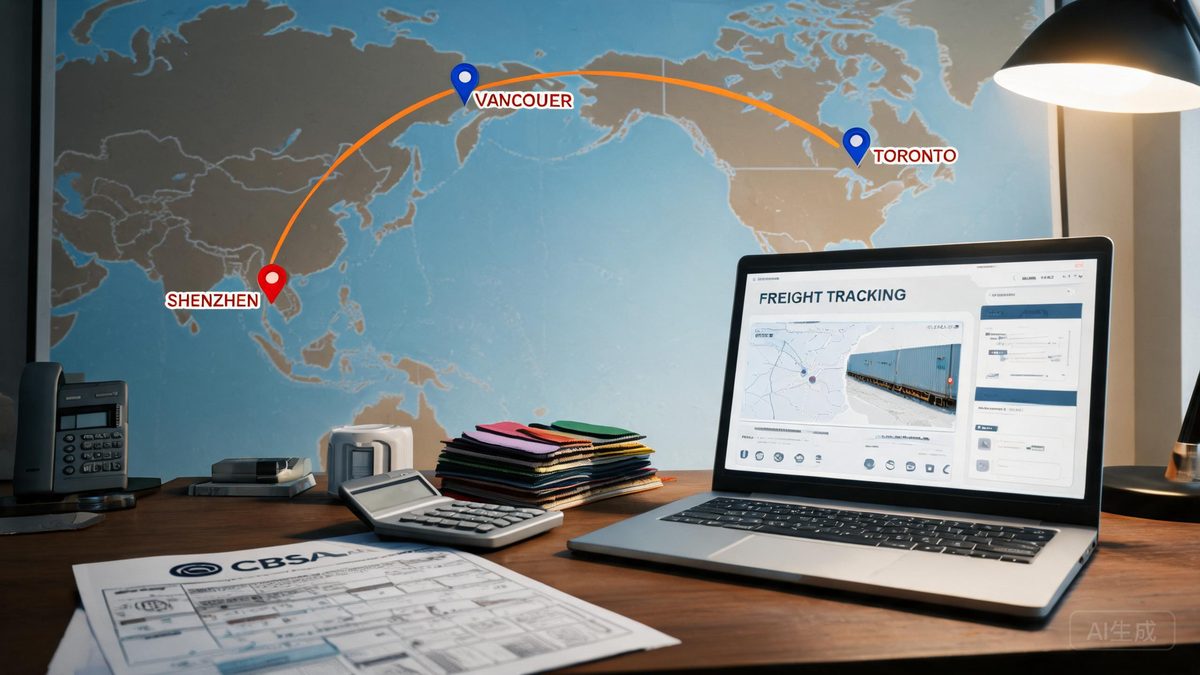
Match the port to your warehouse to minimize inland trucking (which can add CAD 300–1,500 per shipment):
- Vancouver — default for British Columbia and Western Canada; 14–18 days sea from Shanghai/Ningbo; Prince Rupert is a congestion overflow.
- Montreal — for Quebec and Eastern Canada; 25–32 days (often via Halifax trans-shipment).
- Toronto — for Ontario; reached by rail from Vancouver or Montreal, adding 3–7 days of inland transit.
For air freight timing comparisons, see air freight from China; for the broader DDP workflow, see DDP shipping from China.
Why a Canada-Aware Agent Matters
Canada's compliance stack — SOR/2016-174, ISED, Health Canada, bilingual labeling — plus the low CAD $20 de minimis make self-sourcing risky. A Canada-aware agent:
- Confirms SOR/2016-174, ISED, and Health Canada test reports before production.
- Handles BN guidance, DDP/DAP routing, and GST/HST input-tax-credit modeling.
- Routes to the right Canadian port and consolidates multi-SKU shipments.
- Coordinates bilingual (EN/FR) labeling and packaging to avoid relabeling costs.
For comparison, see how Canadian sourcing differs from US sourcing and EU sourcing.
How Yeatru Serves Canadian Buyers
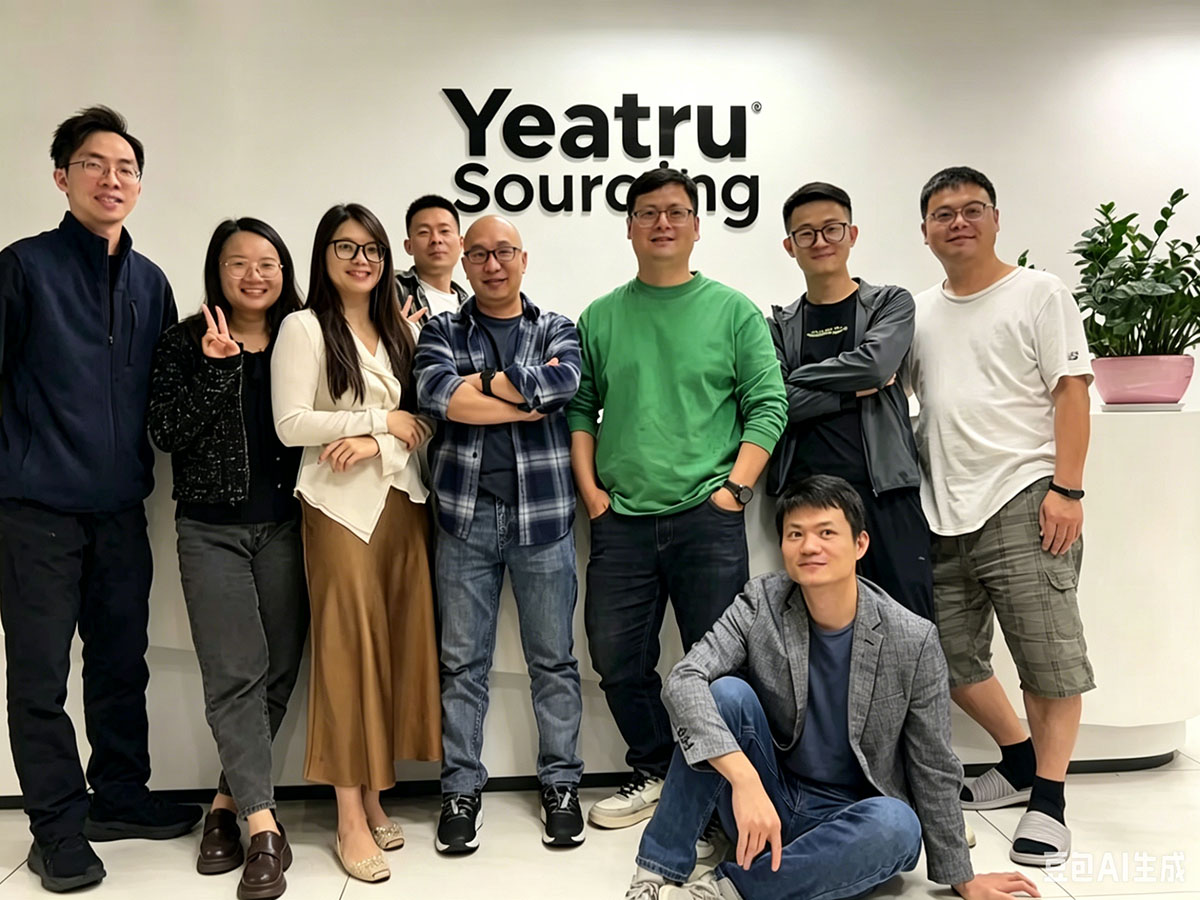
Yeatru Sourcing ships DDP to Vancouver, Montreal, and Toronto weekly. Our Canada-specific service includes:
- HS-code classification for the Canada Customs Tariff and duty modeling.
- SOR/2016-174, ISED, and Health Canada compliance verification.
- BN guidance, DDP or DAP routing, and GST/HST input-tax-credit modeling.
- Bilingual EN/FR label and packaging coordination.
- AQL 2.5 pre-shipment QC and multi-SKU consolidation in Yiwu/Shenzhen.
- CAD invoicing available; US and Canada time-zone support.
Frequently Asked Questions
1. What does a Canada sourcing agent handle?
A Canada-aware China sourcing agent handles supplier discovery, HS-code classification for the Canada Customs Tariff, SOR/2016-174 and Health Canada/ISED compliance verification, GST/HST modeling, DDP or DAP shipping to Vancouver, Montreal or Toronto, and AQL 2.5 pre-shipment QC. They turn a factory EXW price into a fully cleared landed cost per unit.
2. How does GST/HST work on Canada imports from China?
GST is 5% federally, and HST ranges 13–15% in participating provinces (Ontario 13%, Atlantic 15%), while Alberta and the territories use 5% GST plus provincial sales tax. GST/HST is levied on the duty-paid value (goods plus freight plus duty). GST-registered importers can claim input tax credits to recover it.
3. How does CBSA customs clearance work?
CBSA clearance is filed on Form B3 using the importer's BN. The entry declares HS code, customs value (transaction value), origin, and applicable duty under the Canada Customs Tariff. Duty plus GST/HST must be paid before release; most entries are now filed electronically through the CBSA Assessment and Revenue Management (CARM) portal.
4. What is SOR/2016-174?
SOR/2016-174 is the Canada Consumer Product Safety Regulations, which set mandatory safety requirements for a wide range of consumer products including toys, children's sleepwear, cribs, and household chemicals. Products that fail the prescribed tests can be detained or recalled by Health Canada.
5. What is Canada's de minimis threshold?
Canada's de minimis threshold for duty is CAD $20 and for tax is CAD $20 (or CAD $40 for goods shipped by post where certain conditions apply). Shipments above these thresholds are subject to CBSA duty and GST/HST. For business imports, de minimis rarely applies since most commercial shipments exceed CAD $20.
6. Vancouver vs Montreal — which port should I use?
Use Vancouver for British Columbia and Western Canada (14–18 days sea from Shanghai/Ningbo); use Montreal for Quebec and the Maritimes (25–32 days, often via Halifax trans-shipment); route to Toronto via rail from Vancouver or Montreal for Ontario. Match the port to your warehouse to minimize inland trucking, which can add CAD 300–1,500 per shipment.
Common Pitfalls to Avoid
- No written mold/drawing ownership contract. By default Chinese law treats the factory as the mold owner. Your contract must state you own the mold, drawings, and tooling upon full payment, with retrieval rights.
- Signing no NDA before sharing designs. A factory can legally sell your custom design to competitors if there's no NDA. Sign before sending any CAD files, samples, or spec sheets.
- Approving production without a signed golden sample. A verbal 'looks good' leads to 5,000 units that don't match your expectation. Sign and retain a golden sample; production must match it exactly.
- No MOQ flexibility in the contract. A 5,000-unit MOQ for your first order is risky. Negotiate a 1,000–2,000 trial MOQ at a slightly higher unit price, then scale up after quality is confirmed.
- Skipping IP registration in China. Register your trademark and design patent in China (not just your home country). Chinese trademark law is first-to-file — a factory or competitor can squat your brand if you don't register first.
Conclusion
Sourcing from China into Canada is defined by CBSA clearance (BN + B3 entry), GST/HST of 5–15%, SOR/2016-174 consumer safety, ISED for electronics, and a low CAD $20 de minimis. A 1,000-unit order at $5.00 EXW lands at $8.20/unit once DDP freight, 5% duty, 5% GST, and inland delivery are added. A Canada-aware sourcing agent handles BN guidance, compliance verification, GST/HST modeling, DDP/DAP routing, and bilingual labeling so the shipment clears the first time. Get a free Canada landed-cost quote from Yeatru — we will model your per-unit cost with GST/HST within 24 hours. Related: private mold vs logo printing.