2026 TikTok Shop China Sourcing Compliance Guide
This 2026 TikTok Shop China Sourcing Compliance Guide is a seller-focused compliance playbook for cross-border TikTok Shop merchants who source inventory from factories in China and list on TikTok Shop US, UK, EU, Singapore, Malaysia, Philippines, Indonesia, Thailand, Vietnam, and the GCC rollout markets. It covers the four compliance layers every TikTok Shop listing must survive: (1) marketplace category review documents such as FCC ID, CE marking, UKCA, children's CPC, FDA food-contact, and restricted-category brand authorization letters; (2) physical product and packaging labeling including country-of-origin, CE/UKCA mark, importer address, warning symbols, and textile care labels; (3) import duties, VAT, de minimis thresholds, and HS classification that determine landed cost and whether TikTok Shop marketplace IOSS remittance applies; (4) prohibited and restricted products that cannot be listed at all, or require written pre-approval before a single unit ships. Working with a China sourcing agent who understands all four layers is the practical way to keep listings live in 2026, because a certificate that passes upload review today can still be re-audited next month and fail if the factory changed a material, omitted a label, or handed the seller a Photoshop-generated document.
Why TikTok Shop Compliance Matters More in 2026
Between 2024 and 2026 TikTok Shop expanded cross-border seller volume faster than almost any previous marketplace, and the result was a predictable tightening of compliance enforcement. Early TikTok Shop sellers remember 2023 and early 2024 when a self-declared compliance letter and a scanned Chinese business license were usually enough to launch a new category. In 2026 that is no longer the case. Category review teams now verify certificates against the issuing laboratory's public database before approval, randomly sample live listings every 90 days, and run triggered reviews after any return-rate spike, customer safety complaint, or influencer product-review issue. The penalties escalate quickly: first offense is usually listing deactivation with a 14-day appeal window, second offense in the same category triggers temporary payout holds and mandatory compliance training, and a third offense or proven counterfeit or fake certificate leads to permanent account termination, which also impacts any connected accounts under the same beneficial owner.
The second reason 2026 compliance matters is the growing enforcement overlap between TikTok Shop, destination customs authorities, and consumer product safety regulators. In the United States, CPSC and FDA routinely share enforcement leads with major marketplaces, so a recall notice published by CPSC on Wednesday can turn into a hundred TikTok Shop listing suspensions on Thursday. In the European Union, the GPSR (General Product Safety Regulation) that came into force in December 2024 explicitly holds online marketplaces responsible for verifying compliance information on non-food products, and TikTok Shop is listed in the European Commission's enforcement dashboard alongside Amazon and AliExpress. For UK sellers, the post-Brexit product safety regime means UKCA marking enforcement is now active and UK OPSS can request seller information directly from marketplaces. China-sourced goods are the most heavily reviewed population in every one of these programs, which means a seller who only checks the certificate at upload time is carrying a silent compliance liability that can surface months after a product ships.
A third, less-discussed reason is TikTok Shop's own advertising and affiliate rules. A listing that fails compliance review cannot be promoted through TikTok Ads Manager, and any affiliate creator links pointing to it are automatically disabled. For sellers who rely on viral short-video promotion and affiliate commissions, this is effectively a sales freeze even if the listing itself is still theoretically visible. We have worked with TikTok Shop sellers who had a video reach 12 million views and 80,000 product clicks, only to discover that the compliance upload flagged a missing FCC ID on a Bluetooth speaker SKU during the spike and cut the entire affiliate chain before checkout conversion scaled. The fix required re-testing a sample and resubmitting documents, which took 17 business days, by which time the viral trend had completely died off. In 2026, compliance is not only a listing-live requirement, it is also a prerequisite for every seller's most valuable growth channel.
The final reason we wrote this guide is that most compliance failures on TikTok Shop are not the seller's intentional fault. They are failures of translation between TikTok Shop's English-language policy documents and the Chinese factories that actually build the goods. A typical Yiwu factory does not read TikTok Shop Seller University policy updates. Its sales staff quotes a unit price and claims "yes we have CE" because the factory has a 2019 CE test report for a different SKU with a different circuit board, printed on a template the lab never saw. The seller uploads the PDF, listing review passes, and three months later a category audit flags the certificate as invalid for the exact product listed. The seller did not cheat; they simply did not know how to cross-reference a certificate's model number, test date, and issuing lab against the actual mass production unit. This guide is built to close that translation gap, and to give TikTok Shop sellers a repeatable checklist they can use on every new product before they pay the factory balance.
TikTok Shop Marketplace Regions and Compliance Stacks in 2026
TikTok Shop compliance is not one global rule set. Each marketplace region enforces its own local product safety laws, its own import documentation, and its own category-specific pre-approval workflow. In 2026 the most active cross-border seller regions for China-sourced goods are TikTok Shop US, TikTok Shop UK, TikTok Shop EU (covering Germany, France, Italy, Spain, Netherlands, Poland, and the newer 2026 expansion markets of Sweden, Belgium, and Austria), TikTok Shop Singapore, TikTok Shop Malaysia, TikTok Shop Philippines, TikTok Shop Indonesia, TikTok Shop Thailand, TikTok Shop Vietnam, and the newer cross-border programs in Saudi Arabia and UAE. Each region has a different compliance stack, which we summarize in the table below before diving into detail in later sections.
TikTok Shop US operates under US federal consumer product safety law: FCC for electronics, CPSC rules plus CPC for children's products 12 and under, FDA food-contact and cosmetics regulations, FTC labeling and country-of-origin marking, and EPA registration for any treated articles or pesticidal claims. TikTok Shop UK operates under the UK product safety regime: UKCA marking, UK REACH, UK cosmetics regulations with a Responsible Person, and the post-GPSR UK product safety rules. TikTok Shop EU operates under EU directives and regulations: CE marking, REACH, GPSR, WEEE, RoHS, battery directive, medical devices, and the cosmetics regulation requiring an EU Responsible Person. Southeast Asian programs each layer local requirements on top: PSB and CCC references for Singapore electronics, SIRIM and MeSTI in Malaysia, FDA Philippines for food and drug claims, BPOM in Indonesia for cosmetics and processed food, TISI in Thailand, and QCVN marks in Vietnam for regulated electronics. GCC markets (Saudi Arabia, UAE) add SASO, ESMA, and GSO requirements for low-voltage equipment and children's toys.
The practical implication for a cross-border China-based seller is this: a single product listing in TikTok Shop Global cannot simply copy and paste the same compliance file into every region. A Bluetooth speaker that is FCC compliant for the US may not have CE RED test reports valid for EU. A silicone kitchen spatula with FDA food-contact letter for US listing may be missing the LFGB test required for Germany marketplace listings. A private-label cosmetic bottle compliant with EU CPNP registration still needs BPOM notification to list in Indonesia, and SCPM notification to list in Saudi Arabia when the 2026 GCC cosmetics category opens for cross-border sellers. Scaling across multiple regions, in other words, is a certification-scaling problem first and a listing-scaling problem second. This is why most experienced TikTok Shop sellers either pick one core region and source one compliance stack, or work with a sourcing partner who already has region-specific compliance workflows in place.
There is one important simplification in 2026 compared to earlier years: the new TikTok Shop Global Seller Center unified document upload for cross-border merchants. Under the new system, a compliance document uploaded for a parent product SKU in one region can be shared with other marketplace listing variants, but only if the certificate explicitly covers the regulatory domain of the target region. For example, an FCC Part 15 test report will not auto-validate against CE requirements, but a CB test report issued under the IECEE framework can be used as the base evidence for both NRTL listing approval in the US and CE LVD approval in the EU, reducing duplicate sample and testing costs. A sourcing agent experienced in CB report coordination can save sellers 30 to 50 percent of total certification budget on multi-region electronics listings through this route, which is one of the under-discussed benefits of using professional sourcing support rather than buying standalone certificates online.
Layer One: Product Certification Requirements by Category
Every TikTok Shop listing must pass document-based category review before it can be set live, and some categories are also gated behind manual category qualification. Product certification is the single largest area of seller mistakes in TikTok Shop category review in 2026, so we cover it in detail by category group, mapping the exact certifications sellers should confirm before they pay a Chinese factory deposit.
Electronics, Wireless, and Battery-Powered Products
Electronics and battery-powered products are the most heavily reviewed category on TikTok Shop because they represent the highest volume of customer safety incidents. For TikTok Shop US listings, electronic products sold with a wall adapter must carry a minimum of UL 62368-1 or equivalent IEC 62368-1 test report plus an NRTL-marked adapter; internal power adapters without an NRTL mark are rejected automatically at category review in 2026. FCC Part 15B is required for unintentional radiators (chargers, desk lamps, USB hubs, wired mice and keyboards) and FCC Part 15C with an FCC ID grant published in the FCC ID database is mandatory for any Bluetooth, WiFi, 2.4 GHz remote, walkie-talkie, or wireless audio device. Products containing lithium-ion or lithium-polymer cells must additionally upload UN 38.3 test summary, MSDS, and battery specification sheet showing cell manufacturer, nominal voltage, Wh rating, and charge/discharge protections.
For TikTok Shop EU and UK, the corresponding requirements are LVD directive 2014/35/EU test report, EMC directive 2014/30/EU, RED directive 2014/53/EU for any wireless or RF product, RoHS 2 directive 2011/65/EU, WEEE registration documentation showing the producer registration number in at least one EU member state, and CE or UKCA marking permanently applied to the product. An EU or UK Responsible Person address must be provided on packaging and on file, and a compiled Technical File including risk assessment, test reports, user manual, and declaration of conformity must be available to marketplace audit on request for ten years after the last unit is placed on the market. Battery Regulation (EU) 2023/1542 also comes into enforcement effect for products placed on the EU market after February 18, 2027, requiring battery passport information and QR code markings for portable lithium batteries; forward-looking sellers who source today should already require their China factories to collect cell manufacturer information and build the QR code marking into the 2026 tooling to avoid reworking inventory in 2027.
In Southeast Asian markets, electronics add region-specific marks. Singapore requires PSB safety mark for regulated low-voltage equipment under the Consumer Protection (Safety Requirements) Registration Scheme. Malaysia requires SIRIM certification and ST approval for communications and wireless products. Indonesia requires SNI certification for a growing list of regulated electronics including chargers, power banks, and LED lighting products. Thailand requires TISI certification for mandatory-scheme electrical goods. Vietnam requires QCVN conformity assessment documents for telecom and radio equipment. GCC markets require G-mark, ESMA, or SASO conformity certificates depending on the exact product type and voltage range. TikTok Shop category review in 2026 now cross-references these local requirements automatically at upload, so a common seller mistake of submitting only a CE certificate will fail PSB review for Singapore marketplace before the listing ever reaches the manual reviewer step.
Toys, Children's Products, and Baby Gear
TikTok Shop treats all toys and products intended primarily for children age twelve and under as restricted-category listings, and in 2026 many subcategories now require a seller pre-qualification application before listing creation is even unlocked. For the US marketplace, the core requirements are CPSIA-compliant tracking labels permanently molded or printed on both product and packaging, third-party lab testing to the applicable ASTM standard (ASTM F963-17 for toys, ASTM F2088/F406 for baby gear), and a Children's Product Certificate (CPC) issued by a US-registered domestic importer that cites the lab report, lists every applicable regulation, and names the domestic importer as the responsible party. A CPC issued by the Chinese factory, without a US importer registration, will be rejected by TikTok Shop category review in every case in 2026. Additional testing applies for small parts (16 CFR 1501), phthalates (16 CFR 1307), lead content in surface coatings and substrate (16 CFR 1303 and 1500.87/88/89), and for sleep products separate ASTM and crib and bassinet rules.
For TikTok Shop EU and UK listings, toys require EN 71 parts 1, 2, and 3 physical, flammability, and migration testing plus a CE or UKCA Declaration of Conformity, and a warning panel that includes the "not suitable for children under X months" wording when applicable. Baby products additionally require EN 1400 for soothers, EN 14372 for cutlery and tableware, EN 1130 and EN 16890 for cribs and mattresses, EN 13209 for baby carriers, and similar product-specific standards. REACH SVHC screening above 0.1% by weight is mandatory for any product placed on the EU market, and in 2026 TikTok Shop has started requesting SVHC screening reports for children's plastic and textile products during random category re-audits. Small parts choking hazard warnings must additionally follow the exact GPSR template wording published by the European Commission in Annex of the GPSR implementing regulation, not the legacy toy directive wording; reviewers will fail a listing that has the older wording.
Southeast Asian children's toy categories each add local standards. Singapore requires SS 474 for toys. Malaysia requires MS ISO 8124, which mirrors EN 71, and SIRIM ST for battery-operated ride-on toys. Indonesia requires SNI 09-8728 for toys. Thailand requires TIS 685 Part 1 to 3, and GCC markets require GSO toys standard 51-2026 which is harmonized across GCC and comes into enforcement in mid 2026. One under-appreciated detail for cross-border sellers is that TikTok Shop regional category teams in Southeast Asia often request the test sample photos to be included with the report, not only the PDF abstract. This means a seller who buys a test certificate from an online reseller without submitting an actual sample, or a factory that reuses a test report for a different color, will fail when the reviewer compares report sample photos to the live listing photos. For this category more than any other, physical sample coordination through a sourcing agent on the ground in China reduces rejection rates substantially.
Kitchenware and Food-Contact Products
Food-contact materials are the fastest growing restricted category on TikTok Shop in 2026, driven by the high conversion rate of silicone kitchenware, stainless steel bottles, and plastic storage containers in short-video format. US marketplace listings require FDA food-contact regulation compliance: 21 CFR 175-179 for indirect food additives, 21 CFR 176 for paper and paperboard, 21 CFR 177 for polymers, plus FDA Food Facility Registration numbers for any product that is also classified as a food-contact article. A simple "FDA approved" sticker on a factory product page is never enough; the category review team expects a test report from an accredited laboratory showing compliance with the applicable CFR section and the specific simulants and temperatures relevant to the product's intended use (e.g. hot fill, microwave, freezer, boiling water contact). In late 2025 TikTok Shop US added a rule that silicone kitchenware and baby food-contact items must also show a separate heavy metals migration report, and this rule has been grandfathered into existing live listings with a 2026 review sweep.
For EU and UK marketplace listings, food-contact materials are regulated under Framework Regulation (EC) 1935/2004 and the specific measures layered on top of it. Plastics are under EU Plastics Implementation Measure (PIM) Regulation 10/2011 with its 2020 and 2023 amendments, ceramics under 84/500/EEC, and paper and board under national rules with the new EU Paper and Board Food-Contact regulation expected to publish final text in 2027. Germany additionally enforces LFGB Section 30 and 31 for all food-contact articles, and a silicone spatula that passed EU PIM may still fail LFGB if it releases volatile organic compounds above the limit during the sensory test. For TikTok Shop Germany listings specifically, sellers should confirm LFGB testing explicitly because the 2026 category review program for DE marketplace now separates LFGB from general EU PIM. UK mirrors the EU food-contact framework through retained EU law, with parallel UK SI amendments expected in late 2026. For both regions, the declaration of compliance must name the Responsible Person or importer and be available to the marketplace auditor together with the lab test report.
Asian and GCC markets add additional layers. China GB 4806 series standards apply to food-contact products manufactured in China, and in 2026 TikTok Shop cross-border category teams have started requesting GB 4806 compliance documents as baseline even for products shipping to other regions, on the logic that the factory producing for export must hold valid local manufacturing compliance. Singapore requires SS 528 for utensils and SS 530 series for plastics in food contact, Malaysia requires MS 1534 and food import license from MOH for items sold with consumables, Indonesia requires SNI food-contact standards plus BPOM pre-market notification for certain coated metal items, GCC countries require GSO 2011/2012 for food plastics, and Saudi Arabia additionally requires SFDA food-contact registration before listing approval. For food-contact kitchenware the practical sourcing workflow is: confirm target regions first, then order a combined test package from a lab accredited in all target regions via your sourcing agent, rather than testing one region and retrofitting reports later.
Apparel, Textiles, and Footwear
Apparel and textiles are sometimes perceived as low-compliance categories, but 2026 TikTok Shop enforcement across all regions has actually increased the number of textile review failures. The core US requirements are FTC permanent Care Label Rule (16 CFR Part 423), FTC Fiber Content Labeling Rule (Textile Fiber Products Identification Act), country-of-origin permanent label (19 CFR 134.11), and for children's sleepwear 9 months to size 14 the specific flammability standards in 16 CFR 1615 and 1616 with test report plus tracking labels. For adult apparel, CPSC general flammability under 16 CFR 1610 is rarely tested at upload but is enforced on consumer complaint, and flammable costume and festival wear has been a specific 2026 enforcement focus after festival clothing fires in the US and UK. Apparel sold with drawstrings in children's sizes also has strict FTC and CPSC rules on drawstring length that TikTok Shop reviews in random sweeps, especially for hoodies marketed to 2- to 12-year-olds.
EU and UK textile requirements add REACH SVHC screening, PFAS restrictions under REACH Annex XVII as amended in 2023 and 2025, the EU Textile Regulation Ecolabel requirements for any eco claims, and the GPSR safety information requirements that require manufacturer and importer contact on the product label. In April 2026 the EU PFAS restriction enters into application in full, covering more than 14,600 per- and poly-fluoroalkyl substances across all textile categories; TikTok Shop EU category review has already added a PFAS declaration checkbox to textile listing creation and a mandatory "do not use PFAS in waterproof, stain-resistant, or fire-retardant treatments" attestation for outdoor apparel, children's rainwear, and performance fabric categories. For UK listings the parallel UK REACH PFAS restriction follows a similar timeline and wording, so a UK-only seller cannot simply ignore EU PFAS rules and assume compliance. Footwear additionally falls under the general GPSR plus country-specific labeling requirements for composition, and in 2026 EU listings now require a digital product passport data element for leather footwear containing more than 20% leather by weight, with transition period running until 2027 for sellers to upload the DPP QR code proof.
For Southeast Asian markets, textile labels follow the ASEAN harmonized textile labeling rule, but each country still adds its own enforcement requirements: Singapore SS 428 for textile labels, Malaysia enforced JAKIM halal certification requirements for garments marketed as halal, Indonesia SNI textile standards and Indonesian language label rules, Thailand TIS textile labeling standards, Vietnam textile decree 03/2021 labeling requirements, and Saudi Arabia SASO textile plus SFDA cosmetics requirements for any shoe care products sold bundled with footwear. The practical sourcing insight for TikTok Shop apparel sellers is that label compliance, not fiber content testing, produces 70 percent of category review failures, because Chinese factories commonly print country-of-origin labels on removable stickers rather than permanent woven or printed labels, and they omit the required retailer/importer address line. A pre-shipment label audit performed in the factory before balance payment eliminates 90 percent of this failure category at a cost of less than 0.2 percent of the average order value.
Cosmetics, Skincare, and Personal Care
Cosmetics and personal care are one of the most profitable but most restricted categories on TikTok Shop in 2026, and most TikTok Shop programs globally require a category qualification application before the seller can create a cosmetics listing at all. US cosmetics are regulated under FD&C Act Chapter VI and the Fair Packaging and Labeling Act, requiring ingredient listing in INCI order, net contents, manufacturer or distributor name and address, and warning statements for hair dye, sunscreens, antiperspirants, and acne products containing active drug ingredients. In 2026 the newly enacted US cosmetics Modernization Act 2.0 requirements are enforced by FDA: mandatory cosmetic product facility registration, cosmetic product listing for each SKU, adverse event reporting, and GMP compliance. TikTok Shop US cosmetics category review now requests both FDA facility registration number and product listing screenshot as mandatory documents for new listing upload, and existing live cosmetics listings have been notified to complete documentation upload by end of Q3 2026 or face automatic deactivation.
EU and UK cosmetics are regulated under Cosmetics Regulation (EC) 1223/2009 and retained UK Cosmetics Regulation respectively, requiring CPNP or UKCPNP notification before placing on the market, a named EU or UK Responsible Person with physical address, PIF (Product Information File) including safety assessment performed by a qualified safety assessor, INCI ingredient list in descending order of concentration, allergen declarations above the threshold, and batch traceability on every unit. In 2026 the EU SCCS Opinion updates on fragrances, hair dye precursors, and UV filters have created a compliance backlog for private label cosmetics sellers because many formulas registered in 2023 and 2024 now need reformulation before the 2026 enforcement dates. TikTok Shop EU and UK cosmetics category teams have publicly announced that all cosmetics listings must include a current CPNP screenshot showing the listing's exact product name, batch, and Responsible Person contact as part of the random audit sweep running through Q2-Q4 2026. Sellers should also be aware that any cosmetic product making a structure-function claim (anti-aging, anti-wrinkle, hair regrowth, skin whitening, acne treatment, etc.) may be reclassified as a cosmetic with claims requiring additional EU cosmetic claims substantiation under the 2013 Cosmetics Claims Regulation 655/2013.
For Asian markets cosmetics requirements are considerably more complex. Indonesia requires mandatory BPOM registration before listing, and the BPOM process typically takes 4 to 10 weeks per SKU depending on product category. Malaysia requires NPRA notification via the Quest 3+ system, including Cosmetic Product Notification Letter for each SKU. Philippines FDA requires initial market authorization through the FDA e-submission portal plus establishment license to operate for the importer, and cosmetic product notification for each variant. Thailand FDA requires cosmetics notification, with some whitening and hair dye products requiring additional import license. Singapore requires HSA cosmetic product notification via the PRISM portal, with mandatory Responsible Person contact inside Singapore. Saudi Arabia requires SFDA Cosmetic Product Notification via the Saudi Cosmetic e-Services system, and in 2026 SFDA has started requiring a sample inspection at Saudi customs for 10 percent of new cosmetic SKUs imported cross-border via TikTok Shop, adding a 3- to 10-day delay for unprepared sellers. A cosmetics sourcing agent with existing BPOM, SFDA, and NPRA notification workflows can save sellers several months of category qualification time per region.
Tools, Industrial, and Outdoor Products With Moving or Powered Parts
Powered hand tools, garden equipment, pressure washers, portable generators, laser products, outdoor lighting, and any item with a motor or pressurized system fall under enhanced TikTok Shop product safety review in 2026. For US listings, the main triggers are UL or NRTL listing for the electrical side, EPA registration if it contains a small engine emitting regulated exhaust, and ANSI Z133 or OSHA-type standards plus warning labels appropriate to the tool type. Laser products (laser pointers, laser engravers, laser tape measures) must additionally comply with FDA Center for Devices and Radiological Health rules and carry FDA Accession Number or certification for products classified as Class 2 or above, and TikTok Shop US has removed entire brand catalogs for selling Class 3B and Class 4 laser pointers advertised as general consumer products. Pressure washers sold with garden hose connectors must carry warning labels about injection injury, and sellers marketing them for residential cleaning of decks and vehicles should ensure the user manual includes all required warning text; TikTok Shop's automated review system in 2026 parses listing descriptions and flags safety warnings that appear in the manual but not in the listing image carousel.
EU and UK tool listings fall under Machinery Directive 2006/42/EC or the new EU Machinery Regulation (EU) 2023/1230 depending on the date the product is placed on the market, the Low Voltage Directive, and EMC directive for corded and cordless power tools. CE marking is mandatory for all machinery placed on the EU market, and the Technical File must contain the risk assessment performed according to ISO 12100, test reports for each applicable essential health and safety requirement, user manual in the language of the member state of first sale, and EU Declaration of Incorporation for partly completed machinery or Declaration of Conformity for finished machinery. Outdoor products additionally fall under REACH SVHC and RoHS for the battery and charger side, and any product with a combustion engine must comply with the EU Non-Road Mobile Machinery (NRMM) Regulation 2016/1628 emission limits for the engine category. For UK listings the parallel UK Machinery Regulation mirrors the EU provisions and UKCA marking is mandatory, with transitional tolerance for CE-only inventory ending December 31, 2024 for the UK mainland and continuing in limited form in Northern Ireland under the Windsor Framework.
Layer Two: Product Labeling and Packaging Rules
Certification documents are only half the compliance equation. In 2026 TikTok Shop category auditors increasingly request photos of the finished product, retail box, and master carton to verify that labels and marks required by law are physically present, not only shown in artwork design files. The most common label failures on China-sourced TikTok Shop inventory fall into six areas.
Country-of-Origin Marking
For US-bound shipments, 19 CFR 134.11 requires every article of foreign origin imported into the US to be marked in a conspicuous place as legibly, indelibly, and permanently as the nature of the article will permit, to indicate to an ultimate purchaser in the US the English name of the country of origin. The approved wording is "Made in China", or "Made in P.R. China". Stickers are allowed only when the nature of the article prevents permanent marking, but US CBP and TikTok Shop both prefer permanent molded, debossed, ink-jet printed, or woven labels. The marking must be on the article itself, not only on the shipping box. For most products we source for TikTok Shop sellers, we additionally print country-of-origin on the retail box and on the FBA or TikTok fulfillment carton label because TikTok Shop category re-audits ask for photos of all three layers. For the EU and UK, country-of-origin is required under Customs Code and GPSR consumer information rules, and must be accompanied by the name and address of the EU/UK importer or Responsible Person where the regulations require it. Missing country-of-origin marking is the single most frequent reason TikTok Shop US rejects apparel and kitchenware listing audit requests in 2026.
CE, UKCA, FCC, and Other Certification Mark Placement
Certification marks must be applied to the product itself wherever practicable, and to the retail packaging when the product is too small for a permanent mark. CE marks for EU must be at least 5 mm in height, proportioned to the standard CE logo shape, and cannot be stretched, rotated, or split. UKCA marks have a separate logo file provided by the UK government with minimum height of 5 mm. FCC marks and statements for US electronics follow Part 15 labeling rules: a Class A device must carry the FCC statement label, and Class B consumer devices must also carry the consumer interference warning statement in the user manual. Bluetooth SIG word marks and trademark declarations are separate from FCC and CE and must also be used according to the Bluetooth licensee brand guide; many Yiwu electronics factories place a Bluetooth logo without the required superscript trademark symbol, which causes review failures for Bluetooth audio listings under the TikTok Shop intellectual property brand review sweep. For all marks, the pre-shipment inspection should record close-up photography of the finished product and packaging, and this photo evidence should be stored with the compliance file because category re-audits can ask for it 90 or 180 days after the initial listing upload.
Warning Symbols, Age Grading, and Regulatory Warnings
Warning labels are the third most common source of label failures in TikTok Shop 2026 audits. Children's toys for ages 3 and up that contain small parts must display the standard "0-3 not suitable" choking hazard pictogram (the small parts black silhouette baby inside a red circle with slash), followed by the exact standard wording of the warning applicable in each region. US CPSC warning for toys with small parts is "CHOKING HAZARD - Small parts. Not for children under 3 yrs." EU REACH and GPSR warnings for SVHC substances above 0.1% w/w must appear either on packaging or in digital form via a QR code printed on the product or retail box, and the QR code must link to information identifying the SVHC substance and safe use instructions. Products containing button or coin cell batteries must now carry the new mandatory warning statement required under the US Reese's Law and corresponding EU and UK regulations, and in 2026 TikTok Shop has been flagging electronics with coin batteries that lack the physical warning on the retail box, even when the uploaded FCC file is otherwise valid. Laser class warnings, power tool kickback warnings, food-contact microwave/dishwasher suitability labels, and textile flammability warnings all follow similar exact-template rules that Chinese factories commonly abbreviate or translate incorrectly.
Retail Packaging, Unboxing Experience, and Fulfillment Carton Labels
Retail packaging design is often treated as a brand concern rather than a compliance concern, but in 2026 it has material compliance effects. For TikTok Shop US, any claim printed on the retail box (BPA-Free, FDA Approved, Dishwasher Safe, Eco-Friendly, Recycled Plastic 50%, 100% Waterproof, etc.) is considered a product claim by FTC and CPSC and must be supported by documentation that category review can request. Listing claims that match retail box claims are fine; listing claims that are stronger or different from the box create "deceptive packaging" flags. For EU and UK, the GPSR requires that all safety information and traceability information reach the end consumer through packaging, so if a product is shipped in an unmarked polybag the seller is in technical non-compliance even if the master carton is labeled correctly. TikTok Shop fulfillment programs (FBT in SEA, Fulfilled by TikTok US, UK and EU FBT) also require FNSKU-like carton labels with SKU barcode, country-of-origin, and HS code printed on each outer carton that enters the warehouse; mislabeled master cartons are refused at receiving and can cause a 7- to 14-day restock delay at TikTok fulfillment centers during which the listing is marked Out-of-Stock and loses ranking momentum.
Textile Care and Content Labels
Textile care labels are legally required in the US (FTC Care Labeling Rule), EU (Textile Labeling Regulation 1007/2011), UK, and most other major markets. In the US the label must state fiber content by generic fiber name in descending order of percentage by weight, manufacturer or importer RN number or WPL number, country of origin, and care instructions with at least one method for washing, drying, ironing, bleaching, and dry cleaning as appropriate. The RN number must be registered to a US entity, it cannot be the Chinese factory's business license number, and category review can cross-check the FTC RN database. Many TikTok Shop apparel sellers ask their factory to print a generic Chinese-language care label inside the garment and then print the English label on the retail box only; in 2026 this is routinely flagged by the random audit sweep and fails. The correct practice is to sew or heat-transfer the full required care label inside each finished garment, document the photo at inspection, and keep the RN registration details on file for audit.
Serial Number, Batch, and Traceability Markings
Product traceability is a rapidly growing compliance requirement in 2026. The EU GPSR explicitly requires manufacturers and importers to identify product batch or lot number on each unit for ten years after placement on the market. US CPSC tracking label rule for children's products requires batch information and manufacturer contact permanently affixed to both product and retail packaging. Cosmetics regulations require batch number on every unit for recall purposes. Battery regulation (EU) 2023/1542 requires a unique identifier that can be read by the battery passport system from 2027 onward. For TikTok Shop listings, this translates into a practical rule: every unit of every product you source from China should carry a unique batch or lot number that the factory can trace back to its material purchasing records, component suppliers, and production records. We recommend recording the batch number photographically during pre-shipment inspection and including it in the compliance file because recalls, marketplace returns, and CPSC incidents all use batch numbers as the primary identifier. If a factory cannot produce batch records on request, that is a strong signal it is not suitable for a regulated-category TikTok Shop listing.
Layer Three: Import Duties, VAT, De Minimis, and TikTok Shop Fulfillment Rules
Import duties, value-added tax, and customs classification are treated by many TikTok Shop sellers as something the shipping company handles automatically. In reality customs classification and duty rate errors are one of the top five causes of TikTok Shop inventory delays in 2026, and a classification error can double or triple the landed cost of an otherwise profitable SKU. Understanding the customs layer also helps sellers choose correctly between TikTok Shop Fulfillment, standard parcel logistics, and bulk container shipping to their own warehouse.
De Minimis Thresholds in 2026 and What They Actually Exempt
De minimis is the value threshold under which customs duties are not charged on low-value shipments. In the United States in 2026, Section 321 de minimis remains USD 800 per person per day for informal entry shipments. This means a single parcel shipped to a single US resident and valued under USD 800 at the time of importation usually enters without formal customs entry and without duty payment. Many TikTok Shop cross-border sellers using the direct mail model rely heavily on de minimis to price products competitively, because it removes the importer-of-record duty and customs broker cost layer. However, it is a very common seller misunderstanding to believe de minimis also exempts shipments from certification, labeling, and import documentation requirements. It does not. US CBP can and does detain low-value de minimis shipments for FCC issues, CPSC children's product compliance, missing country-of-origin marking, IP concerns, FDA food-contact issues, and counterfeit review. TikTok Shop US cross-border shipments that are detained by CBP for compliance reasons become the seller's financial responsibility even when shipped through the TikTok Shop Integrated Logistics Service, and repeated detentions flag the seller account for enhanced compliance review. In 2026 CBP's Section 321 enforcement pilot program has increased the sampling rate of electronics and children's toy shipments below the USD 800 threshold, so a seller who previously shipped without documents and never had issues may now see 5-10 percent of parcels stopped for inspection.
In the European Union the de minimis threshold for customs duties is EUR 150 per shipment. Shipments valued above EUR 150 are subject to customs duty at the applicable HS code rate. VAT on EU cross-border e-commerce shipments no longer has a true zero VAT de minimis after the 2021 EU VAT reform. Shipments valued at EUR 22 and above were historically VAT-exempt but that exemption was removed. For TikTok Shop EU marketplace-facilitated cross-border shipments under EUR 150, TikTok Shop typically collects and remits VAT via the Import One-Stop Shop (IOSS) scheme, which means the buyer sees VAT-inclusive pricing at checkout and no further VAT or customs fee is collected on delivery. This simplified IOSS flow is one of the biggest operational advantages of selling through the TikTok Shop cross-border program rather than a standalone Shopify store. However, IOSS does not remove the seller's obligation to correctly declare HS code, origin, and customs value, and it does not exempt the seller from product certification or GPSR labeling requirements. Sellers should also note that the IOSS scheme is only available when shipping via a logistics partner that participates in TikTok Shop's integrated logistics; shipping parcels with a non-participating freight forwarder means IOSS VAT may not be remitted and the buyer will be charged VAT plus clearance fee on delivery, which generates customer complaints and negatively impacts seller performance metrics.
In the United Kingdom the de minimis for customs duties is GBP 135. Shipments above GBP 135 are subject to UK customs duty at the UK Global Tariff rate, plus UK VAT at the standard rate of 20% (or reduced rate where applicable) calculated on the sum of customs value plus duty plus insurance and freight. TikTok Shop UK cross-border listings under GBP 135 use the similar VOEC (Vat On E-commerce) scheme where the marketplace collects VAT at checkout and remits it to HMRC directly, provided the seller ships through the TikTok Shop Integrated Logistics Service. For non-participating logistics, the seller must register for UK VAT themselves if they exceed the VAT registration threshold and handle customs clearance declarations. Scotland and Wales have no separate VAT regimes for e-commerce shipments; import VAT is UK-wide. Northern Ireland follows the Windsor Framework rules for EU-level product compliance and VAT treatment for certain categories, so sellers who ship to Northern Ireland specifically should confirm the product compliance stack with their sourcing agent or customs broker rather than treating it as a standard UK shipment.
Southeast Asian and GCC de minimis thresholds vary country to country. Singapore's de minimis for GST relief is SGD 400 per shipment under the Import GST Deferment Scheme, though this is subject to change when the next GST hike is implemented. Malaysia de minimis for duty relief is MYR 500, with sales tax applied on lower-value parcels depending on goods category. Philippines de minimis remains PHP 10,000 under the Ease of Doing Business Act. Thailand de minimis is THB 1,500 for duties and taxes, with recent enforcement tightening that ended the informal "anything under the threshold is undocumented" practice that many Thai-focused sellers used in 2023 and 2024. Vietnam de minimis is VND 1,000,000 per shipment per recipient per day. UAE and Saudi GCC de minimis are AED 300 and SAR 1,000 respectively for duty relief, with VAT collected by TikTok Shop GCC logistics on orders above the low-value consignment VAT threshold. In every SEA and GCC region, the key 2026 change is that customs authorities have started exchanging import data directly with TikTok Shop category teams, so sellers who intentionally under-declare HS code or customs value to stay under de minimis now face account-level penalties including payout freeze rather than only shipment-level customs penalties.
HS Classification Correctness and Country-Specific Duty Rates
Every imported product must be classified under a six-digit Harmonized System (HS) code defined by the World Customs Organization, with additional country-specific digits at the 8-, 10-, or 12-digit level depending on the destination. HS code determines applicable duty rate, admissibility requirements, quota or licensing requirements, and whether a product requires additional FDA, CPSC, or FCC review. In TikTok Shop 2026 category upload, many sellers enter the HS code provided by their Chinese factory directly, and this is the source of most classification errors because Chinese export HS classification does not always match the import classification used in the destination country. The first six digits of HS code are harmonized globally, but the remaining digits (which determine actual duty rate and specific admissibility) are set independently by each customs territory. A factory may correctly classify a product for Chinese export using HS code 8517.62 (for a wireless headset in China export tariff schedule) but the US import classification may fall under a different 10-digit HTSUS number with a different duty rate, and the EU Combined Nomenclature may classify the same product under an 8-digit CN code that triggers additional WEEE reporting obligations.
The practical sourcing recommendation is to request a formal HS classification ruling or binding tariff information (BTI in EU/UK, binding ruling in US, advance classification ruling in Singapore, Malaysia, Australia etc.) for any high-volume SKU where duty represents more than 3% of the landed cost. The ruling fee of a few hundred dollars typically pays for itself in one or two shipments when the difference between the seller's assumed duty rate and the actual correct duty rate is 2% to 7%. For TikTok Shop bulk inventory shipments to TikTok US Fulfillment warehouses via LCL or FCL sea freight, or shipments to EU 3PLs in Germany and Netherlands, a verified HS classification is even more important because a CBP or customs audit post-entry can assess additional duties, plus interest, plus penalties up to 400% of the underpaid amount for negligence cases. In our experience as a sourcing agent, 20 to 25 percent of first-time TikTok Shop high-volume sellers who classified their own SKUs discover during classification review that they were using an HS code that was either too high (overpaying duty) or too low (exposing them to post-entry penalties), which is why we include a basic HS classification sanity check as part of our standard order management service.
US Section 301 China Tariffs and Exclusion Status in 2026
Any TikTok Shop US seller importing goods from China in 2026 must pay attention to the ongoing US-China Section 301 tariffs. The original 25%, 15%, and 7.5% tariffs across List 1 through List 4A products remain in force as of August 2026, modified only by specific product exclusion extensions and new review procedures announced by USTR in May 2026. Products such as consumer electronics, certain apparel categories, cookware, handbags, furniture, and industrial components may still carry an additional Section 301 tariff of 7.5% to 25% on top of the regular column 1 duty rate, and this additional tariff is applied automatically at entry. A number of short-term exclusions that expired in 2023 and 2024 were not renewed; however, in 2026 USTR opened a new round of public comment on product-specific exclusions and issued several new exclusion categories for medical products, green energy-related consumer goods, and certain inputs used by domestic manufacturers, but most consumer goods sold on TikTok Shop are not within these new exclusion categories. TikTok Shop sellers should understand that Section 301 tariff is a legal importer obligation and cannot be avoided by shipping via de minimis parcel for order values below USD 800 (de minimis shipments under Section 321 are duty-free including Section 301 duties) but this benefit disappears as soon as a seller consolidates inventory into a bulk shipment to a US TikTok Fulfillment Center or domestic 3PL warehouse. Many sellers switch from direct mail to bulk fulfillment to speed up delivery and increase Buy Box eligibility, only to discover their margin disappears because they did not include Section 301 tariff in the bulk-landed-cost calculation. This is why we recommend every new TikTok Shop seller run two separate landed-cost models: one for direct-mail de minimis model, and one for bulk-inventory model, including all applicable duty, Section 301 tariff, freight, fulfillment, and TikTok seller fee components.
Layer Four: TikTok Shop Prohibited and Restricted Categories in 2026
Even when a product complies with product certification, labeling, and import duty rules, it may still be prohibited or restricted under TikTok Shop internal marketplace policy. The difference matters because prohibited products cannot be listed at all and any attempt to list them will trigger immediate account action. Restricted products require formal category qualification and written approval before listing. The 2026 TikTok Shop policy update further split restricted categories into three enforcement levels: Standard Review (document upload on listing), Manual Category Qualification (seller must apply and pass a review before creating listings in the category), and Invitation-Only (TikTok Shop only opens these categories to selected sellers and not to open cross-border applications). Below is the current practical summary applicable to China-sourced cross-border sellers.
Prohibited Products That Cannot Be Listed
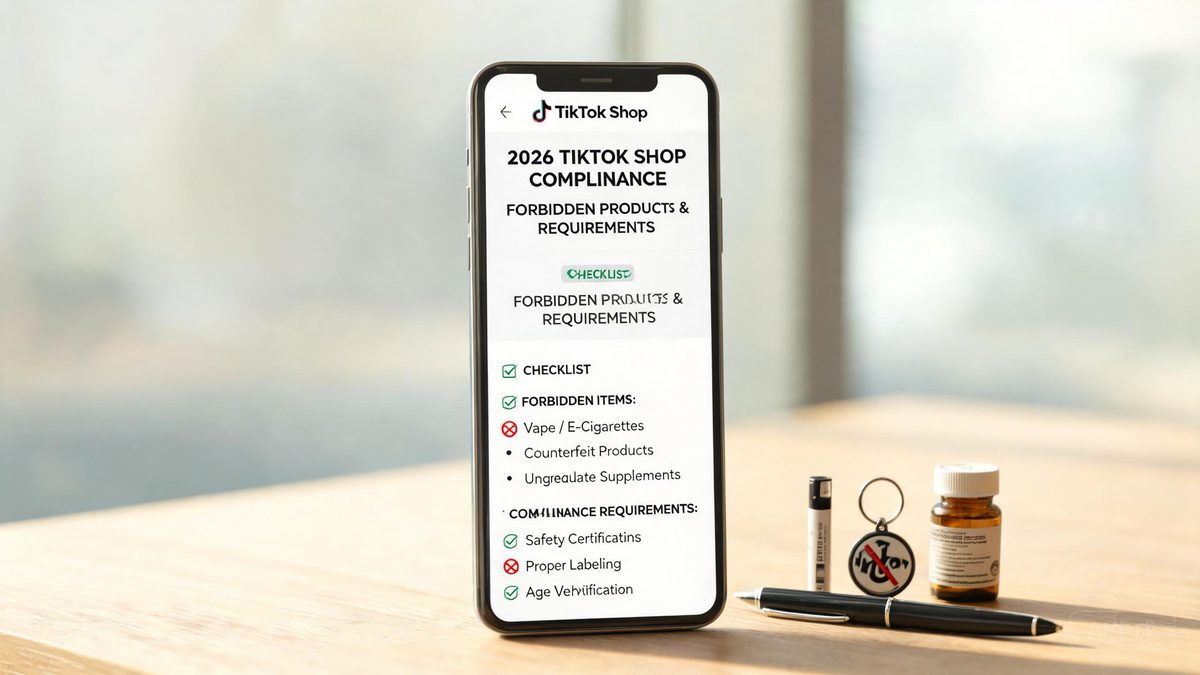
TikTok Shop prohibited products include: any product that infringes third-party intellectual property including counterfeit luxury goods, replica sneakers, pirated software and media, and unlicensed brand collaborations; weapons, firearms, ammunition, explosives, and realistic imitation firearms including gel blasters and airsoft replicas regardless of the destination country's law; illegal drugs, controlled substances, and any drug paraphernalia including items marketed for use with cannabis; adult products and explicit content, including adult toys, explicit undergarments, and adult-only subscription services, regardless of whether the product itself is legal in the destination; unsafe and adulterated food products including dietary supplements containing prescription ingredients, weight-loss products containing undeclared sibutramine or analogs, male-enhancement products containing sildenafil analogs, and bodybuilding products with DMAA or similar stimulants; medical devices making unapproved treatment or cure claims; human and animal organs, human tissue products, breast milk, and endangered wildlife products protected under CITES; uncertified standalone lithium cells shipped without UN 38.3 and without protective packaging; and any product promoted through a misleading, deceptive, or coerced live-stream sales practice. Additionally, in 2026 TikTok Shop added "unauthorized satellite television equipment" and "signal descramblers" to the global prohibited list, and added "spy cameras and covert recording devices" regardless of whether the product has a secondary legitimate consumer use case. New 2026 additions also include specific non-compliant energy-related products: certain non-graded lithium battery packs, fake solar panel efficiency claims, and illegal fuel-saving devices marketed to car owners.
Restricted Categories Requiring Pre-Approval Before Listing
TikTok Shop restricted categories that require pre-qualification for China-sourced cross-border sellers in 2026 include: food, beverage, and dietary supplements (every region requires additional factory license, product registration, and sometimes local import license or facility registration); cosmetics, skincare, hair care, and perfumes (every region requires cosmetics notification or registration documents plus Responsible Person details); baby and infant products including formula, baby food, diapers, and baby wipes (most regions require category qualification and enhanced children's product safety documents); over-the-counter topical drugs, oral care products making drug claims, sunscreens, and anti-acne products with active ingredients; contact lenses and eyeglasses with prescription lenses; medical devices and products displaying medical symbols (including band-aid products, thermometers, and blood pressure monitors that sometimes mistakenly fall under general consumer electronics in sellers' catalogs); CBD and hemp-derived products including delta-8, delta-10, HHC, and any cannabinoid products regardless of whether they are legal under state law in the US; tobacco products, heated tobacco devices, e-cigarettes, vapes, and any associated accessories; financial services products including credit cards, insurance, and loan products; cryptocurrency and NFT products; fireworks and pyrotechnics; and power banks, lithium battery cells, and standalone replacement batteries sold as individual products. Laser products above Class 2, UVC sanitizing devices, and ozone-generating air purifiers are also restricted to manual review in all regions as of Q3 2025 and remain restricted in 2026. A restricted product that is listed without category qualification can be delisted without appeal window, so it is always better to apply for category qualification and receive the approval email in writing before placing the first factory production order.
TikTok Shop Seller Center Compliance Upload Best Practices
A common TikTok Shop seller mistake is preparing all compliance documents correctly in the factory, then failing the category review because the documents were uploaded in the wrong format, the wrong order, or with missing metadata. In 2026 TikTok Shop Seller Center category review uses a combination of automated document parsing and manual reviewer sampling, so the way documents are organized, named, and packaged materially impacts pass rate. The following practical workflow applies across most cross-border regions.
First, convert all documents to searchable PDF format rather than scanned image-only PDF. The category review automation in 2026 performs text extraction on uploaded documents and compares certificate numbers, model numbers, applicant names, and test dates against public databases. Image-only scanned documents have a 30 to 40 percent higher failure rate because the parser cannot read model numbers, even when the document is otherwise valid. We recommend OCRing every scanned factory certificate and verifying OCR output against the certificate's actual text before upload, and including a one-page cover sheet inside the PDF that lists the certificate number, model number, standard tested, issue date, expiry date, and lab name in plain text. Second, always include the lab accreditation evidence together with the certificate. Many sellers upload the test report cover page only, forgetting the ISO 17025 accreditation certificate of the lab, which reviewers request separately 30% of the time. Bundling the lab accreditation page as the final page of the same PDF reduces follow-up email requests and cuts approval time by an average of 2 to 3 business days.
Third, ensure the certificate model number exactly matches the model number used in the listing title, the product SKU table, and the outer product label. Even a one-character difference (for example factory model XYZ-100 vs. XYZ-100-BK for the black color variant) will fail the automated model-number check if the test report only lists XYZ-100 without the color suffix. The correct way to handle color variants is to add a variant certificate extension letter or a factory declaration stating that the color, packaging language, or minor cosmetic change does not affect tested components, and upload that factory declaration together with the main certificate as a bundled document. Fourth, store every document under a consistent file naming convention: [Marketplace]-[Region]-[Category]-[SKU]-[DocumentType]-[VersionDate].pdf. For example, TTS-US-ELEC-SKU123-FCCPart15C-2026-08-15.pdf. Naming consistency prevents the common seller error of uploading the EU CE file into the FCC upload field by mistake, which triggers an immediate fail and adds a compliance record to the seller account even though the correct document existed.
Fifth and finally, keep a full change log of every compliance document including date received, from whom, sample identification number, test sample origin factory, and expiry date. Because TikTok Shop runs category re-audits for 90 days and 180 days after listing activation, and because product safety regulators can request audit records for up to 10 years in some jurisdictions, the sellers who survive these reviews are the ones who stored the entire chain: lab invoice, sample submission form, shipping proof of sample from factory to lab, lab certificate, and photo evidence of the tested production sample, rather than only the certificate PDF itself. Our sourcing service maintains this chain for each client order in a dedicated compliance folder with download links that remain active for at least 7 years, and we provide the folder directly to sellers who need to attach it to marketplace audit responses.
Pre-Shipment Compliance Checklist for Every TikTok Shop Shipment
Over the past 18 months of working with TikTok Shop sellers on compliance issues, we have distilled the pre-shipment compliance workflow into a 12-step checklist that a sourcing agent or factory QC team can execute for every production order before the balance payment is released. We share it here because more than 80% of the TikTok Shop listing suspensions we are brought in to fix could have been avoided if the seller had run this checklist at the factory before the shipment left China.
Step 1. Confirm target marketplace(s) for the product and pull the applicable compliance matrix: certification requirements, label requirements, and restricted category status for each region. Step 2. Verify factory certificate file against lab public database (FCC ID database, EU CE NANDO database, UKCA database, SIRIM/SASO public portals, etc.), confirm certificate number exists and is valid, confirm model number and factory name match the actual production exactly, and note expiry date. Step 3. Pull physical sample of the actual mass production unit, not a separately supplied golden sample, and photograph certification marks, country-of-origin mark, warning labels, textile care labels, and batch numbers in both close-up and full-product shots. Step 4. Photograph retail packaging from all 6 sides plus open-box to confirm importer address, Responsible Person address, certification marks, warning text, and ingredient or fiber content label. Step 5. Photograph master carton labels to confirm FNSKU/TikTok SKU barcode, country-of-origin statement, HS code, shipping marks, and handling symbols. Step 6. Review user manual for in-language requirements, GPSR safety information, battery disposal symbols, and WEEE/REACH notice language for EU/UK. Step 7. For electronics, verify battery cell model, UN 38.3 test summary, MSDS, and compare to the battery specification on the lab certificate. Step 8. For children's products, confirm tracking labels on both product and packaging, confirm CPC / EN 71 and warning pictograms are legible. Step 9. For food-contact, confirm simulants tested match intended use claims on listing and packaging. Step 10. For cosmetics, confirm batch number on each unit matches PIF/CPNP notification file and Responsible Person address on packaging. Step 11. Confirm HS classification for the target destination, compare declared customs value to factory proforma invoice, and calculate landed cost with de minimis and Section 301 status modeled explicitly. Step 12. Package all documents into a single compliance zip bundle, save with the batch number and order number in the filename, and email to the seller together with a one-page summary sheet showing expiry dates and document gaps before balance is authorized for release to the factory. This 12-step checklist takes an average of 90 minutes per order and prevents the vast majority of the suspension scenarios we see in practice every week.
How a China-Based Sourcing Agent Reduces TikTok Shop Compliance Risk
The four compliance layers we reviewed in this guide (certification documents, physical labels, import customs, and marketplace policy) all share the same characteristic: the critical work has to happen on the ground in China, at the factory, at the pre-production sample stage, during production, and at the pre-shipment inspection stage before the goods leave the port. Once a container has left China, or once individual parcels have been dispatched to the TikTok Shop integrated logistics cross-border hub, correcting a certification error, missing label, or wrong HS classification becomes 10 to 20 times more expensive than correcting it at the factory before shipment. This is the core economic value of working with a China-based sourcing agent for TikTok Shop inventory: the agent is physically present in the manufacturing region during the critical decision points, speaks the factory's language, understands the documentation chain, and can hold the factory accountable for compliance before the final payment transfers.
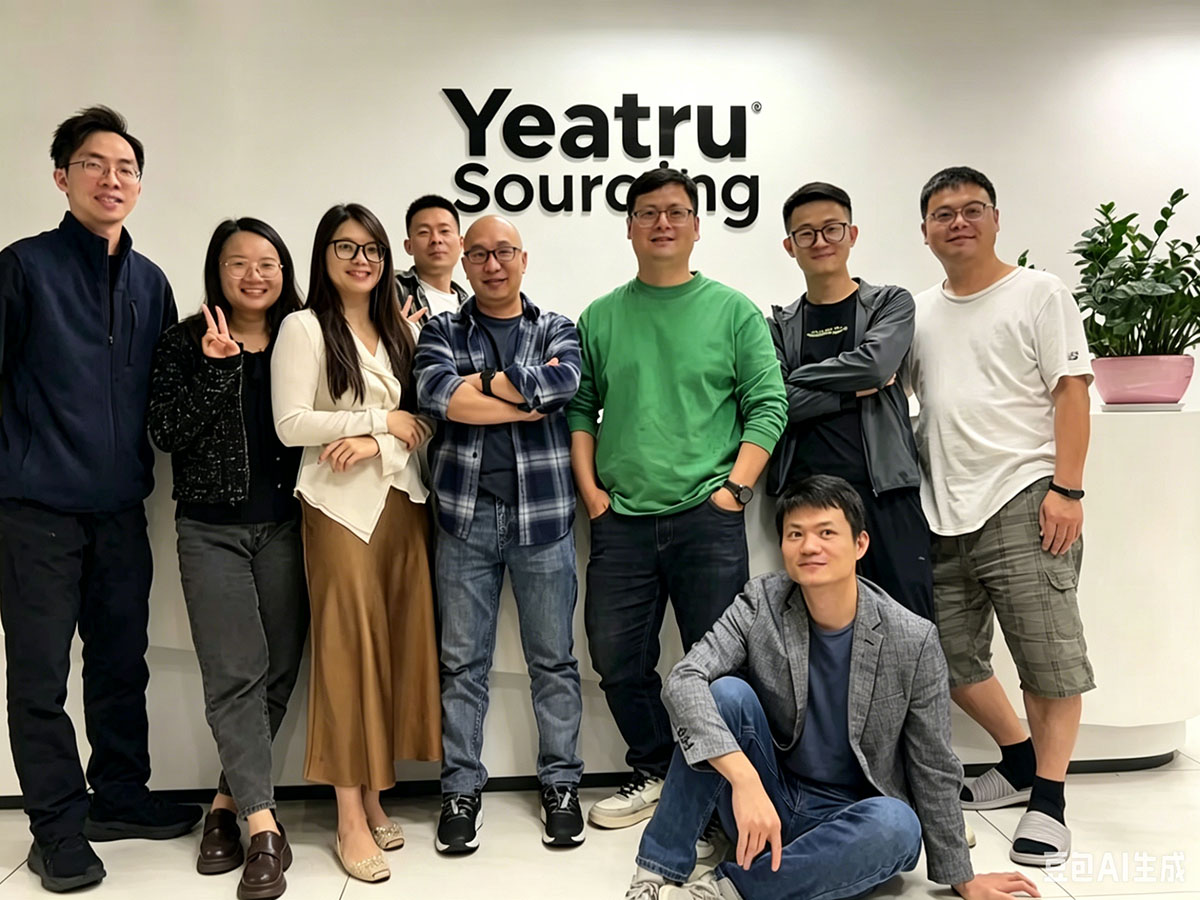
Our sourcing team at Yeatru Sourcing typically reduces TikTok Shop seller compliance failures by approximately 85% compared to sellers who buy directly from Alibaba factories without on-ground support. We achieve this through six practical mechanisms: first, we pre-qualify factories before we even send them a client RFQ, and we reject factories with a history of Photoshop certificates, inconsistent test reports, or repeated compliance failures in our own internal database of 75,000+ verified suppliers. Second, we issue a written compliance specification sheet together with the purchase contract, which defines exactly which certifications, which standards, which marks, which labels, and which documents the factory must deliver, and makes non-compliance a contractual defect allowing the buyer to reject the batch without penalty. Third, we coordinate lab sample submission directly with accredited labs rather than relying on the factory to submit samples alone; this eliminates the factory practice of sending a high-quality hand-built sample to the lab and then cutting corners on mass production materials. Fourth, during production we run at least one in-line inspection at 20-30% production completion specifically checking for label placement and marking, which gives time to correct printing errors before the full production is packed. Fifth, at 100% completion we run final AQL 2.5 pre-shipment inspection that includes the full 12-step compliance checklist we published earlier in this guide, with 50+ point photographic evidence per inspection report. Sixth and finally, we assemble the full compliance zip bundle for every batch and deliver it to the seller together with the inspection report before the balance is approved for release to the factory, rather than chasing documents after the shipment has already departed Ningbo or Shanghai port.
The second reason sourcing agents reduce risk is specialization. A sourcing agent that works with 200+ TikTok Shop sellers across 50+ countries sees the same compliance mistakes repeat across product categories and marketplace regions, and can pre-empt them for the next seller before the mistake happens. For example, when TikTok Shop UK cosmetics team announced in Q1 2026 that they would start verifying UK Responsible Person registrations against UKCPNP during random audits, we already had the compliance specification sheet updated for all our UK cosmetics clients and notified all pending production factories to add the new label layout before we approved balance release. Sellers who were managing their own factories individually often discovered the new requirement only when their first listing failed the random audit sweep in late April, which caused a 2-3 week listing freeze for sellers who had to reprint packaging and re-coordinate UK RP registration. Specialization creates an information advantage on policy changes that translates directly into fewer suspensions and less time spent on compliance fire-fighting.
The third reason is leverage. A single TikTok Shop seller placing a single production order has limited negotiation leverage when a factory says "certificate is okay, just upload it". If the factory refuses to reprint labels or re-test a sample, the seller's only options are to accept the risk, cancel the order and lose their deposit, or start arbitration in a Chinese court system most foreign sellers do not understand. A sourcing agent who places 20, 50, or 100 orders through the same factory every year has far more leverage. The factory will re-label 10,000 retail boxes without charging the seller, re-test a sample at their own cost, or rework a defective batch because they know the sourcing agent's future order volume is worth far more than the short-term cost of the correction. This leverage effect is the least discussed but one of the most financially valuable outcomes of using a professional sourcing partner for regulated-category TikTok Shop inventory.
2026 TikTok Shop China Sourcing Compliance FAQs
These eight frequently asked questions cover the most common compliance issues TikTok Shop cross-border sellers encounter when sourcing products from China in 2026. The answers are based on real seller cases from Yeatru Sourcing client projects across the US, UK, EU, Singapore, Malaysia, Philippines, Indonesia, Thailand, and GCC markets.
1. What documents does TikTok Shop require for cross-border listings from China?
TikTok Shop cross-border listings from China typically require: business license of the export entity, product certification reports (CE, FCC, CPC, RoHS, FDA food-contact depending on category), test reports from an ISO 17025 accredited lab, children's product CPC for US, responsible person information for EU/UK cosmetics and REACH, country-of-origin label evidence, a product compliance declaration signed by the seller, and sometimes MSDS for battery or cosmetic products. Requirements vary by shop region and category, so confirm via the TikTok Shop Seller University policy center for your active marketplace.
2. What products are prohibited or restricted on TikTok Shop in 2026?
TikTok Shop 2026 prohibits: weapons and imitation weapons, counterfeit and replica goods, undeclared adult products, illegal drugs and paraphernalia, unsafe nutritional supplements with prescription ingredients, uncertified lithium batteries shipped alone, products violating intellectual property, and misleading weight-loss or medical devices. Restricted categories requiring pre-approval include: food and beverage, cosmetics and skincare, dietary supplements, medical devices, baby products, toys for children under 3, power banks and cells, laser items, and CBD or hemp-derived products regardless of legal status in the destination country.
3. Which certifications do I need for electronics shipped from China to TikTok Shop US?
For electronics shipped from China to TikTok Shop US you need, at minimum: FCC Part 15B or 15C (EMI/intentional radiator) certification or Supplier's Declaration of Conformity where allowed, UL/ETL or equivalent NRTL safety test evidence for any product sold with a wall adapter or containing a lithium battery, FCC ID for wireless/Bluetooth/WiFi products, a children's product CPC issued by a US-registered importer if the product is primarily intended for children 12 and under, and UN 38.3 transport documents plus MSDS for lithium batteries and battery-powered items.
4. Do I need CE marking on TikTok Shop listings shipping to the UK and EU?
Yes. TikTok Shop EU listings require CE marking for products within CE scope (electronics, toys, PPE, machinery, pressure equipment, gas appliances, and REACH-regulated chemicals). UK listings require UKCA marking, with a transition-period tolerance for CE-only goods ending in December 2024 in most categories, after which UKCA becomes mandatory in its place. A valid Technical File and EU or UK Responsible Person contact must be documented and provided to TikTok Shop on request.
5. What labeling rules apply on TikTok Shop for China-sourced goods?
China-sourced goods on TikTok Shop must, for the US, display country-of-origin (Made in China) permanently on the product, its retail packaging, and any FBA or TikTok warehouse carton label. For EU/UK, the CE or UKCA mark, importer/responsible person name and address, batch number, and in-language warnings must appear on packaging. For toys, children's products, and food-contact items, ASTM, CPSIA, EN 71, or FDA symbol warnings must also be printed at the correct font size and contrast. Care instruction labels are required for apparel and textile categories globally.
6. How do import duties and de minimis thresholds affect TikTok Shop sellers in 2026?
Import duties apply when a shipment exceeds the destination country's de minimis threshold. In 2026 the US de minimis is USD 800 per person per day; sellers using small-parcel direct mail often stay under this value to avoid formal entry duties, but it does not exempt products from certification requirements. The EU de minimis for duties is EUR 150 (VAT applies above EUR 22 via IOSS for marketplace-facilitated shipments). UK de minimis for duties is GBP 135, above which full import VAT and duties apply at point of entry. TikTok Shop Global Fulfillment programs often remit VAT through the marketplace IOSS/VOEC schemes, but sellers still hold legal responsibility for correct HS classification and duty rate reporting.
7. Why do TikTok Shop listings get suspended after sourcing from China, and how can a sourcing agent prevent it?
TikTok Shop listings sourced from China are most often suspended for: missing or fake certificates (especially FCC, CE, CPC), undeclared lithium batteries, missing country-of-origin labels, incorrect HS classification, counterfeit or copyright-infringing designs, unapproved restricted-category listings, or a customer return spike caused by uninspected factory defects. A sourcing agent prevents suspension by auditing certificates against accredited labs before payment, running pre-shipment AQL 2.5 inspection that includes label and packaging review, confirming restricted-category pre-approval status before production, and providing a complete compliance document package the seller can upload directly into TikTok Shop Seller Center.
8. Can a sourcing agent in China issue TikTok Shop compliance certificates?
No. Only third-party ISO 17025 accredited testing labs can issue formal CE, FCC, CPC, RoHS, FDA, REACH, or UKCA test reports and certificates. A sourcing agent cannot issue certificates themselves, but they can coordinate sample submission to a verified lab, review the certificate against applicable standards, keep the compliance trail with lab invoice and sample data, and verify that the factory builds mass production to the same specification the tested sample was built to. This chain is what TikTok Shop category review actually checks.
Conclusion: Compliance as Competitive Advantage in 2026 TikTok Shop
In the early TikTok Shop years, sellers won primarily on speed: who found a trending product first, who sourced it from the cheapest factory, who launched video ads before the category saturated. In 2026, TikTok Shop has matured past that phase, and the competitive advantage has shifted from raw speed to predictable, repeatable compliance. The sellers who grow fastest this year and next are not the ones taking compliance shortcuts to launch two days earlier; they are the sellers who have integrated a written compliance checklist into every product sourcing decision, and who build certification and label cost into the landed cost model before the first video is shot. A listing that stays live for twelve months, passes every random category re-audit, and survives a viral spike without getting disconnected from the affiliate system will generate two to five times more lifetime revenue than a cheaper-sourced listing that lives for six weeks and gets suspended before the ad spend is recovered.
The second strategic insight is that compliance is not a one-time cost but an investment that compounds across product launches, marketplace regions, and seller account reputation. A seller who builds a verified compliance chain on their first kitchenware TikTok Shop listing can reuse the supplier vetting, the lab relationship, the HS classification, the label template, and the compliance folder structure for their twentieth kitchenware listing at a fraction of the time and cost. A seller account with zero compliance suspensions and zero fake-certificate flags moves through restricted-category qualification applications faster than accounts with a history of compliance issues, because TikTok Shop's internal risk scoring system weights past seller compliance performance. For cross-border sellers who plan to run 20+ SKUs across multiple regions, building a clean compliance record today is economically equivalent to building marketplace account equity that is hard for new competitors to replicate.
That said, building and maintaining a compliance-ready supply chain from China is not something most TikTok Shop sellers can do on their own while also managing video content, influencer marketing, customer service, marketplace store operations, and advertising spend. The translation gap between TikTok Shop's English-language policy updates and Chinese factory sales teams, the sheer number of region-specific regulations that change every quarter, and the need for on-ground factory inspection at the exact moment when labels are applied and certificates are issued all point to the same practical conclusion: TikTok Shop sellers scaling into medium and high volume need a trusted on-ground partner in China who owns compliance end to end, just as they would have an in-house compliance manager if they were operating domestically.
If you are launching new TikTok Shop SKUs from China in 2026, or if you have existing listings that you want to proactively audit before the next category sweep, the next step is to prepare a product sheet listing your SKU, target marketplace regions, current factory source, and any existing certificates, and request a compliance review. As a Yiwu-based China sourcing agent with 14+ years of combined experience, 200+ clients in 50+ countries, and an existing TikTok Shop seller-specific compliance workflow, Yeatru Sourcing helps TikTok Shop sellers at every stage: initial category qualification, supplier shortlisting, sample and lab coordination, AQL 2.5 pre-shipment inspection, label audit, full document bundle preparation, and even TikTok Fulfillment-ready packaging and consolidation. Our standard service fee starts at 3% Order Management for existing supplier relationships and 4% to 8% tiered Full Sourcing for new product development, with minimum fee USD 50 per order. Request a free quote today with your product sheet and target regions, and we will return a compliance gap analysis and sourcing proposal within one business day.
Scaling TikTok Shop inventory from China without compliance surprises? Yeatru Sourcing runs pre-production spec sheets, AQL 2.5 inspection with 12-step label and certification audit, lab-sample coordination, and a complete upload-ready document bundle for every order. Get a free quote and see the compliance checklist before you pay the factory balance.
The difference between a TikTok Shop SKU that stays live through every trend spike and one that dies in a compliance suspension is rarely the cost of the factory or the quality of the video creative. It is the quality of the compliance work done before the listing was ever created. The four layers of marketplace certification, physical product labeling, import customs classification and duties, and prohibited and restricted category policy all need to line up on the same product, and the only practical place to verify all four is on the ground in China during production, not after the shipment has left. Use the 12-step pre-shipment compliance checklist in this guide, verify certificates against lab databases not only factory emails, and when you are ready to scale, partner with a sourcing agent who has already done this across hundreds of TikTok Shop products. That combination is how you turn TikTok Shop compliance from a risk to be managed into a structural advantage that helps you outlast the sellers who skip the documents, cut the label corners, and get suspended when the next compliance sweep hits.