What Is Section 301?
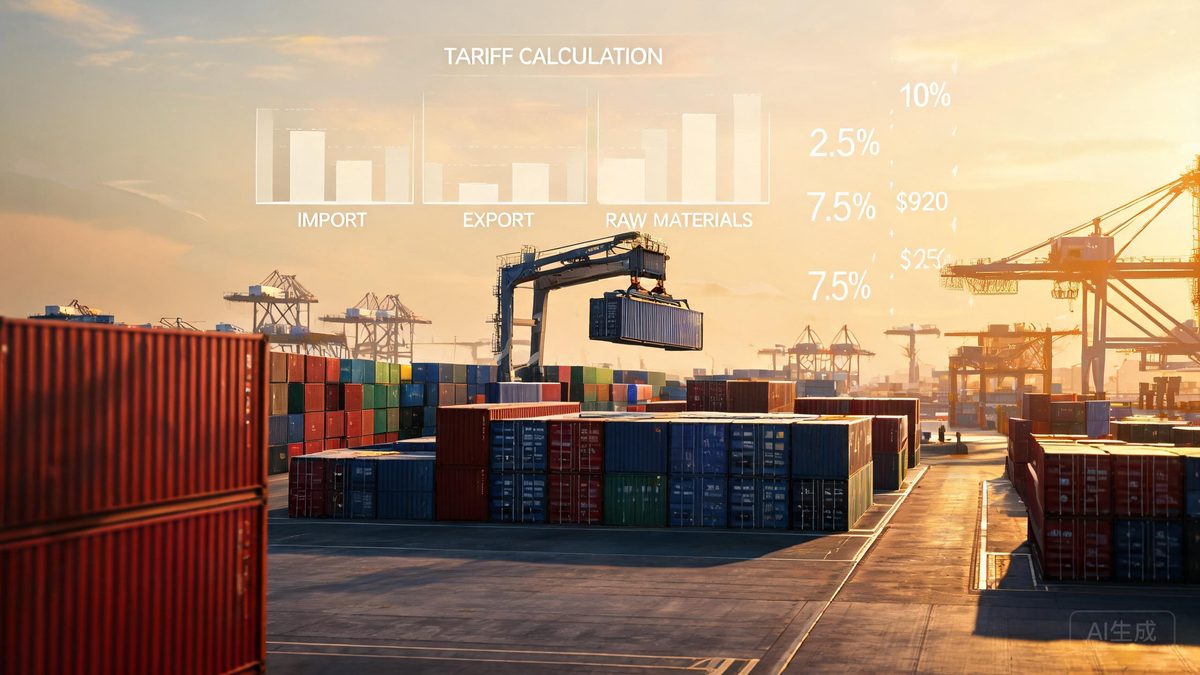
Section 301 is the part of the US Trade Act of 1974 that lets the United States Trade Representative (USTR) impose additional import duties — separate from, and in addition to, the normal Most-Favored-Nation (MFN) Harmonized Tariff — when a trading partner is found to engage in unfair trade practices. Against China, USTR found forced technology transfer and IP practices unfair in 2018, triggering four waves of tariffs (Lists 1, 2, 3 and 4) on roughly $370B of Chinese goods at 7.5%–25%. Those tariffs were never repealed; the 2024 Biden review raised key strategic products up to 100%. In 2026, Section 301 remains one of the single largest cost line-items for any importer buying from China, and it applies whether you ship by sea freight, air, or courier.
Section 301 Rate Table: List 1 to 4B in 2026
Section 301 tariffs were rolled out in four lists between July 2018 and September 2019. The lists are defined by 8-digit HTS subheadings, so two products that look identical to a buyer can sit on different lists. All four lists remain in force in 2026.
| List | Section 301 Rate | Effective Date | Import Value | Product Scope |
|---|---|---|---|---|
| List 1 | 25% | Jul 6, 2018 | ~$34B | Industrial machinery, autos, aerospace parts |
| List 2 | 25% | Aug 23, 2018 | ~$16B | Semiconductors, plastics, chemicals, railway equipment |
| List 3 | 25% (raised from 10% on May 10, 2019) | Sep 24, 2018 | ~$200B | Broad consumer and industrial goods, furniture, apparel inputs |
| List 4A | 7.5% (reduced from 15%) | Sep 1, 2019 | ~$112B | Remaining consumer goods; cell phones & laptops excluded |
| List 4B | Suspended (planned 15%); select items raised 2024–2026 | Planned Sep 2019, deferred | ~$160B residual | Remaining consumer electronics — cell phones & laptops exempt; EVs/semis/batteries moved up via 2024 increases |
Together, Lists 1–4 cover roughly $370B of Chinese imports. Goods not on any list pay only the normal MFN duty — which is why correct classification is worth more than almost any negotiation discount.
2024 Biden Increases on Strategic Products
In May 2024, USTR completed a statutory four-year review of Section 301 and raised rates on a set of strategic "industrial policy" categories. These hikes stack on top of the existing list rate and phase in through 2026.
| Product (HS chapter) | Old Section 301 Rate | New Rate | Effective |
|---|---|---|---|
| Electric vehicles (8703.80 / 8703.90) | 25% | 100% | 2024 |
| Semiconductors (8541 / 8542) | 25% | 50% | 2025 |
| Solar cells & modules (8501.72 / 8501.73 / 8541.43) | 25% | 50% | 2024 |
| EV lithium batteries & parts (8507.60) | 7.5% | 25% | 2024 |
| Non-EV lithium batteries & parts | 7.5% | 25% | 2026 |
| Steel & aluminum | 0%–7.5% | 25% | 2024 |
| Critical minerals (e.g. cobalt, nickel sulfates) | 0% | 25% | 2024 |
The pattern matters: consumer electronics like cell phones and laptops were deliberately left at their low or zero Section 301 rate, while clean-energy and semiconductor inputs were targeted. If your product touches batteries, solar, or chips, treat the higher rate as permanent.
How to Look Up Your HS Code's Section 301 Rate
The single most important step is finding the correct 10-digit HTSUS code for your product, because Section 301 lists attach to the 8-digit subheading. Follow this sequence:
- Classify to 10 digits. Use the USITC Harmonized Tariff Schedule search. Borderline goods (e.g., "smart" vs. "non-smart", toy vs. electronic) often land on different 8-digit subheadings with different list status.
- Read the HTS column 1 (MFN) rate. This is your baseline duty — typically 0%–7% for most consumer goods.
- Cross-check the USTR Section 301 lists (Annex A–E). Match your 8-digit subheading to List 1, 2, 3, 4A or the 2024 increase notice. The USTR lists and the CBP ACE HTS tool both flag Section 301 surtaxes.
- Check the exclusion status. Search the USTR Section 301 exclusions roster by 10-digit code — if your exact code is on an active exclusion, the 301 duty is waived for that period.
- Get a binding ruling if it's borderline. For a high-value or recurring import, request a CBP binding ruling on classification; it locks in your rate and removes guesswork.
For the full classification walkthrough, see our HS code lookup guide, and for what happens at the border, our China customs clearance overview.
Landed-Cost Worked Example: A $20,000 Shipment at 25% Section 301
Importers routinely underestimate total duty because Section 301 stacks on the MFN rate, and there are two ad-valorem fees on top. Here is the math for a $20,000 customs (entered) value shipment of a product with MFN 3.5% and Section 301 25%.
Stacking order: MFN duty first → Section 301 duty on the same customs value → Merchandise Processing Fee (MPF, 0.3464%) → Harbor Maintenance Fee (HMF, 0.125%). Both the MFN and Section 301 duty are calculated on the entered value, not on each other.
| Cost component | Rate | Amount |
|---|---|---|
| Customs (entered) value | — | $20,000.00 |
| MFN duty (HTS column 1) | 3.5% | $700.00 |
| Section 301 duty | 25% | $5,000.00 |
| Merchandise Processing Fee (MPF) | 0.3464% | $69.28 |
| Harbor Maintenance Fee (HMF) | 0.125% | $25.00 |
| Total duty & fees | — | $5,794.28 |
| Total landed cost (ex-freight) | — | $25,794.28 |
Section 301 alone accounts for $5,000 of the $5,794 duty burden — about 86%. That is why classifying off the 25% list, or sourcing outside China, can move unit margin more than any factory price cut. Model your own numbers in our landed-cost calculator before you place the PO.
Mitigation Strategies: Legal Options & Their Tradeoffs
- Apply for a Section 301 exclusion. If USTR opens a window for your product category, you can request an exclusion by showing the goods are not strategically important and no non-China substitute exists. Tradeoff: most consumer categories are not eligible, decisions take months, and exclusions are time-limited and frequently non-renewed.
- Re-examine HTS classification. If your product legitimately fits an 8/10-digit code that is off the 301 lists, you owe no Section 301 duty. Get a CBP binding ruling to lock it in. Tradeoff: deliberate misclassification is customs fraud — penalties, plus retroactive duty plus interest — so this only works for genuine classification disputes.
- Use a Foreign-Trade Zone (FTZ) or bonded warehouse. Defer or reduce duty; goods re-exported or destroyed in the zone avoid the 301 duty entirely, and you can elect the lower of the input or finished-product rate. Tradeoff: requires FTZ status and warehousing cost; goods that enter US commerce still pay the duty.
- Relocate genuine production outside China. Sourcing from Vietnam, India, or Mexico removes Section 301 entirely if the country of origin legitimately changes through substantial transformation. Tradeoff: new supplier qualification, higher unit cost, longer lead time, and capacity limits — plan 3–6 months. See our step-by-step import guide for the framework.
- Absorb or pass through the duty. The simplest path: price the 301 duty into your landed cost and either absorb it in margin or pass it to the end customer. Tradeoff: erodes competitiveness vs. rivals sourcing elsewhere; viable only if your category tolerates the price increase.
- Do not transship. Routing China-origin goods through Vietnam or Mexico and relabeling them to hide origin is illegal without substantial transformation. USCBP runs origin audits and anti-circumvention inquiries; penalties include seizure, fines up to the goods' domestic value, and loss of import privileges.
Pick the strategy by Incoterm and shipment value: exclusions and HTS rulings suit recurring high-volume lines; FTZ suits goods you partly re-export; relocation suits categories where the 301 rate (e.g. 50–100%) makes China uneconomic.
How Yeatru Helps With Section 301 Exposure
Yeatru Sourcing audits the tariff exposure of every China order before you commit. Our team will:
- Confirm your product's 10-digit HTS classification and flag its Section 301 list status and MFN rate
- Build a landed-cost model including MFN + Section 301 + MPF + HMF so your unit margin is honest before the PO
- Screen products for open USTR exclusion windows and prepare the filing paperwork where eligible
- Advise on FTZ / bonded-warehouse routing and on genuine production relocation to Vietnam, India, or Mexico when the 301 rate is uneconomic
- Coordinate DDP shipping with a US broker so duty is paid correctly and entry is clean via our customs clearance process
Frequently Asked Questions
1. What is a Section 301 tariff?
Section 301 of the US Trade Act of 1974 lets the United States Trade Representative impose extra import duties on top of the normal Most-Favored-Nation tariff when a trading partner is found to engage in unfair trade practices. Against China, it added 7.5%–25% (now up to 100%) additional duty on roughly $370B of imports starting in 2018.
2. Is Section 301 still in force in 2026?
Yes. The List 1, 2, 3 and 4A tariffs remain in force in 2026, and the 2024 Biden increases — EVs to 100%, semiconductors to 50%, solar to 50%, batteries to 25% — phase in through 2026. There is no general repeal of Section 301 on China.
3. How do I find my HS code's Section 301 rate?
Get your 10-digit HTSUS code, then check the 8-digit subheading against the USTR Section 301 product lists (Annex A–E) or the CBP ACE HTS search. Each list has its own rate (7.5%, 25%, 50% or 100%), so two similar products can face very different duties — see our HS code lookup guide.
4. Can I get a Section 301 exclusion?
Only for certain product categories during open USTR exclusion windows. Most original exclusions expired at the end of 2023 and 2024. To qualify you must show the goods are not strategically important and that no non-China substitute is reasonably available.
5. What is transshipment and is it legal?
Transshipment is routing China-origin goods through a third country such as Vietnam or Mexico to hide their true origin and dodge Section 301. It is illegal unless the goods undergo a substantial transformation there. USCBP enforces via origin audits and anti-circumvention inquiries; penalties include seizure, fines up to the goods' domestic value, and loss of import privileges.
6. Do Section 301 tariffs apply below the de minimis threshold?
Since the United States ended the $800 de minimis exemption in 2025, virtually all commercial imports from China must now be formally entered and are dutiable. That means Section 301 applies regardless of shipment value — plan for duty even on small test orders.
Conclusion
Section 301 is not a negotiating footnote — in 2026 it adds 7.5%–100% on top of MFN duty for roughly $370B of Chinese imports, with strategic products like EVs, semiconductors, solar, and batteries pushed to 50%–100%. The duty you owe is decided by your 8-digit HTS subheading, the list it sits on, and whether an exclusion is open — so classify early, model the full landed cost (MFN + Section 301 + MPF + HMF), and choose mitigation honestly: exclusion, binding HTS ruling, FTZ, or genuine relocation outside China. Send Yeatru your product and HS code for a free Section 301 exposure check — we'll confirm your rate, build the landed-cost model, and tell you within 24 hours whether to absorb, exclude, or restructure.