What Is a China Inspection Report?
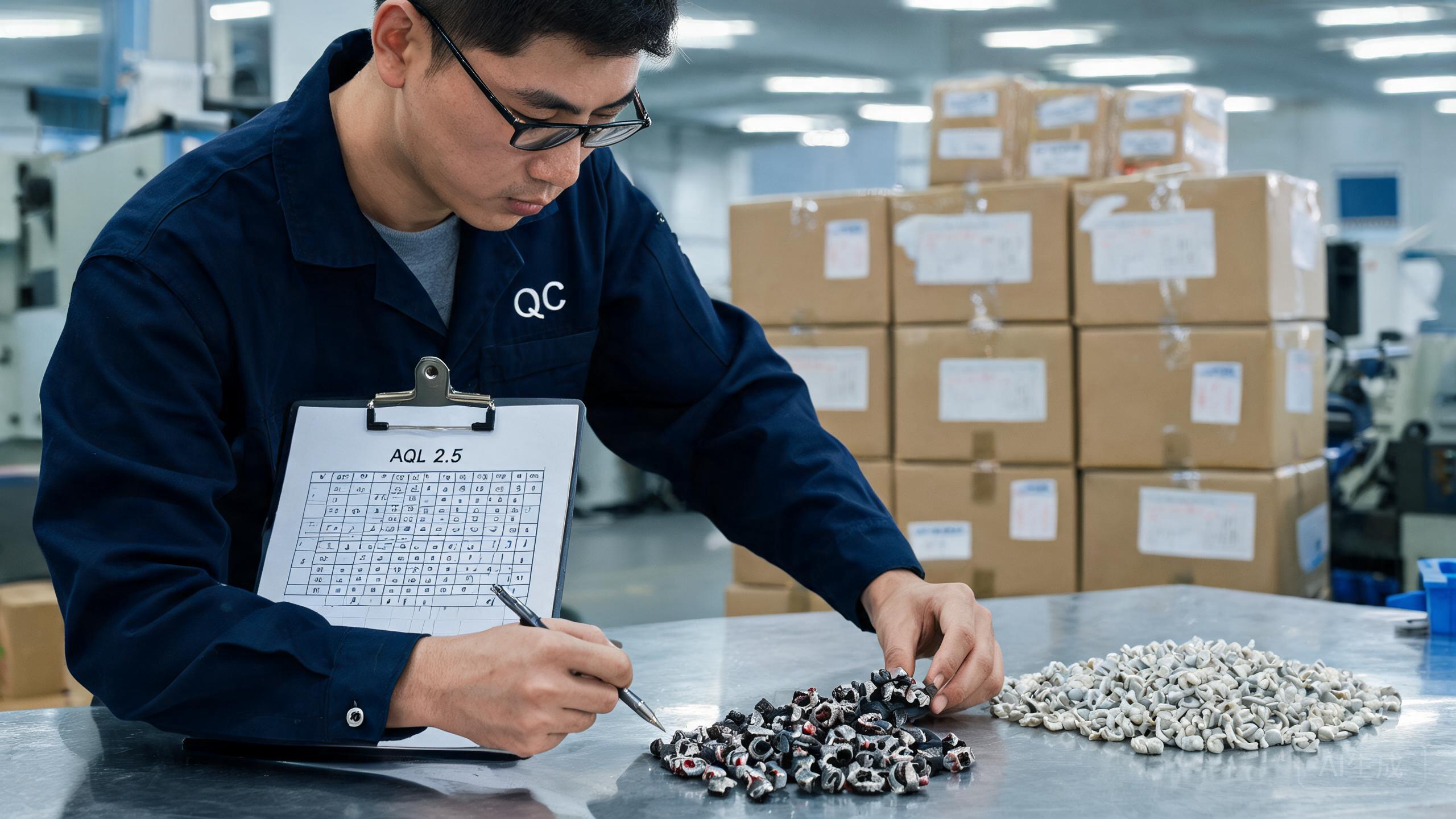
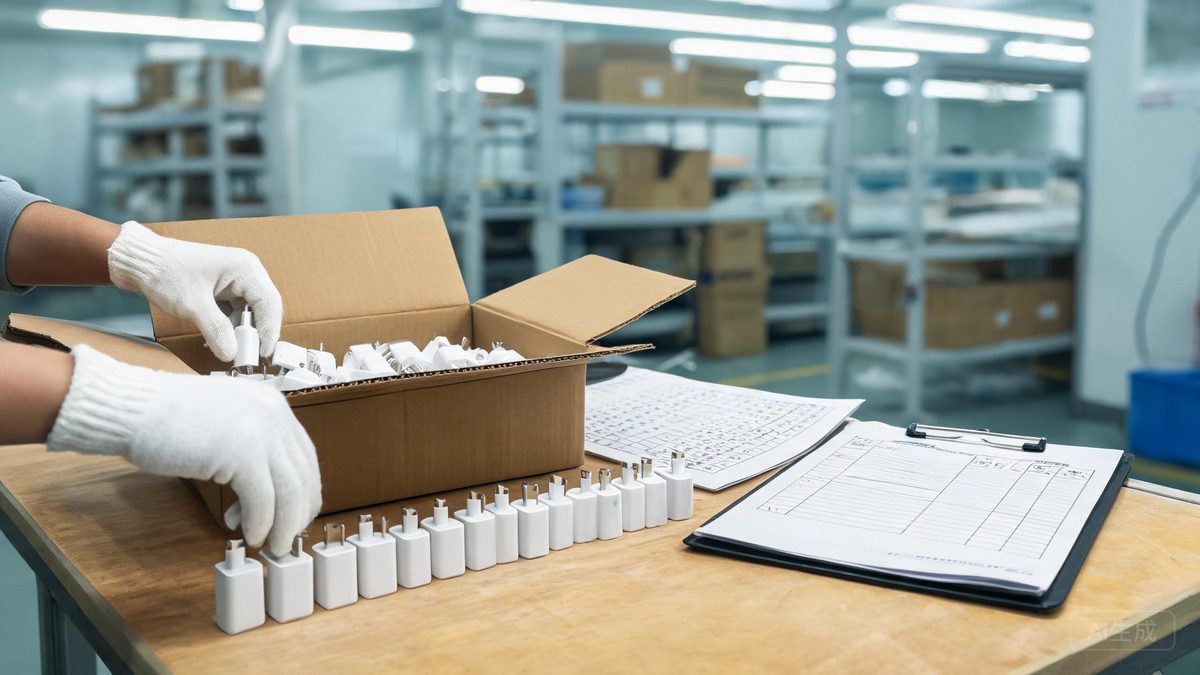
A China inspection report is the written record a QC inspector produces after physically sampling a production lot at the factory, usually during a pre-shipment inspection (PSI). It states the lot size, the sample size (n) drawn under ISO 2859-1 / ANSI Z1.4, the AQL levels (default 2.5 major / 4.0 minor / 0 critical), the defect count in each class, the accept (Ac) versus reject (Re) comparison, dated photo evidence, and a final Pass / Conditional / Fail verdict. It is a contract deliverable that releases or withholds your balance payment — not a marketing PDF.
The 12 Sections of a Standard Inspection Report
A usable report is built from 12 sections. Before you read the verdict, confirm that all 12 exist and that each is backed by evidence. The table below lists each section, what to verify, and the warning sign that it is weak or missing.
| # | Report Section | What to Verify | Weak / Missing Sign |
|---|---|---|---|
| 1 | Header & order data | PO number, factory name and address, lot size, inspection date, inspector ID | No lot size or inspector identification |
| 2 | Quantity verification | Cartons counted vs proforma invoice; inner-box quantities opened | "Quantity accepted as stated" with no carton count |
| 3 | Packaging & shipping marks | Carton strength, marks, barcode scan, tape seal | No carton drop or stack photo |
| 4 | Labeling & compliance | Country of origin, warnings, language, barcode match | No label photographs |
| 5 | Appearance & workmanship | Finish, print registration, stitching, color consistency | "No defects observed" with zero photos |
| 6 | Dimensions & weight | Readings against spec tolerance (e.g. ±1 mm, ±5 g) | No caliper or scale readings shown |
| 7 | Function tests | Button, battery, leak, torque, assembly tests performed | Function marked "OK" with no test list |
| 8 | Safety tests (critical) | Sharp edges, small parts, voltage, phthalates, drop test | Safety marked "N/A" on a relevant product |
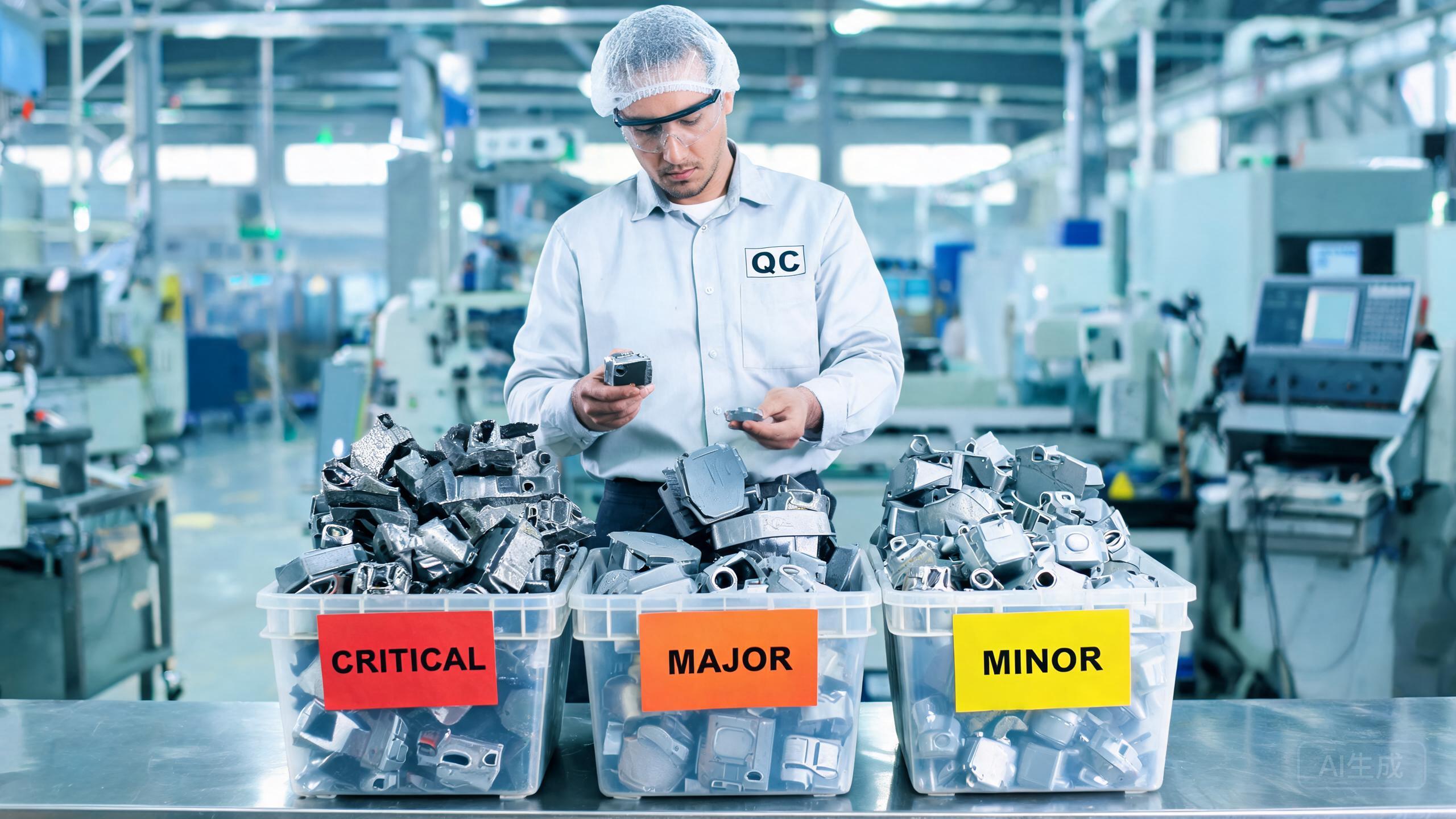
| 9 | Defect classification | Each defect tagged critical / major / minor with count and location | Vague wording such as "some cosmetic defects" |
| 10 | AQL sampling table | Lot size, inspection level, code letter, sample size n | No code letter and no n |
| 11 | Ac/Re verdict per class | Defect counts compared with the correct Ac and Re numbers | Counts given but no Ac/Re comparison |
| 12 | Photo & video evidence | Dated photos of every defect class plus the AQL card | Zero photos, or reused stock images |
If sections 10 and 11 are present but section 12 is empty, treat the report as unverified. Half of the disputes we handle start exactly there — a clean verdict with no photographic proof. Our pre-shipment inspection guide covers how the on-site check itself should be run.
How AQL Sampling and Ac/Re Verdicts Work in the Report
Almost all consumer-goods inspections run a single sampling plan at General Inspection Level II. The inspector looks up the lot size, reads off a code letter, and pulls that many units at random. Each defect class is then compared with its Ac (accept) and Re (reject) numbers. This is the single most important math in the report, and the most common place factories and lazy inspectors cut corners.
| Lot Size | Code Letter | Sample Size (n) | AQL 2.5 Major: Ac / Re | AQL 4.0 Minor: Ac / Re |
|---|---|---|---|---|
| 151 – 280 | G | 32 | 1 / 2 | 3 / 4 |
| 281 – 500 | H | 50 | 2 / 3 | 5 / 6 |
| 501 – 1,200 | J | 80 | 5 / 6 | 7 / 8 |
| 1,201 – 3,200 | K | 125 | 7 / 8 | 10 / 11 |
| 3,201 – 10,000 | L | 200 | 10 / 11 | 14 / 15 |
| 10,001 – 35,000 | M | 315 | 14 / 15 | 21 / 22 |
Critical defects run AQL 0 — Ac = 0, Re = 1 — so one sharp edge, one live contact, or one accessible small part on a child's product fails the entire lot. The inspector must also draw the sample randomly across the whole stack, not from the top cartons or the newest output. When you see a report for an 8,000-unit lot quoting n = 32 (code letter G), the sample is roughly six times too small and the result means almost nothing.
The 8 Red Flags That Should Make You Reject a "Pass" Report
Most bad reports are not forged — they are thin. Here are the eight red flags we screen for on every report we review for clients.
- No dated photos of each defect class. A verdict without a timestamped photo of the actual defects cannot be enforced at the factory door or in a claim.
- Sample size below the ISO 2859-1 requirement. An 8,000-unit lot needs n = 200. If the report shows n = 32 or n = 50, the inspector either under-sampled or the sample plan was never applied.
- Vague defect classification. "Cosmetic defects present" is not a class. Every defect must be tagged critical, major or minor — see defect classification.
- Sampling only from top or recent cartons. If every inspected unit came from the last hour of production, the check missed the early-shift output where substitution and worn tooling show up.
- No approved golden sample comparison. Without the signed golden sample on the table, "matches spec" is the inspector's opinion, not a measurement.
- A Pass verdict with no Ac/Re numbers. If the report says Pass but never shows the sample size, code letter, counts and limits, there is nothing to audit.
- Function and safety tests marked "N/A". On electronics, toys, food-contact or children's goods, skipped safety testing is the single most expensive gap — it becomes a recall risk.
- Unverifiable inspector or agency. No inspector name, no agency stamp, no sign-off, and a 900-carton inspection completed in under two hours. Ask for the work papers and the on-site time log.
If two or more of these appear, do not release the balance on the strength of the report. Request a re-issue or a second inspection before the cartons leave the factory.
Pass vs Conditional vs Fail: What Each Verdict Really Means
The final verdict is a formula, not a feeling. Match the report's verdict to the numbers and to your own defect sheet before you act.
| Verdict | What Triggers It | Your Next Action |
|---|---|---|
| Pass | Every defect class at or below its Ac number; all tests performed | Release the balance and book the shipment. Retain the report and photos as your baseline. |
| Conditional | Minor defects over limit, or admin/photo gaps; no critical or major Re breach | Require minor rework or a documented credit; re-verify a photo set before loading. |
| Fail | Any class at its Re number, or one critical defect found | Hold the balance, supplier reworks at their cost, book a re-inspection that must pass before loading. |
How to Challenge or Dispute an Inspection Report
You do not have to accept a report you do not trust. Work the dispute in a fixed order so your position stays contractual rather than emotional.
- Freeze the balance payment. Send a short written hold notice the same day. The unpaid balance is your only real leverage at this stage.
- Request the raw evidence. Ask for the full photo set, the carton list, the AQL card photo and the on-site time log — not the summary PDF.
- Re-run the AQL math yourself. Recompute the code letter, sample size and Ac/Re for each class. Quantify the gap (for example, "n should be 200, not 50").
- Book a second independent inspection. Use a different provider at the supplier's cost when the first report failed for genuine defects. Schedule within 1–3 working days.
- Escalate to the agency's QC manager. Put the discrepancy in writing with the corrected numbers and photo evidence so the agency, not you, owns the re-issue decision.
- Document everything by email. Keep a dated thread with the supplier and inspector; it turns your dispute into an enforceable record and supports any claim or chargeback later — see third-party inspection in China.
Case Study: 3 Missed Defect Classes Inside a "Pass" Report
A US Amazon seller booked a PSI on a 3,000-unit run of silicone baby bibs valued at $14,800 FOB, MOQ 3,000, at AQL 2.5 major / 4.0 minor. The report came back Pass with 2 majors and 8 minors and no critical defects. Six weeks later, the seller's 3PL flagged a 6.4% defect rate. We re-audited the original report and found three defect classes the inspector never tested or photographed.
| Missed Class | What the Report Said | What Was Actually in the Lot | Cost Impact |
|---|---|---|---|
| Residual odor / phthalate smell | Safety & material section marked "N/A" | 40 units had a strong chemical odor from uncured silicone | 4.1% return rate on Amazon |
| Print peel (major) | "No print defects observed" — no photos | 55 units showed printed-logo peeling under tape test | Branded goods unusable |
| Weak carton tape (minor→major) | Packaging section passed with no drop/stack test | 12 cartons arrived crushed, damaging 90 units | Freight loss + replacement air freight |
We froze the outstanding 50% balance of $7,400, requested the raw photo set, and re-ran the AQL math — the sample itself was acceptable (n = 125, code letter K), but two required tests had been skipped and one entire defect class was never opened. A second independent inspection the following week returned Fail, with the odor class alone exceeding its Re number. Outcome: the factory reworked 120 units, the seller took an 18% credit ($2,664) on the balance, and Yeatru billed the $220 re-inspection fee to the supplier under the defect clause. Total recovered value was $2,664 in credit plus roughly $3,700 in avoided Amazon returns — more than 25× the price of the original inspection.
Inspection Report Review Checklist
Run this 10-point checklist before you act on any report, Pass or otherwise.
- Header names the correct PO, factory, lot size, date and inspector ID.
- Carton count and inner-box quantities are actually counted, not assumed.
- Sample size n matches the lot size and code letter under Level II.
- Every defect is tagged critical / major / minor, with a count and a photo.
- The corrected Ac/Re limits are shown next to each class.
- Critical defects use AQL 0 and were genuinely sampled for.
- Function and safety tests are listed and performed, not marked "N/A".
- Dated photos cover each defect class plus the AQL card and carton stacks.
- Dimensions and weights are shown against spec tolerances.
- The Verified Pass / Conditional / Fail verdict matches the numbers.
How Yeatru Re-Verifies Every Report
Yeatru's in-house QC team in Yiwu, Shenzhen, Guangzhou and Ningbo issues a AQL 2.5 major / 4.0 minor / 0 critical report for every order, then re-checks the math, the sample spread and the photo set before the buyer acts. Every defect gets a dated photo and a location, we retain the signed golden sample at the factory, and we re-run any report that fails our internal audit and bill the supplier for a re-inspection when defects are genuine. The goal is simple: the report you hold should be strong enough to defend in a claim, not just to release a payment — see our China quality control inspection guide for the full service.
Frequently Asked Questions
1. How do I read the AQL sample size on a China inspection report?
Find the lot size, then apply General Inspection Level II. A 3,200–10,000-unit lot uses code letter L and sample size n = 200. For AQL 2.5 major the accept number (Ac) is 10 and reject (Re) is 11; for AQL 4.0 minor Ac = 14 and Re = 15. Critical defects run AQL 0, so Ac = 0, Re = 1 — one critical defect fails the lot.
2. What are the biggest red flags in an inspection report?
The eight we see most often are: no dated photos of each defect class; a sample size below the ISO 2859-1 requirement; vague defect classification ("cosmetic") with no counts; sampling only from top or recently produced cartons; no approved golden-sample comparison; a Pass verdict with no Ac/Re numbers shown; function and safety tests marked N/A; and an unsigned report with no verifiable inspector or agency.
3. Can I challenge a China inspection report I disagree with?
Yes. Freeze the balance payment, request the raw photo set, carton list and time log, and re-run the AQL math yourself. If the numbers do not support the verdict, book a second independent inspection at the supplier's cost. Document everything by email. A repeat inspection costs $150–$300 per man-day and normally takes 1–3 working days to schedule.
4. What is the difference between a Pass, Conditional and Fail report?
Pass means every defect class stayed within its Ac limit, so you release the balance and ship. Conditional means minors exceeded limits or admin items are incomplete, so the supplier reworks the minors or grants a documented credit. Fail means any class hit its Re number or a single critical defect was found, so you hold payment, the supplier reworks at their cost, and a re-inspection must pass.
5. How much does a re-inspection cost and who pays?
A single-lot re-inspection is $150–$500 per man-day depending on the provider (agent QC $80–$200, mid-tier $150–$300, SGS/BV/TUV $250–$500). When the first report failed because of genuine defects, the supplier pays the re-inspection fee under the standard defect clause. When the failure was a documentation error, the agency usually re-issues at no charge.
6. Does a Pass report guarantee the goods are defect-free?
No. AQL sampling is a statistical estimate, not a warranty. An AQL 2.5 Pass allows up to 10 major defects in a 200-piece sample of a 5,000-unit lot, so a whole lot can still carry 2–5% hidden defects. Budget 1–3% for post-shipment defects and keep a defect-credit clause in the contract rather than treating Pass as zero-defect.
Conclusion
A China inspection report is only as strong as its sample size, its Ac/Re math and its dated photo evidence. Read it section by section, re-run the AQL numbers yourself, and treat the verdict as a starting point rather than a verdict you cannot touch. When the report and the numbers disagree, freeze the balance, demand the raw evidence, and book a second inspection at the supplier's cost — that is how a "Pass" with three hidden defect classes turns into a 18% credit and a rework instead of a warehouse full of returns. Contact Yeatru to have your next inspection report written, audited, or re-verified before you pay the balance. Related: China quality control inspection guide.