What Is QC Photo & Video Evidence?
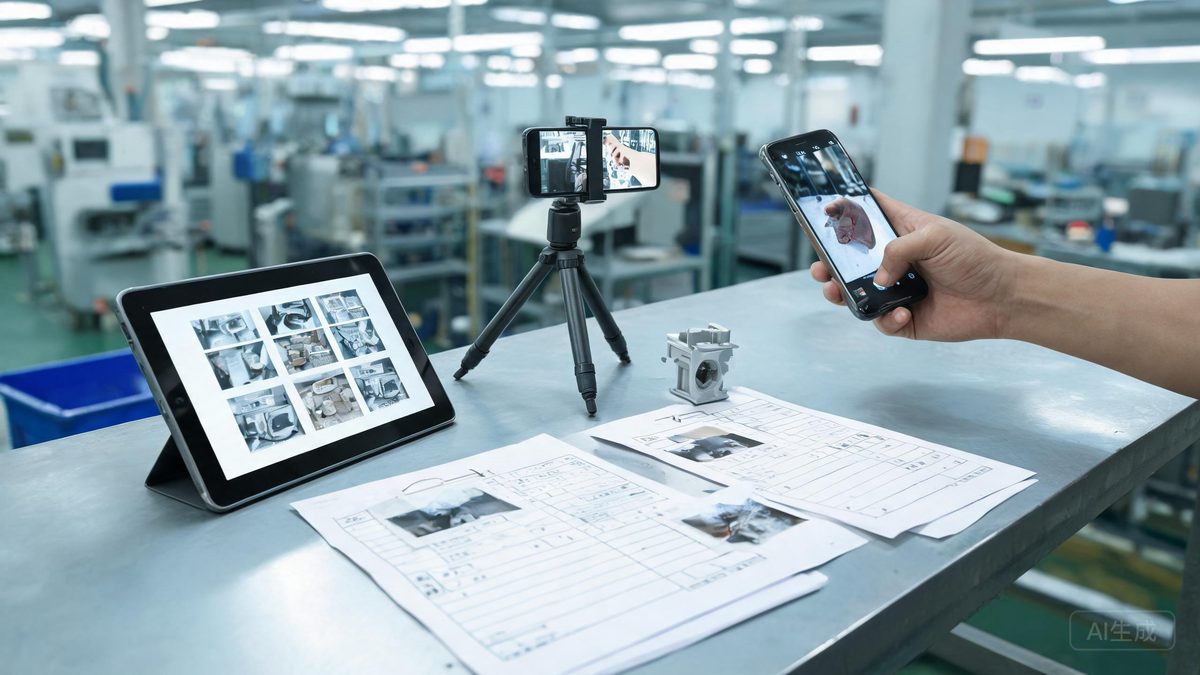
QC photo and video evidence is the visual record an inspector creates during a quality inspection in China — still photos of products, packaging, defects, and the factory floor, plus short videos of the production line and functional tests. Its purpose is to document the actual condition of the goods at a specific point in time, creating an objective record that both buyer and supplier can reference. In an industry where disputes are common and the buyer is thousands of miles away, photo/video evidence turns a subjective "the quality is bad" into a factual, timestamped claim.
Why Photo & Video Evidence Matters
- Dispute resolution — a supplier cannot deny a defect if you have a clear, timestamped photo of it on their production line.
- Supplier accountability — knowing an inspector will photograph every stage pushes factories to maintain consistency.
- Buyer confidence — you see the actual goods before paying the balance and before they ship.
- Amazon / retailer audit trails — marketplaces and retailers increasingly require inspection records for compliance and safety claims.
- Legal documentation — timestamped photos with chain of custody are admissible in CIETAC arbitration.
Photo Checklist by Inspection Type
Each inspection stage has a different photo focus. Shooting the right set at the right time prevents defects from slipping through.
| Inspection Stage | What to Photograph | Typical Photo Count | Purpose |
|---|---|---|---|
| Pre-production | Raw materials, component batch labels, material certificates, factory floor, production line setup | 10 – 25 | Prove agreed materials are used |
| During-production (in-line) | Work-in-progress, assembly line, in-line QC checks, semi-finished units | 15 – 30 | Catch defects early, before 100% produced |
| Pre-shipment (PSL) | Finished product (multiple angles), packaging, carton marks, labeling, AQL sampling, defect close-ups | 20 – 50 | Final pass/fail before balance payment |
| Loading / container stuffing | Cartons loaded, container seal, seal number, full container | 10 – 20 | Prove correct quantity shipped |
Video Evidence Types
Stills alone can be disputed ("that's not our factory," "that photo is old"). Video closes the gap. Yeatru inspectors record four standard video clips:
- Factory walkthrough video — 1–2 minutes showing the facility, production capacity, and that the inspector is physically on site.
- Production line video — shows work-in-progress, worker process, and in-line QC activity.
- Functional test video — drop test, load test, electrical safety test, waterproof test, or whatever the product's functional requirement is. This is the most important clip — it proves the product actually works.
- Packaging process video — shows units being packed, cartons sealed, and carton marks applied.
A typical inspection video runs 2–5 minutes total and is delivered alongside the photo report.
Photo Standards & Tools
A bad photo is worse than no photo — it creates ambiguity. Follow these standards:
- Clear lighting — use natural light or a ring light; avoid shadows that hide defects.
- Scale reference — place a ruler or coin next to the defect so size is unambiguous.
- Multiple angles — shoot each product/defect from at least 3 angles (front, side, close-up).
- Defect annotation — overlay text on the photo describing the defect type and severity (critical / major / minor), plus the batch number and inspection date.
- Batch / date stamp — every photo set should include a photo of the batch label and production date.
- Tools — a modern phone camera (12 MP+) with timestamp enabled, plus cloud storage (Google Drive, Dropbox) with version history to preserve EXIF metadata.
Worked Example: PSL Inspection Catches 12% Defects
A US Amazon FBA buyer ordered 5,000 stainless-steel water bottles from a Shenzhen factory at $3.20/pc ($16,000 total). Yeatru ran a pre-shipment inspection with 40 photos + a 3-minute video.
- Findings: 12% of sampled units had a major defect — the silicone seal was misaligned, causing leaks on the drop test (captured on video).
- Evidence: 8 annotated defect close-ups with ruler scale, a functional test video showing the leak, and 12 photos of carton marks.
- Negotiation: buyer sent the photo report to the factory, which could not deny the on-site evidence. Factory agreed to free rework of the entire batch plus a 10% discount ($1,600) on the next order.
- Re-inspection: after 5 days of rework, a second PSL inspection showed 1.2% defects — within AQL 2.5. Shipment released.
Without the photo/video evidence, the buyer would have paid the balance, received leaking bottles, and faced Amazon returns and negative reviews. The $180 inspection saved a $16,000 loss. For how this ties into the overall QC flow, read China quality control inspection.
Legal Value of Photo Evidence in China
Chinese law (Civil Procedure Law and CIETAC arbitration rules) accepts photos and video as evidence, provided you can establish chain of custody — who shot it, when, where, and that it was not altered. Practically this means:
- Keep original files with EXIF data (timestamp, GPS, camera model) — never export only compressed versions.
- Store in cloud storage with version history so you can prove the file was not edited after the fact.
- Have the inspector sign the inspection report and include their name, inspector ID, and factory address.
- For high-value disputes, a notarized inspection report from a licensed third-party inspector carries extra weight.
Key point: photos alone are not automatic proof. Pair them with a signed inspection report and the original unedited files. That combination is what CIETAC arbitrators look for.
How Yeatru Delivers Photo & Video Reports
Every Yeatru inspection includes:
- 20–50 annotated photos — defect close-ups with scale, carton marks, labeling, and packaging.
- 2–5 minute video — factory walkthrough + production line + functional test + packaging.
- Signed AQL 2.5 defect sheet — critical/major/minor counts with pass/fail recommendation.
- Delivered within 24 hours of the on-site inspection, before your balance payment is due.
For an overview of all inspection stages, see our pre-shipment inspection and third-party inspection guides.
Frequently Asked Questions
1. Why is photo evidence important in QC inspections?
Photo and video evidence creates a factual record you can use for dispute resolution, supplier accountability, Amazon/retailer audit trails, and legal documentation. Timestamped photos with a clear chain of custody are accepted by CIETAC arbitration as evidence, which is often the difference between winning and losing a defect claim.
2. What kind of video should a QC inspector shoot?
Four video types cover the inspection: (1) a factory walkthrough showing the facility and capacity, (2) a production-line video showing work-in-progress, (3) a functional test video (drop, load, electrical safety, waterproof), and (4) a packaging process video. A 2–5 minute video is standard and much harder to dispute than stills alone.
3. How many photos should a QC inspection include?
A standard pre-shipment inspection includes 20–50 photos: 5–10 of packaging and carton marks, 10–20 of finished products from multiple angles, 5–10 of defect close-ups with annotations, and a few of the sampling process and batch labels. A factory audit or during-production inspection can run 50–100 photos.
4. Can inspection photos be used as evidence in a supplier dispute?
Yes. China's CIETAC arbitration accepts timestamped photos and video as evidence, provided you can show chain of custody (who shot them, when, where, and that they were not altered). Always keep original files with EXIF data and store them in cloud storage with version history.
5. How do you annotate a defect photo correctly?
Include a scale reference (ruler or coin) next to the defect, shoot from multiple angles, and add a text annotation describing the defect type and severity (critical/major/minor). Overlay the batch number and inspection date. Clear, annotated defect photos make rework requests unambiguous.
6. What does a Yeatru photo/video QC report include?
Each Yeatru inspection report includes 20–50 annotated photos, a 2–5 minute video (factory walkthrough + functional test), a signed AQL 2.5 defect sheet, carton mark and labeling checks, and a pass/fail recommendation. Reports are delivered within 24 hours of the on-site inspection.
Conclusion
Photo and video evidence transforms QC from a handshake agreement into a factual, defensible record. By shooting the right checklist at each inspection stage — pre-production, during-production, and pre-shipment — and following clear photo standards (scale references, annotations, timestamps), you give yourself the evidence needed to negotiate rework, discounts, or replacements. The water-bottle example shows how a $180 inspection with 40 photos and a 3-minute video caught a 12% defect rate and saved a $16,000 order. Book a photo/video QC inspection with Yeatru and get your annotated report within 24 hours.