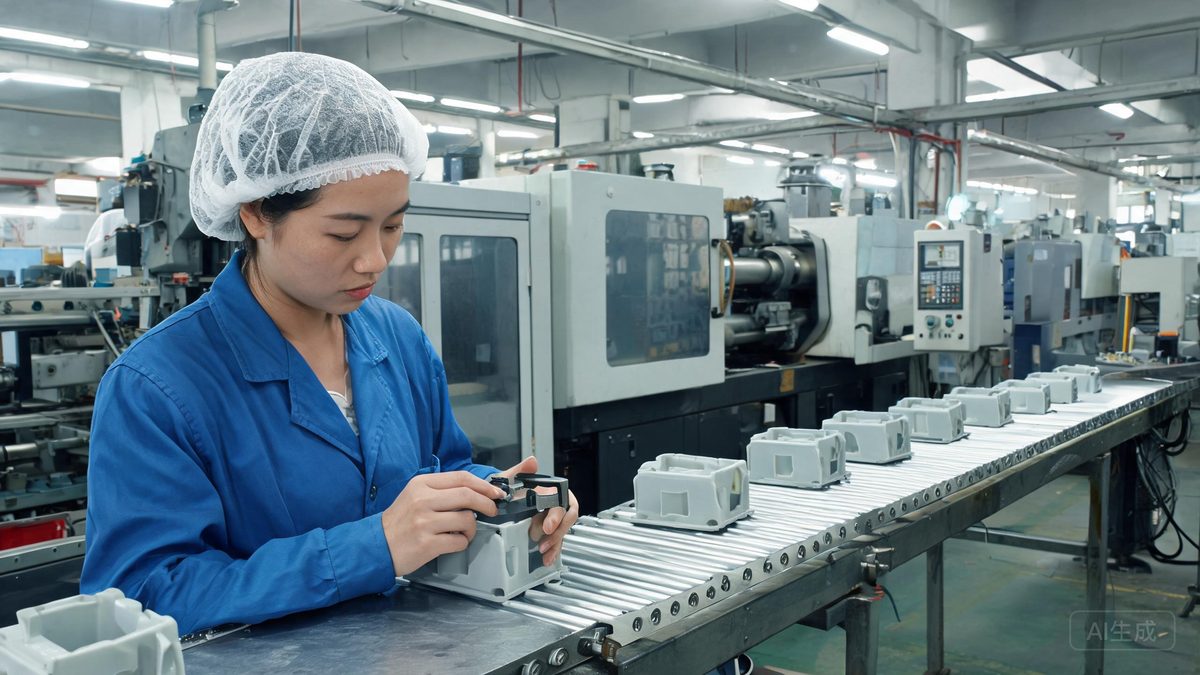
What Is In-Process Quality Inspection (DUPRO)?
DUPRO (during-production inspection), also called in-process inspection or DPI, is an on-site QC check performed when 20–50% of an order is produced. Unlike pre-shipment inspection, which checks finished, packed goods, DUPRO inspects semi-finished and finished units on the production line. Its purpose is to catch systemic defects — wrong material, wrong process, poor workmanship — early, so the supplier can correct the remaining production instead of reworking the entire lot at the end.
DUPRO vs PSI: What's the Difference?
| DUPRO (During-Production) | PSI (Pre-Shipment) | |
|---|---|---|
| Timing | 20% – 50% produced | 100% produced, 80%+ packed |
| Purpose | Catch defects mid-run, correct remaining production | Final quality gate before shipping |
| Sample | Semi-finished + finished units from the line | AQL sample from packed cartons |
| Decision | Diagnostic — no formal Pass/Fail | Pass / Conditional / Fail (gates balance payment) |
| Cost | $80 – $200/man-day (agent) | $80 – $500/man-day |
| Defect caught | Systemic issues (material, process, rate) | Final defects in finished/packed goods |
| Required? | Recommended for new supplier/product | Mandatory on almost every order |
When to Use DUPRO
DUPRO is worth booking in five scenarios:
- New supplier — you don't yet know their workmanship or defect rate.
- New product or new tooling — first run of a new mold, print film, or assembly process.
- High defect-rate category — apparel, toys, electronics, injection-molded parts historically run 3–8% defect rates.
- Tight deadline — a full-lot rework at PSI would miss the ship date; catching it at 30% keeps the schedule.
- High order value — a $50k+ order where a 10% defect rate means $5k+ in rework; the $150 DUPRO is cheap insurance.
For repeat orders from proven suppliers with stable defect rates, you can skip DUPRO and rely on PSI only.
What DUPRO Checks
A DUPRO inspector focuses on in-line issues rather than the full PSI checklist:
| Check Area | What's Inspected |
|---|---|
| Workmanship | Stitching, gluing, assembly, welding, print registration on finished and semi-finished units |
| Material & components | Material grade, color, weight, thickness vs spec; correct components installed |
| In-line defect rate | Count of defective units passing the line per hour; % defect rate vs acceptable |
| Production rate | Units produced vs planned schedule; risk of late shipment |
| Spec adherence | Dimensions, function, logo, label vs approved golden sample |
| Process control | Are operators following the SOP? Is the machine calibrated? Is QC checking in-line? |
Defects found are classified critical/major/minor per your defect classification sheet.
Worked Example: New-Supplier Order, DUPRO Saves $15k+
A German retailer orders 10,000 wooden cutting boards at $5.00/unit ($50,000) from a new supplier in Dongguan. They book one DUPRO at 30% (3,000 units made) through Yeatru at $150.
The DUPRO finds the supplier used pine instead of the specified beech — a material substitution that would fail the food-contact compliance test and get seized at EU customs. If caught at PSI, the entire 10,000-unit lot would need rework (re-cut from beech) costing ~$15,000 in material and labor, plus a 10-day delay.
| Scenario | Defect caught at | Units to rework | Rework cost | Delay |
|---|---|---|---|---|
| With DUPRO at 30% | DUPRO | 3,000 (and stop remaining 7,000) | ~$4,500 | 3 days |
| Without DUPRO (PSI only) | PSI at 100% | 10,000 | ~$15,000 | 10 days |
The $150 DUPRO saved ~$10,500 in rework and 7 days of delay. The supplier corrected the material for the remaining 7,000 units before cutting, and the final PSI passed.
DUPRO Frequency
- Standard new order: one DUPRO at 30–40%.
- High-risk / high-value order: two DUPROs — one at 20%, one at 50%.
- Long production run (>30 days): weekly DUPROs to monitor the in-line defect rate.
- Repeat order, proven supplier: skip DUPRO, PSI only.
How DUPRO Reduces Rework Cost
The economics are simple: reworking an unfinished unit on the line costs a fraction of reworking a finished, packed unit. A wrong print at the print stage costs $0.10 to fix; reprinting after assembly and packing costs $1.50. Wrong material caught before cutting costs the material delta; caught after the lot is finished costs labor to disassemble + material + re-assemble. Catching a systemic defect at 30% means only 30% of the lot needs rework, and the remaining 70% is produced correctly from the start.
How Yeatru Runs DUPRO
Yeatru's QC team schedules DUPROs alongside your production milestone reporting:
- We confirm the production % with the factory before booking the DUPRO
- The inspector checks workmanship, material, in-line defect rate, and production rate
- Same-day report with photos of defects and a corrective-action plan for the supplier
- Follow-up call with the factory to confirm the correction is implemented for the remaining production
- Final PSI at 100% to confirm the fix held
Frequently Asked Questions
1. What is a DUPRO (during-production inspection)?
DUPRO is an on-site QC check done when 20–50% of an order is produced. The inspector checks semi-finished and finished units on the line for workmanship, material, in-line defects, and spec adherence. The goal is to catch systemic issues early so the supplier can correct the remaining production.
2. When should I use a DUPRO?
Use DUPRO for: new suppliers, new products/tooling, high-defect-rate categories, tight deadlines, and high-value orders. Repeat orders from proven suppliers usually rely on PSI only.
3. DUPRO vs PSI — what's the difference?
DUPRO is mid-run (20–50%), diagnostic, no formal Pass/Fail. PSI is at 100%/80%+ packed, uses strict AQL, and issues a Pass/Fail that gates the balance payment. DUPRO reduces rework cost; PSI is the final gate. DUPRO does not replace PSI.
4. How often should I do DUPRO?
One DUPRO at 30–40% is standard. For high-risk/high-value orders, do two (20% and 50%). For runs over 30 days, do weekly DUPROs. Each costs $80–$200/man-day via agent QC.
5. How much does a DUPRO cost?
A DUPRO takes 1 man-day: $80–$200 via agent QC, $150–$300 mid-tier, $250–$500 big-4 TPI. Compared to a full-lot rework ($2,000–$20,000+), DUPRO is almost always worth it on new orders.
6. Does DUPRO replace the pre-shipment inspection (PSI)?
No. Even with a clean DUPRO, you still need a PSI at 100% production to confirm the finished, packed goods meet spec before paying the balance. A good DUPRO reduces the chance of PSI failure but does not eliminate it.
Conclusion
DUPRO is the most cost-effective QC tool for new suppliers and new products — it catches systemic defects at 20–50% production, when only a fraction of the lot needs rework and the rest can be corrected before it's made. At $80–$200/man-day, a single DUPRO routinely saves thousands in full-lot rework and days of delay. Pair DUPRO with a mandatory PSI at 100% to gate the balance payment, and run both against AQL 2.5 major / 4.0 minor / 0 critical. Contact Yeatru to schedule DUPRO and PSI for your next China order.