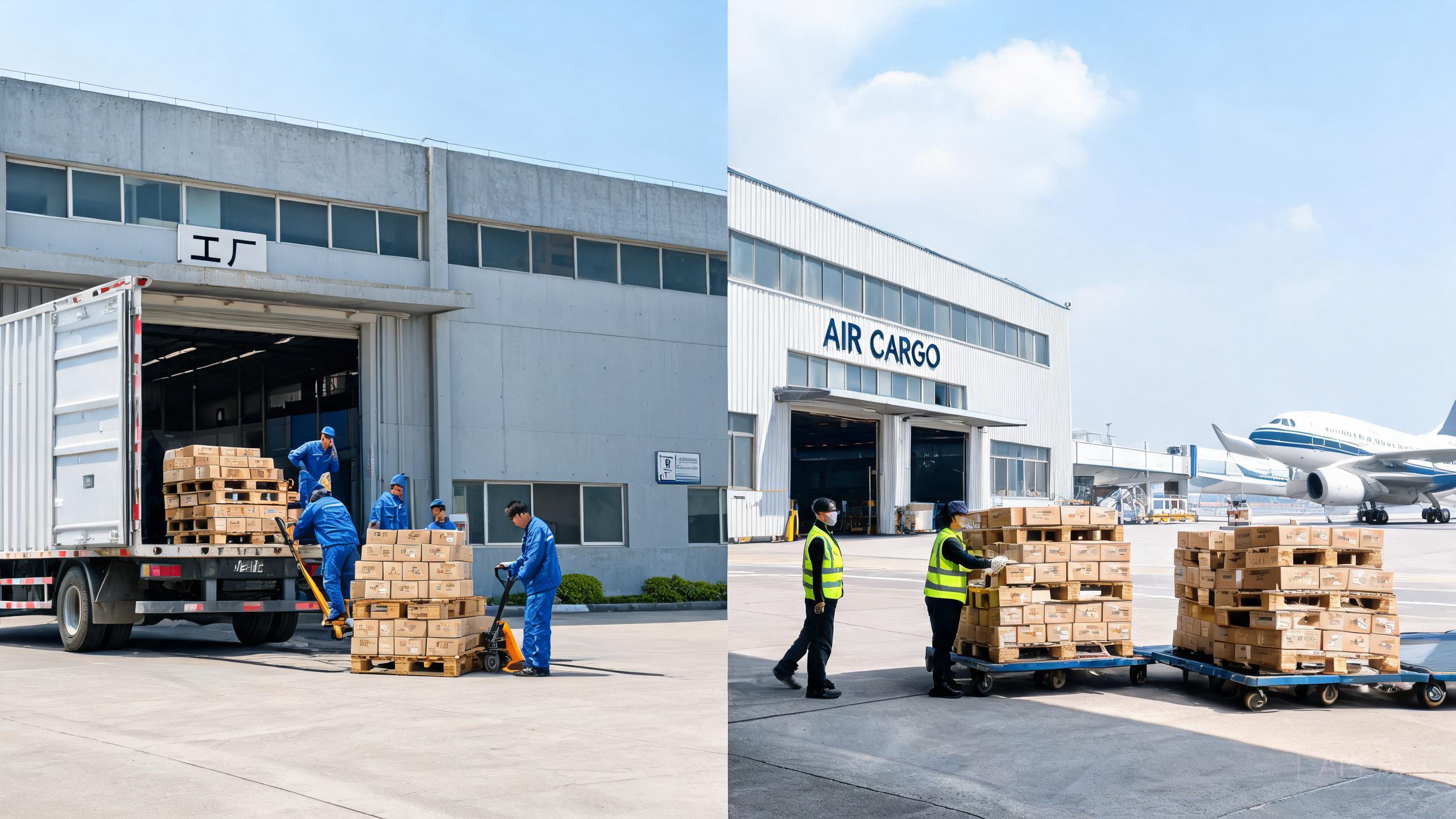
What Are FCA and EXW?
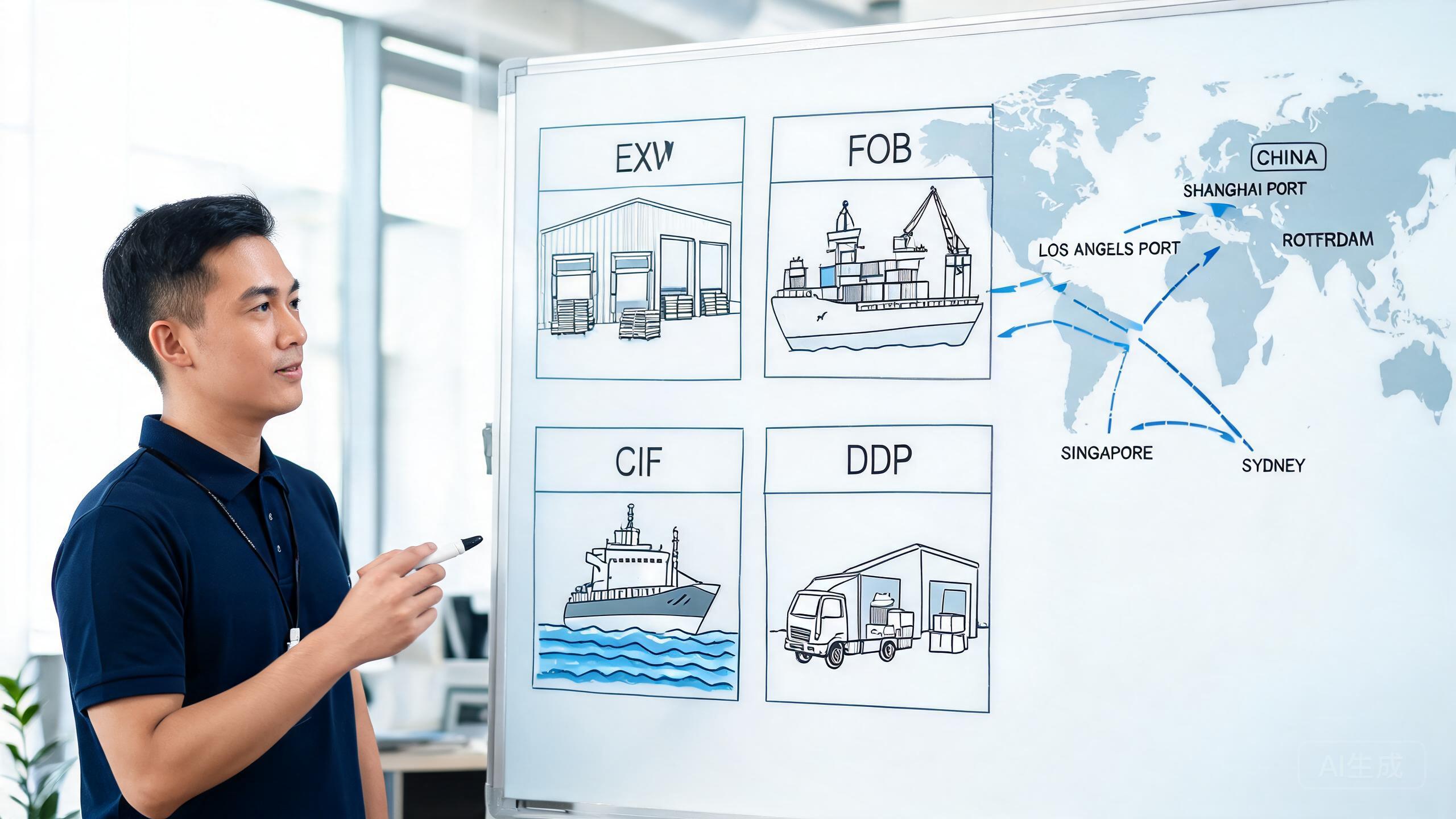
EXW (Ex Works) is the Incoterm that places maximum obligation on the buyer. The seller only needs to make the goods available at their factory or warehouse; you arrange and pay for everything from that point: China inland trucking, export clearance, international freight, insurance, import clearance, duty, and last-mile.
FCA (Free Carrier) shifts the export clearance obligation back to the seller. The seller delivers the goods, cleared for export, to a named carrier (e.g., "FCA Ningbo Port" or "FCA Hong Kong Air Cargo Terminal"). You handle everything from the carrier onward: freight, insurance, import, duty.
The single most important difference: under FCA the seller handles China export clearance; under EXW you do. This matters because Chinese law requires the exporter of record to be a Chinese entity with the right licenses. As a foreign buyer, arranging export clearance under EXW is legally and practically awkward.
FCA vs EXW: Side-by-Side Comparison
| Responsibility | EXW (Ex Works) | FCA (Free Carrier) |
|---|---|---|
| Goods available at | Factory / seller's warehouse | Named carrier (port, airport, warehouse) |
| China inland trucking | Buyer | Seller (to named carrier) |
| China export clearance | Buyer | Seller |
| International freight | Buyer | Buyer |
| Insurance | Buyer | Buyer |
| Import clearance & duty | Buyer | Buyer |
| Risk transfer | At factory door | To named carrier |
| Unit price | Lowest | Slightly higher (+ inland + export) |
Why Export Clearance Matters
Under Chinese law, the exporter of record must be a Chinese-registered entity with a valid foreign trade operator's license (对外贸易经营者备案). The exporter is responsible for:
- Filing the export declaration with China Customs
- Paying any export VAT or obtaining export VAT refunds
- Ensuring the goods are not restricted or require export licenses (e.g., certain chemicals, dual-use items, antiques)
- Issuing the correct export documents (commercial invoice, packing list, bill of lading)
Under EXW, you (the foreign buyer) are technically responsible for export clearance. In practice, you must hire a Chinese freight forwarder to act as your agent and file the export declaration. This adds cost ($40–$150 per shipment) and risk: if the goods turn out to need an export license the seller doesn't have, the shipment is blocked and you've already paid for inland trucking.
Under FCA, the seller clears export — they know their own products, licenses, and documentation. If there's an export issue, it's their problem to solve before the goods reach your carrier.
Cost Comparison: Same Order, FCA vs EXW
1,000 units at $4.00 EXW from a Yiwu factory, 4 cbm, air freight to Los Angeles.
| Line Item | EXW | FCA (Yiwu Airport) |
|---|---|---|
| Goods at factory | $4.00 | $4.00 |
| Yiwu → airport trucking (~$90/4cbm) | $0.09 (buyer arranges) | — |
| Export declaration + docs (~$95) | $0.10 (buyer's forwarder) | — |
| Seller's FCA markup (inland + export bundled) | — | $0.15 |
| Air freight Yiwu → LA (~$3.20/cbm share) | $3.20 | $3.20 |
| Insurance | $0.02 | $0.02 |
| US customs entry + duty | $0.50 | $0.50 |
| Total per unit | $7.91 | $7.87 |
FCA is actually slightly cheaper here because the seller bundles inland trucking + export clearance more efficiently than a foreign buyer's forwarder can. The "EXW is cheaper" myth ignores that a foreign buyer's China-side costs (trucking broker + export agent) often exceed the seller's bundled FCA markup.
When to Choose EXW
- Large FCL orders ($50k+) where you have an established China trucking + export broker and negotiate better rates than the seller.
- Consolidating multiple suppliers into one container — you control the trucking schedule from each factory to your consolidation warehouse.
- You need the absolute lowest unit price and have the admin capacity to manage China-side logistics.
When to Choose FCA
- Air freight shipments — FCA is the correct term; FOB doesn't legally apply to air (no "vessel").
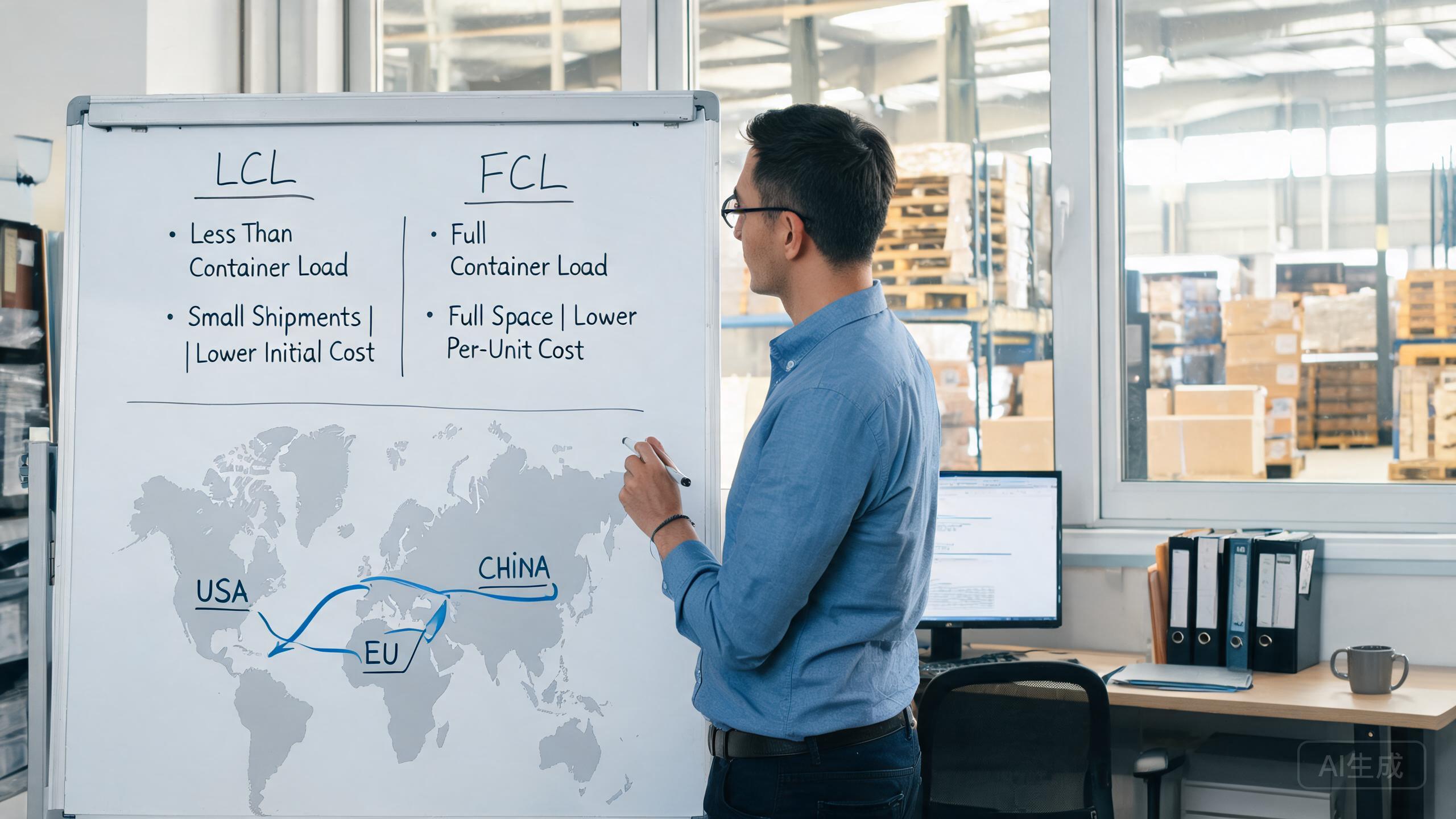
- LCL (Less than Container Load) — the seller delivers to the consolidator's warehouse cleared for export.
- Small to medium orders where you don't have a China-side broker.
- Restricted or licensed goods — let the seller handle export clearance and licensing.
- Most buyers in most situations — FCA is the safer default.
How Yeatru Quotes FCA vs EXW
Yeatru defaults to FCA for air and LCL because it's legally correct and shifts export responsibility to the seller. For large FCL consolidations, we offer EXW with transparent China-side trucking and export-agent line items so you can see exactly what the "EXW savings" actually are. We never recommend EXW for first-time buyers or restricted-category goods.
Frequently Asked Questions
1. What is the difference between FCA and EXW?
Under EXW the buyer handles everything from the factory door, including China export clearance. Under FCA the seller delivers goods to a named carrier and handles export clearance. The key difference is export responsibility and the risk transfer point (factory door vs. carrier).
2. Which is cheaper, FCA or EXW?
EXW has a lower unit price, but the buyer must add China trucking ($80–$500) and export agent fees ($40–$150). For small orders, FCA is often cheaper overall because the seller bundles inland + export more efficiently. EXW only wins for large FCL orders where the buyer has their own China-side broker.
3. Why is FCA better than EXW for air freight?
FOB (the sea-freight default) legally requires goods to be "on board a vessel," which doesn't apply to air freight. FCA is the air-freight equivalent of FOB: the seller delivers to the airline cargo terminal, cleared for export. Using EXW for air leaves export clearance and risk with the buyer before the goods reach the airline.
4. Who handles export clearance under FCA?
The seller handles export clearance under FCA. This is the main advantage — the seller knows their products, licenses, and documentation, and is the legally proper exporter of record in China.
5. Can I use EXW if I don't have a China broker?
Technically yes, but practically not recommended. You'll need to hire a Chinese freight forwarder to act as your export agent. For small orders, the forwarder's fees negate any EXW savings. FCA puts export responsibility on the seller at little or no extra cost.
6. When does risk transfer under FCA?
Under FCA, risk transfers to the buyer when the goods are delivered to the named carrier at the named place (e.g., port, airport, or carrier's warehouse). The seller bears risk during inland transit to the carrier; the buyer bears risk from the carrier onward.
Conclusion
FCA and EXW both leave international freight in your hands, but FCA makes the seller handle China export clearance — which is legally and practically the seller's job. For most buyers, FCA is the safer and often cheaper choice. Use EXW only for large FCL orders where you have an established China-side broker and want maximum control. Never use EXW for restricted-category goods. Get an FCA vs EXW comparison from Yeatru with transparent China-side cost breakdowns.