Why Freight Cost Matters in China Sourcing
For many importers, freight is the second-largest cost line after the goods themselves — often 10–40% of total landed cost. Unlike the unit price (which you negotiate once with the factory), freight cost is shaped by dozens of decisions: which port, which mode, which Incoterm, how you pack, when you book, and how fast you clear customs. Small changes compound: a 15% freight reduction on a $10,000 order is $1,500 back in your margin. The 10 strategies below are the levers Yeatru pulls for every client to keep landed cost low.
The 10 Strategies: Savings & Effort
| # | Strategy | Potential Saving | Effort |
|---|---|---|---|
| 1 | Consolidate orders to hit LCL/FCL breakpoints | 15 – 40% | Low |
| 2 | Optimize packaging dimensions | 5 – 20% | Medium |
| 3 | Choose the right mode (air/sea/express/rail) | 20 – 60% | Low |
| 4 | Ship from the nearest port | $200 – $400/container | Low |
| 5 | Book off-peak (avoid Sep–Dec PSS) | $300 – $800/container | Low |
| 6 | Use EXW + own freight vs supplier's CIF | 10 – 25% of freight | Medium |
| 7 | Negotiate FOB vs CIF | 10 – 25% of freight | Low |
| 8 | Combine multiple orders into one shipment | 10 – 30% | Low |
| 9 | Use rail to EU instead of air | 40 – 60% vs air | Low |
| 10 | Avoid demurrage / detention (clear fast) | $100 – $250/day avoided | Low |
1. Consolidate LCL → FCL Breakpoints
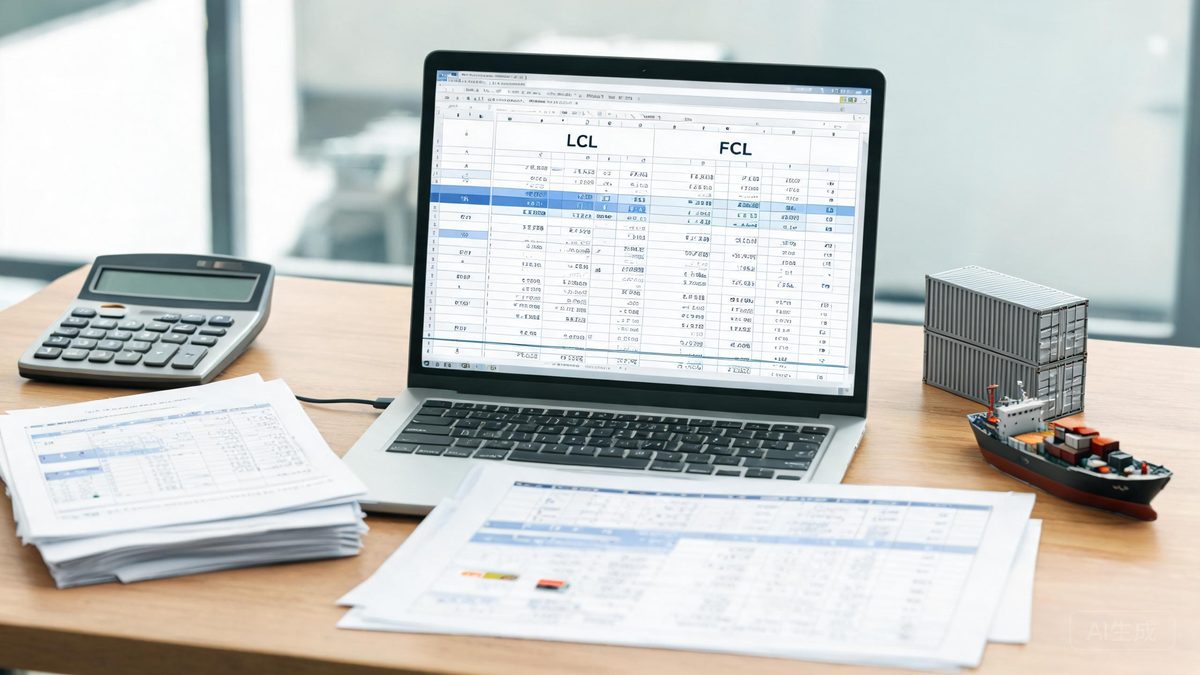
LCL adds $30–$60/CBM in consolidation, THC and documentation fees. Once your combined cargo passes ~15 CBM, a 20GP FCL (33 CBM) is cheaper per CBM than LCL — and the more you fill it, the lower the per-unit cost. For air freight, the per-kg rate drops at the 45, 100, 300 and 500 kg thresholds. Use China warehousing & consolidation to collect from multiple factories and ship as one.
2. Optimize Packaging Dimensions
Air and express bill on volumetric weight, not actual weight. A box of plush measuring 50×40×30 cm and weighing 6 kg bills at 10 kg (air, ÷6000). Redesign the carton to 45×38×28 cm → volumetric weight drops to 7.98 kg, saving ~2 kg × $6/kg = $12 per box. For a 500-box order that is $6,000. Ask your supplier to remove void space, nest products, and use the smallest carton that still passes drop tests.
3. Choose the Right Mode by Weight & Urgency
| Mode | Cost/kg (China → US) | Transit | Best For |
|---|---|---|---|
| Express courier | $8 – $14 ($3.50–$7 agent) | 2 – 5 days | Samples, <45 kg, documents |
| Air freight | $5 – $7.50 | 3 – 7 days | 45 – 500 kg, urgent |
| Rail (China → EU) | $2 – $3.50 | 15 – 22 days | EU buyers, mid-urgency |
| Sea freight (LCL/FCL) | $0.50 – $1.50 | 25 – 40 days | >500 kg, non-urgent |
Shipping a 60 kg urgent restock by sea "to save money" costs you 30 days of stockout — far more than the air premium. Match the mode to both weight and urgency.
4. Ship from the Nearest Port
Inland trucking from factory to port is a real cost. Yiwu buyers save $200–$400 per container by trucking to Ningbo (280 km) instead of Shanghai (300 km, more congested). Shenzhen/Yantian is cheapest for Guangdong factories; Qingdao for Shandong; Guangzhou for Pearl River delta LCL. Always ask which port your forwarder is loading from and compare inland haulage.
5. Book Off-Peak to Avoid PSS & GRI
Shipping lines add Peak Season Surcharge (PSS) of $300–$800 per container and General Rate Increases (GRI) roughly August through October as retailers stock for Black Friday and Christmas. Booking 2–3 weeks ahead and shipping before mid-August locks pre-peak rates. If you must ship in peak season, consolidate to FCL to spread the surcharge over more units.
6 & 7. Use EXW/FOB, Not CIF
Under CIF, the supplier arranges freight and rolls it into the unit price — typically with a 10–25% markup. Under FOB, the supplier delivers to the port and you choose the forwarder; under EXW, you pick up at the factory. Taking control of freight usually saves 10–25% vs CIF, and you get full visibility into the rate. Compare the CIF unit price against (FOB unit price + your own freight quote) — the gap is your savings. See FOB vs EXW vs DDP.
8. Combine Multiple Orders into One Shipment
Two 6 CBM LCL shipments cost more than one 12 CBM LCL shipment (one set of docs, one consolidation fee, one customs entry). If you source from 3–5 factories for the same market, hold cargo at a China warehouse until you can fill one container. This also cuts the number of customs entries and reduces damage from multiple handlings.
9. Use Rail to the EU Instead of Air
For EU buyers, rail freight from China (Yiwu → Duisburg/Hamburg, 15–22 days, $2–$3.50/kg) is dramatically cheaper than air ($4–$6/kg) and faster than sea (28–38 days). It is ideal for mid-volume, mid-urgency cargo where air is too expensive but sea is too slow. Rail runs year-round and is not affected by ocean peak-season surcharges.
10. Avoid Demurrage & Detention
Demurrage ($100–$250/day) kicks in after the 3–7 free port days; detention applies if you keep the container past the free return window. To avoid both: prepare commercial invoice, packing list, BL and certificate of origin before the vessel arrives; clear customs same-day; pick up the container immediately; and return the empty within the free window. A 5-day delay can add $500–$1,250 to a single container.
Worked Example: $10,000 Order — 3 Strategies Applied
A buyer sources $10,000 of home goods (8 CBM, 1,200 kg) from 3 Yiwu suppliers to the US West Coast. Baseline: 3 separate CIF LCL shipments. Apply 3 strategies: consolidate + optimize packaging + EXW vs CIF.
| Line Item | Baseline (3× CIF LCL) | After 3 Strategies |
|---|---|---|
| Goods (FOB/EXW) | $10,000 (CIF, freight markup ~15%) | $8,700 (EXW, no freight markup) |
| Inland trucking (3× factory → port) | $300 | $180 (consolidated pickup) |
| LCL freight (3× vs 1×) | 8 CBM × $70 = $560 (split) | 8 CBM × $55 = $440 (one consolidated LCL) |
| Consolidation & docs (3× vs 1×) | 3 × $180 = $540 | 1 × $220 = $220 |
| Packaging optimization (vol weight cut 15%) | — | −$84 (less chargeable volume) |
| Destination THC + customs (3× vs 1×) | 3 × $150 = $450 | 1 × $180 = $180 |
| Duty (5%) | $500 | $435 |
| Last-mile delivery | $300 | $200 |
| Total landed | $12,650 | $10,271 |
| Savings | $2,379 (18.8% of landed cost) | |
Three simple moves — consolidating to one shipment, taking EXW to strip the CIF freight markup, and cutting 15% of volumetric weight — save $2,379, nearly 19% of the total landed cost. The goods themselves cost less because EXW removes the supplier's freight markup.
How Yeatru Helps Reduce Freight Cost
Yeatru Sourcing builds freight optimization into every shipment:
- Free consolidation in Yiwu/Shenzhen to hit LCL/FCL and air breakpoints — warehousing & consolidation
- Packaging review to cut volumetric weight before cargo leaves the factory
- Mode selection — we quote sea, air, rail and express and recommend the cheapest that meets your deadline
- EXW/FOB freight control — we book the carrier directly, no supplier markup
- Off-peak booking and fast customs clearance to avoid PSS and demurrage — China customs clearance
Frequently Asked Questions
1. How can I reduce freight cost from China?
The highest-impact moves: consolidate multiple supplier orders into one FCL/LCL shipment, optimize carton dimensions to cut volumetric weight, choose the right mode (express under 45 kg, air 45–500 kg, sea over 500 kg), ship from the nearest port (Yiwu to Ningbo, not Shanghai), book before the Aug–Oct peak season, use EXW/FOB instead of CIF, and clear customs fast to avoid demurrage.
2. Is CIF or FOB cheaper?
FOB is usually cheaper. Under CIF the supplier arranges freight and marks it up 10–25%; under FOB you pick the forwarder and negotiate the rate yourself. CIF looks simpler but the freight markup is hidden in the unit price. Always compare the CIF unit price against FOB unit price + your own freight quote. See FOB vs EXW vs DDP.
3. Can I combine orders from different suppliers?
Yes — this is one of the biggest savings. Use a China warehousing & consolidation service to collect cargo from 2–10 factories, inspect it, repalletize, and ship as one LCL or FCL. This cuts per-CBM consolidation fees and can flip the math from LCL to cheaper FCL.
4. Rail or sea to the EU — which is cheaper?
Sea is cheaper ($0.50–$1.50/kg, 28–38 days) but rail ($2–$3.50/kg, 15–22 days) is much faster. Rail wins when you need stock in 2–3 weeks and air is too expensive; sea wins when you have 35+ days of lead time and want the lowest per-unit cost.
5. What is PSS (Peak Season Surcharge)?
PSS is a $300–$800 per container surcharge shipping lines add from roughly August through October as retailers stock for the holidays, on top of General Rate Increases (GRI). Booking 2–3 weeks ahead and shipping before mid-August avoids most PSS.
6. How do I avoid demurrage and detention?
Prepare commercial invoice, packing list, BL and certificate of origin before the vessel arrives so customs can clear immediately. Pick up the container within the 3–7 free port days and return the empty within the free detention window. Demurrage runs $100–$250/day once free days expire.
Conclusion
Freight cost from China is not a fixed line item — it is a series of decisions you can optimize. The three highest-levers are consolidation (hit FCL/air breakpoints), mode selection (match weight & urgency), and taking control of freight (EXW/FOB over CIF). Add packaging optimization, nearest-port routing, off-peak booking, and fast customs clearance, and a typical buyer cuts landed freight by 15–30%. Get a free landed-cost analysis from Yeatru — we'll show you exactly where your freight spend is leaking and how to fix it.