Most first-time China buyers build their sourcing budget on a single number: the factory's unit price. They multiply by quantity add a rough guess for freight and call it done. Then the container arrives and the actual invoice is 25–40% higher than expected. The difference is not fraud — it is the cost components that the factory quote deliberately does not include.
This guide breaks down the 6 cost components that make up the true total cost of ownership (TCO) for a China-sourced order: product unit price tooling/sampling certification/testing quality control logistics/freight and duties/taxes. For each component we give the percentage range real dollar amounts and the common traps that inflate it. We close with a full cost breakdown of a real 5 000 USD PO and a comparison table showing how a unit-price-only decision differs from a TCO-based decision.
Understanding this breakdown is the difference between a profitable import business and one that slowly bleeds money on every container. The buyers who survive and scale in China sourcing are not the ones who get the lowest unit price — they are the ones who know the true landed cost down to the dollar and build their margins around it.
1. The TCO Formula for China Sourcing
Total Cost of Ownership for a China-sourced order is the sum of 6 cost buckets plus the probability-weighted cost of failures. The formula:
TCO = (UnitPrice × Qty)
 + Tooling & Sampling
 + Certification & Lab Testing
 + Quality Control (AQL inspection)
 + Freight & Logistics (incl. insurance)
 + Duties & Taxes
 + Expected Failure Cost (defect × rework rate)
Yeatru's 2026 benchmark of 312 POs found that the unit price (UnitPrice × Qty) made up 61% of TCO on average. The remaining 39% was split roughly evenly between freight (12%) duties (8%) certification (5%) QC (3%) tooling (4%) and failure costs (7%). For regulated categories the non-price share rises to 45%.
2. Component 1: Product Unit Price (45–70% of TCO)
The unit price is the only number you see on the Alibaba chat window and it is the most negotiable. It includes raw materials labor factory overhead and profit margin. In China labor accounts for 15–30% of unit price raw materials 40–60% and overhead/profit 15–25%.
What affects unit price:
- Order quantity: MOQ pricing vs volume pricing can differ by 15–35%. A 5 000-unit order may cost 2.80 USD/pc while a 50 000-unit order costs 1.90 USD/pc for the same product.
- Raw material grade: 304 vs 201 stainless food-grade vs industrial silicone 190T vs 210D polyester. Grade differences change unit price by 10–40%.
- Customization: Custom color logo or packaging adds 5–20% to unit price. Custom mold adds 0.50–3.00 USD/pc amortized over the mold life.
- Factory tier: Top-tier ISO-certified factories charge 10–25% more than unlicensed workshops but deliver 3–5× lower defect rates.
Typical range: 45–70% of total landed cost. For commodity goods it can be 70%+; for regulated electronics or cosmetics it drops to 45–55%.
3. Component 2: Tooling & Sampling (2–8% of TCO)
Tooling and sampling covers the cost of creating custom molds and pre-production samples. This is a one-time cost per product design but is often the most underestimated line item.
Cost ranges by tooling type:
- Silicone mold: 300–1 500 USD (lead time 7–15 days)
- Plastic injection mold (single cavity): 1 500–12 000 USD (lead time 15–30 days)
- Plastic injection mold (multi-cavity): 8 000–30 000 USD (lead time 25–45 days)
- Die-cast mold: 5 000–25 000 USD (lead time 20–40 days)
- Blow mold: 2 000–10 000 USD (lead time 15–30 days)
- Pre-production sample: 50–300 USD per sample (lead time 5–15 days)
Traps to avoid:
- Free mold offers. A factory offering a "free" mold is amortizing it into your unit price at 2–5× the actual cost. You pay for the mold whether you see it or not.
- No mold-ownership agreement. Without a Chinese-language agreement naming you as 100% owner the factory owns your mold and can run it for competitors.
- Mold life not specified. A quality injection mold should produce 300 000–1 000 000 cycles. Cheap molds fail at 50 000–100 000 cycles requiring re-tooling.
- Sample cost rolled into first PO. Some factories charge 500 USD for a sample then deduct it from the first PO. Always confirm the sample policy in writing.
Typical share of TCO: 2–8% for one-time tooling amortized over the first production run. For high-volume reorders it drops below 1%.
4. Component 3: Certification & Lab Testing (2–10% of TCO)
Certification is the cost of proving your product meets the safety and compliance standards of your destination market. It is the most frequently skipped cost line and the one that causes the most expensive failures.
Cost ranges by certification:
- FCC (US electronics): 300–800 USD
- CE / RoHS (EU electronics): 400–1 200 USD
- FDA food-contact (US kitchenware): 250–600 USD
- LFGB (Germany food-contact): 300–700 USD
- CPSIA / ASTM F963 (US toys): 600–1 800 USD
- EN 71 (EU toys): 400–1 200 USD
- CPSR / CPNP (EU cosmetics): 800–2 500 USD
- UN38.3 (battery shipping): 300–800 USD
- California Prop 65: 200–500 USD
Traps to avoid:
- Fake lab reports. 38% of certification documents shown on Alibaba are template fakes. Always verify the report number directly with the lab (SGS Intertek TÜV).
- Testing the wrong product. A factory's CE certificate for "electronics" may not cover your exact model. The test report must list your product name model and specifications.
- Expired certificates. Most certifications are valid for 1–3 years. A 2023 certificate may not meet 2026 regulatory requirements.
- Not retesting after spec changes. If you change raw material color or component you need a new test report. A certificate covers only the exact configuration tested.
Typical share of TCO: 2% for unregulated commodities up to 10% for multi-certification regulated products. For a 5 000 USD toy PO certification can be 500–1 800 USD.
5. Component 4: Quality Control (1–5% of TCO)
Quality control includes pre-shipment AQL inspection in-process inspection and any rework/re-inspection costs. It is the highest-ROI cost line in China sourcing.
Cost ranges by QC type:
- Pre-shipment AQL 2.5/4.0 inspection: 180–320 USD/man-day
- In-process inspection (during production): 200–350 USD/man-day
- Container loading supervision: 150–250 USD/man-day
- Rework by factory: usually free if defects are factory's fault (negotiate in PO)
- Re-inspection after rework: 180–320 USD/man-day
ROI calculation: A 220 USD pre-shipment inspection on a 5 000-unit order catches defects at the 2.5% AQL threshold. If the factory has a 5% defect rate (common for un-audited suppliers) the inspection catches 125 defective units. At an average landed cost of 5 USD/unit that is 625 USD in defects caught before shipping — a 2.8× ROI on the inspection cost. For orders with 10%+ defect rates the ROI is 5–20×.
Traps to avoid:
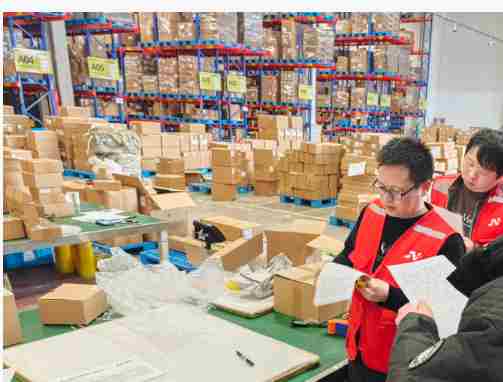
- Factory-paid inspection. If the factory pays the inspector the inspector works for the factory not you. Always pay the inspection company directly.
- Inspecting too early. Final inspection should be done when 100% of production is complete and 80%+ is packed. Inspecting earlier lets the factory swap defective units after the inspector leaves.
- No photo evidence. A verbal "pass" report is worthless. Require dated photos of every defect category and a sealed retained sample.
- Using the wrong AQL level. AQL 2.5 for major / 4.0 for minor is standard for consumer goods. Toys use AQL 0 for critical defects. Medical/safety products use AQL 0.65 or 1.0.
Typical share of TCO: 1–5%. For most orders this is 180–640 USD. Never skip this line — the expected value of QC inspection is always positive.
6. Component 5: Freight & Logistics (8–18% of TCO)
Freight is the single largest hidden cost. It includes ocean/air freight port fees trucking in China insurance and destination charges. Incoterm selection dramatically affects this cost.
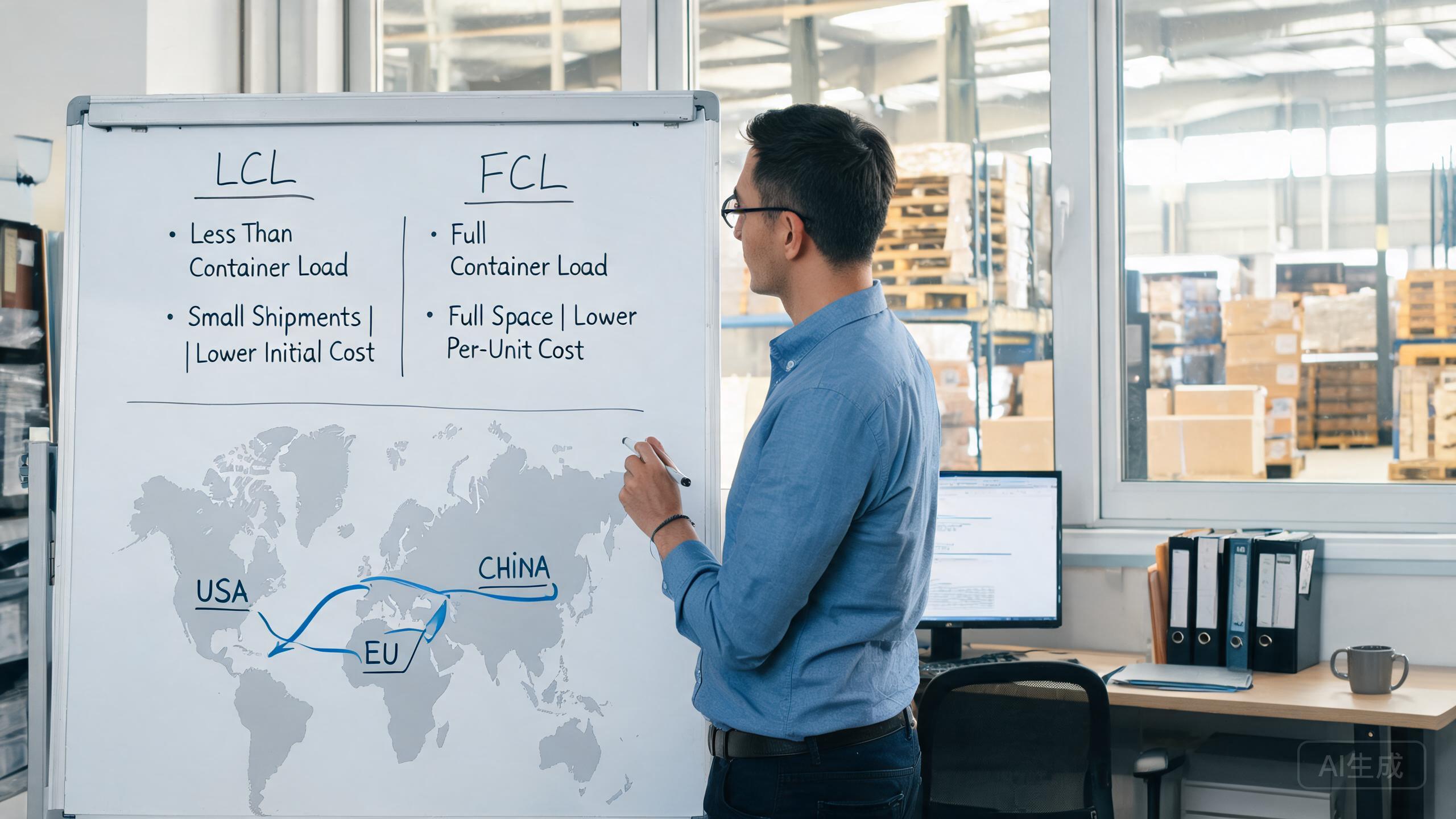
2026 freight rate ranges (Ningbo/Shanghai to US):
- FCL 40 HQ to LA: 1 800–3 200 USD (18–25 days)
- FCL 40 HQ to NY: 2 800–4 500 USD (28–35 days)
- LCL to West Coast: 45–85 USD/CBM
- LCL to East Coast: 65–115 USD/CBM
- Air freight: 3.50–6.50 USD/kg (5–8 days)
- Express (DHL/FedEx): 6–12 USD/kg (3–5 days)
- Marine cargo insurance: 0.15–0.30% of cargo value
Incoterm comparison (the most common cost trap):
- EXW (Ex-Works): Buyer pays all costs from factory door including China trucking (300–800 USD) export clearance (150–400 USD) and port fees. Unit price looks 3–5% lower but total is usually higher.
- FOB (Free On Board): Factory pays China trucking export clearance and loading onto vessel. Buyer pays ocean freight and destination. This is the most common and usually the most cost-effective for FCL.
- CIF (Cost Insurance Freight): Factory pays freight and insurance to destination port. Buyer pays destination charges and duties. Risky because the factory controls the freight forwarder and may add hidden fees.
- DDP (Delivered Duty Paid): Factory delivers to your door including duties. Simplest but most expensive — factory adds 10–20% margin on freight and duties.
Traps to avoid:
- EXW for FCL. EXW quotes look cheaper but the 1 000–2 000 USD in China-side costs you pay separately usually exceed the FOB premium.
- Overstated CBM. Some factories inflate carton dimensions to reduce their per-package export cost. Always verify real CBM before booking freight.
- Not consolidating. Shipping 5 separate LCL shipments from 5 suppliers costs 2–3× more than consolidating into one FCL at a bonded warehouse.
- No cargo insurance. A 5 000 USD order with no insurance is a 5 000 USD bet that the container won't be lost or damaged. Insurance costs 8–15 USD — never skip it.
Typical share of TCO: 8–12% for FCL shipments 12–18% for LCL. Air freight can push this to 20–40%.
7. Component 6: Duties & Taxes (0–25% of TCO)
Duties and taxes are determined by the HS code of your product and the destination country. They are paid to the destination government and cannot be negotiated — but they can be optimized through correct classification.
2026 US duty rate examples:
- Stainless-steel bottle (HS 7323.93): 3.9% + 7.5% Section 301 = 11.4%
- Cotton T-shirt (HS 6109.10): 16.5% + 7.5% Section 301 = 24.0%
- Wireless earbuds (HS 8518.30): 0% + 7.5% Section 301 = 7.5%
- Silicone spatula (HS 3924.10): 3.9% + 7.5% Section 301 = 11.4%
- Plastic building blocks (HS 9503.00): 0% + 7.5% Section 301 = 7.5%
- Ceramic mug (HS 6912.00): 7.5% + 7.5% Section 301 = 15.0%
Additional US costs: Merchandise Processing Fee (MPF) of 0.3464% (min 31.67 USD max 614.35 USD) and Harbor Maintenance Fee (HMF) of 0.125% for ocean shipments.
EU duty rates: Generally 0–17% depending on HS code. Plus VAT of 19–27% (varies by country) calculated on the duty-inclusive value. UK: similar duty rates plus 20% VAT.
Traps to avoid:
- Wrong HS code classification. Misclassifying to get a lower duty rate is fraud. US CBP penalties range from 200% to 400% of the underpaid duty plus seizure.
- Under-invoicing. Declaring a lower value to reduce duties is the #1 cause of customs seizures. The buyer is 100% legally liable for the declaration.
- Missing country-of-origin label. Every product must be permanently marked with country of origin. Missing labels can result in detention and re-export costs.
- Not accounting for Section 301. China-origin goods face additional 7.5–25% tariffs. These are not going away in 2026.
Typical share of TCO: 0–25% depending on HS code. For most consumer goods 5–15%. For apparel and textiles can reach 20–30%.
8. Cost Breakdown Summary Table
| Cost Component | % of Unit Price | % of TCO | Typical $ Range (5k PO) | Optional? |
|---|---|---|---|---|
| Product unit price | 100% | 45–70% | $5 000 | No |
| Tooling & sampling | 2–8% | 2–8% | $100–$400 | No (for custom) |
| Certification & testing | 2–10% | 2–10% | $100–$500 | No (regulated) |
| Quality control (AQL) | 1–5% | 1–5% | $180–$320 | No |
| Freight & logistics | 8–18% | 8–18% | $400–$900 | No |
| Duties & taxes | 0–25% | 5–15% | $250–$750 | No |
| Total landed cost | 115–165% | 100% | $6 030–$7 870 |
9. Case Study: Full Cost Breakdown of a $5 000 Kitchenware PO
Product: 1 000 stainless-steel insulated food jars (500ml) — FOB Ningbo $5.00/pc
| Cost Line | Amount | % of Total | Notes |
|---|---|---|---|
| Product unit price (1 000 × $5.00) | $5 000.00 | 71.4% | FOB Ningbo 304 stainless custom logo |
| Mold tooling (logo engraving) | $350.00 | 5.0% | One-time mold fee amortized over first order |
| FDA food-contact lab test | $320.00 | 4.6% | SGS migration test valid 2 years |
| AQL 2.5 pre-shipment inspection | $220.00 | 3.1% | 1 inspector 1 day in Ningbo |
| Ocean freight (LCL 2.5 CBM to LA) | $175.00 | 2.5% | 70 USD/CBM × 2.5 CBM |
| Cargo insurance | $12.00 | 0.2% | 0.24% of cargo value |
| US duty (11.4% of FOB value) | $570.00 | 8.1% | 3.9% base + 7.5% Section 301 |
| MPF + HMF fees | $31.67 | 0.5% | Minimum MPF applies |
| Customs broker + destination trucking | $180.00 | 2.6% | Broker 100 USD + drayage 80 USD |
| Sourcing agent commission (5%) | $250.00 | 3.6% | On FOB product value |
| Total landed cost | $7 108.67 | 100% |
Key insights from this breakdown
- Hidden costs total $2 108.67 (42.2% above unit price). The buyer who budgeted only the 5 000 USD unit price would have been surprised by an additional 2 108 USD on arrival.
- Duties are the largest hidden cost at $570 (8.1%). Correct HS classification is critical — misclassifying as a general kitchen utensil (HS 7323.93 at 11.4%) vs a drinking vessel (HS 7323.93 is correct) would not change this but misclassifying as a toy would.
- Freight is only $175 because the buyer consolidated with other orders. Shipping alone would have cost 400–600 USD. Consolidation saved 225–425 USD.
- Certification + QC cost $540 but prevented an estimated $3 000+ in failures. The FDA test confirmed 304 stainless (not 201) and the AQL inspection caught 28 defective units that would have caused Amazon refunds.
- True per-unit landed cost: $7.11 vs the quoted $5.00 FOB. The buyer must sell at 21.30 USD+ to hit a 3× markup — not 15.00 USD as they initially planned.
10. Unit Price vs TCO: Decision Comparison
The table below shows how a unit-price-only decision differs from a TCO-based decision for the same product category. The numbers are from Yeatru's 2026 dataset of 312 POs.
| Decision Factor | Unit-Price-Only Buyer | TCO-Based Buyer |
|---|---|---|
| Supplier selection | Cheapest quote ($2.10) | Best TCO ($2.50 unit + lower hidden costs) |
| Budget estimate | $5 000 (unit price only) | $7 100 (full landed) |
| Certification | Skipped (factory says "CE certified") | Verified lab test ($320) |
| QC inspection | Skipped | AQL 2.5 ($220) |
| Freight | EXW quote (unexpected $1 200 China-side) | FOB + consolidated ($175) |
| Actual landed cost | $8 400 (unexpected overrun $3 400) | $7 109 (matches estimate) |
| Defect rate | 11.3% ($565 rework) | 1.8% ($90 rework) |
| Compliance failure risk | High (68% chance of listing suspension) | Low (verifiable certificates) |
| True 12-month cost | $9 865 | $7 199 |
The TCO-based buyer pays 0.40 USD more per unit but saves 2 666 USD over 12 months by avoiding rework compliance failures and unexpected freight costs. This is why professional buyers never decide on unit price alone.
11. Frequently Asked Questions
- What is the average landed cost multiplier from China? For FCL shipments of general consumer goods the multiplier is 1.15–1.25× the FOB unit price. For LCL it is 1.25–1.40×. For air freight it is 1.40–1.80×. For regulated categories add 5–15% for certification.
- Can I avoid Section 301 tariffs? Legally no for China-origin goods. Some buyers use transshipment through Vietnam or Malaysia but this is illegal if the goods are not substantially transformed there. US CBP actively audits transshipment and penalties include seizure and 200% duty.
- How can I reduce freight costs? Three ways: (1) consolidate multiple supplier orders into one FCL (saves 18–32% vs LCL) (2) optimize packaging to reduce CBM (smaller cartons = more units per container) and (3) use FOB instead of EXW (avoids hidden China-side fees).
- Is certification a one-time cost? Yes per product configuration. A single test report covers all future orders of the exact same product/material/specification. If you change any variable (material color component) you need a new test. Certificates are valid for 1–3 years depending on the standard.
- How much should I budget for QC on a 5 000 USD order? 180–320 USD for one pre-shipment AQL inspection. If the product is regulated or high-value add an in-process inspection (200–350 USD) at 50–60% completion. Total QC budget: 180–670 USD.
- What is the single biggest hidden cost for first-time buyers? Freight. Most first-time buyers underestimate freight by 50–100% because they use EXW quotes without understanding China-side costs. Always get a full freight quote from your own forwarder before placing the PO.
Need a Transparent Cost Breakdown for Your PO?
Yeatru Sourcing provides a full 6-component TCO breakdown for every quotation — no hidden fees no surprises. We handle supplier negotiation certification QC freight consolidation and customs clearance with transparent commissions from 3% to 8% on PO value. Get a detailed cost breakdown for your next product within 48 hours.