What Is a T/T Bank Transfer to a Chinese Supplier?
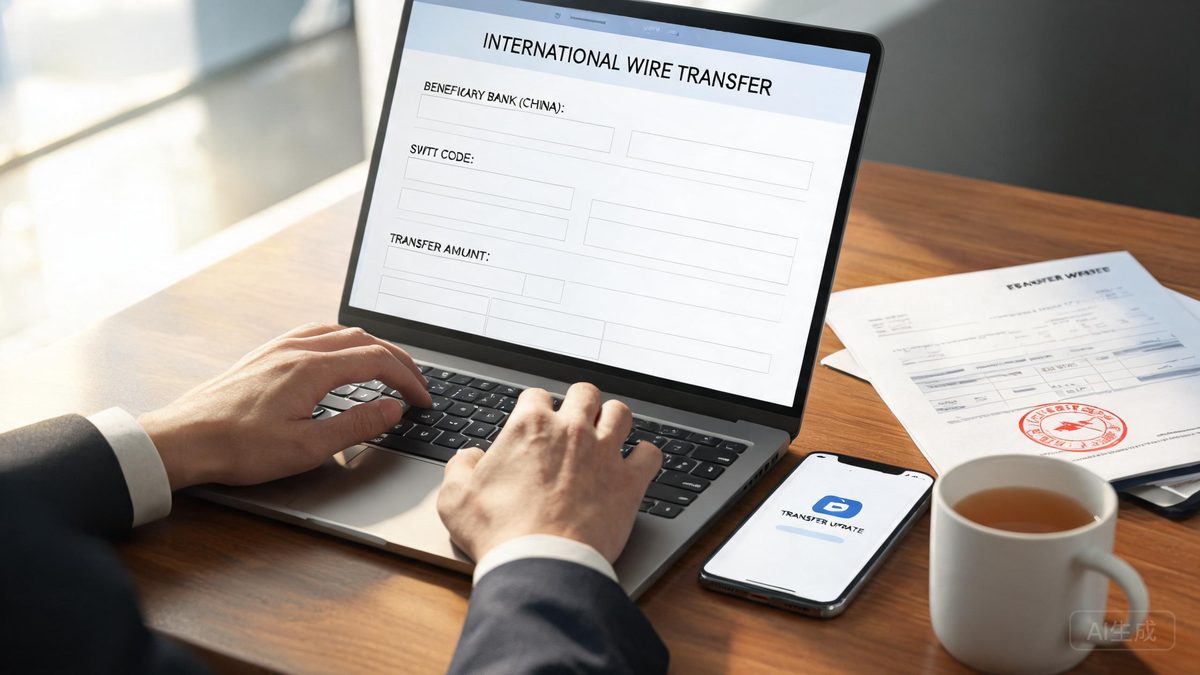
T/T (telegraphic transfer) is an international bank wire that moves funds from your bank to a Chinese supplier's bank account, almost always routed through the SWIFT network. It is the default payment method for China production orders because it is fast, low-fee, and accepted by every factory with a corporate USD/EUR/GBP account. Unlike PayPal or escrow, a T/T is irreversible once it clears — which is both its strength (suppliers trust it) and its weakness (you cannot claw back funds if the supplier defaults). Safe T/T use therefore depends on verifying the account and structuring the payment as a deposit + QC-gated balance.
The T/T Wire Process: Step by Step
- Supplier issues a PI (proforma invoice) listing the order value and full bank details: beneficiary company name, account number, SWIFT/BIC code, bank name, and bank address.
- You verify the account — the beneficiary name must match the company name on the business license character-for-character.
- Your bank sends the SWIFT wire. Most wires transit through 1–2 correspondent (intermediary) banks before reaching the Chinese receiving bank.
- 1–3 business days later, the supplier's bank credits the account. The supplier sends a credit advice (MT103 or bank receipt).
- You confirm receipt and the factory begins production against the deposit.
T/T Fee Breakdown
Buyers are often surprised that the fee is not just what their own bank charges. A SWIFT wire to China typically passes through three banks, each taking a cut.
| Fee Layer | Typical Cost | Notes |
|---|---|---|
| Sender's bank (your bank) | $20 – $50 | Outgoing international wire fee; some banks waive it for premium accounts. |
| Intermediary / correspondent bank | $15 – $30 | Deducted in transit if the sending and receiving banks have no direct correspondent relationship. |
| Recipient's bank (Chinese bank) | $10 – $20 | Incoming wire fee deducted from the credited amount. |
| Total typical cost | $35 – $100 | Lower with major Chinese banks (ICBC, BOC, CMB) and SHA cost-sharing. |
Cost-sharing options: SHA (shared — each party pays their own bank's fee, most common) and OUR (you pay all fees, ensures the supplier receives the full PI amount, costs more upfront). For precision, specify the cost code in the wire instruction.
T/T vs Other Payment Methods
| Method | Fee on $10k | Speed | Reversibility / Protection | Best For |
|---|---|---|---|---|
| T/T wire | $35 – $100 | 1–3 days | Irreversible | Production orders, verified factories |
| PayPal | ~$540 (~5.4%) | Instant | 180-day buyer protection | Samples <$3k |
| XTransfer | $40 – $70 (0.4–0.7%) | Same-day – 2 days | Compliance-verified | Repeat smaller suppliers |
| Alibaba Trade Assurance | 1–2% + funding fee | 1–3 days | Escrow-style refund | Alibaba.com orders |
| Letter of Credit | $200 – $500 | 5–10 days | Bank-backed | Orders >$50k |
T/T Risks and How to Mitigate Them
- Bank-account-swap scam: a compromised or fake email sends a "revised PI" with a different account number. Mitigation: always re-confirm bank details by phone/WeChat with a known contact, and match the beneficiary to the business license.
- No payment protection / no refund: once cleared, T/T cannot be reversed. Mitigation: use 50/50 terms so only the deposit is at risk, and release the balance only after AQL 2.5 pre-shipment QC passes.
- Personal accounts: suppliers asking for a personal-name account are either evading tax or running a scam. Mitigation: refuse and require a corporate account whose beneficiary matches the license.
- Hidden intermediary fees: the supplier receives less than the PI amount. Mitigation: use OUR cost-sharing or add a fee buffer to the wire.
SWIFT vs CNAPS Codes
For international wires into China you use the bank's SWIFT/BIC code (8–11 characters, e.g. ICBKCNBJ for Industrial and Commercial Bank of China Beijing). CNAPS (China National Advanced Payment System) codes are 12-digit codes used for domestic RMB transfers within China — they are not used for incoming USD/EUR wires. Some suppliers list both; use SWIFT for your foreign wire. If you are paying RMB domestically (e.g. through a China entity), then CNAPS applies.
Worked Example: $10,000 T/T Wire
A verified Yiwu electronics factory sends a PI for a $10,000 deposit on a $20,000 OEM order. Bank details: beneficiary "Yiwu XX Electronics Co., Ltd.", SWIFT ICBKCNBJZJY (ICBC Jinhua).
- Initiate a USD SWIFT wire for $10,000 with SHA cost-sharing at your US bank.
- Fees: sender $25 + intermediary $15 + recipient $5 = $45 total.
- The supplier's account is credited $9,975 (after the $25 in-transit deductions) on day 2.
- You confirm the MT103 credit advice against the PI beneficiary name — match confirmed.
If you had used OUR, you would pay ~$55–$60 upfront and the supplier would receive the full $10,000. Either way, the order is now in production against the verified deposit.
How Yeatru Handles T/T Payments
Yeatru mediates T/T safety on every managed order:
- Verifies the supplier's business license and confirms the PI bank beneficiary matches the licensed company name before you wire.
- Recommends SHA vs OUR cost-sharing based on the supplier's bank and the order size.
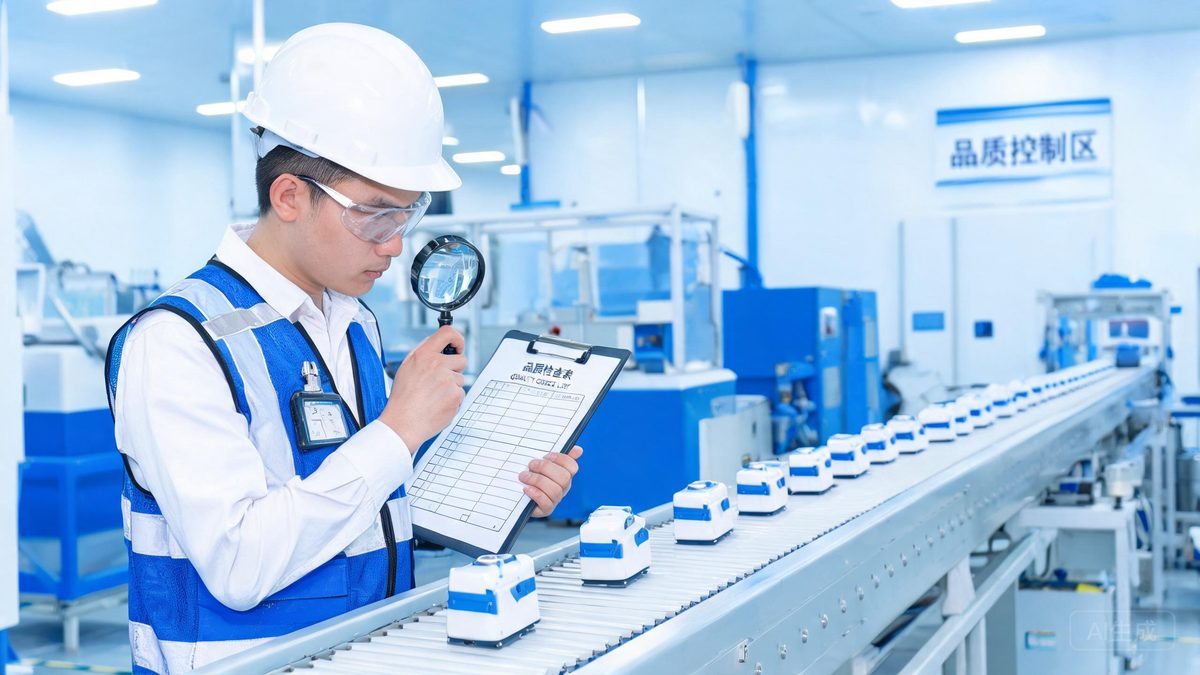
- Structures 50/50 payment terms with an AQL 2.5 QC gate before the balance wire.
- Re-confirms bank details by phone before the balance transfer to catch any mid-order account change.
Frequently Asked Questions
1. How do I send a T/T bank transfer to a Chinese supplier?
Get a signed PI with the supplier's bank details (beneficiary name, account number, SWIFT/BIC, bank name/address). Verify the beneficiary matches the business license. Then initiate an international wire at your bank (online or in-branch) in USD/EUR/GBP. Save the SWIFT receipt (MT103) and confirm receipt with the supplier 1–3 days later.
2. What are the fees for a T/T wire to China?
Total $35–$100 per wire: sender bank $20–$50, intermediary/correspondent bank $15–$30, recipient bank $10–$20. Large Chinese banks (ICBC, BOC, CMB) and SHA cost-sharing keep the total closer to $35–$60; OUR usually costs more upfront.
3. How long does a T/T wire transfer to China take?
1–3 business days for USD wires via SWIFT to a major Chinese bank. EUR wires via SEPA+SWIFT can take 1–2 days. Delays over 5 days usually mean a missing intermediary, wrong SWIFT code, or compliance hold — ask both banks for the MT103 trace.
4. How do I verify a Chinese supplier's bank account?
(1) The beneficiary name on the PI must match the company name on the business license character-for-character. (2) Call the bank's listed number to confirm the account is a corporate account in that company's name. (3) Never accept a personal-name account or a "trading partner" account. (4) Cross-check against gsxt.gov.cn and the license verification guide.
5. Can I send a T/T to a personal bank account?
Technically yes, but never for production orders. Personal accounts are the #1 scam channel — funds are untraceable and unprotected. If a supplier insists on a personal account, walk away. Only verified factory corporate accounts are acceptable.
6. Can I get a T/T refund if the supplier defaults?
Almost never. T/T is irreversible once the funds clear the recipient's bank. Your only recourse is the 50/50 structure (deposit at risk, balance withheld), legal action under the PI/contract, or a complaint to China's 12315 system. This is why you never pay 100% upfront.
Conclusion
T/T bank transfer is the workhorse of China production payments — fast, cheap ($35–$100), and universally accepted — but it is irreversible, so safety depends on process, not the method itself. Verify the beneficiary against the business license, use 50/50 terms, gate the balance behind a QC pass, and never wire to a personal account. Done this way, T/T is as safe as any cross-border payment can be. Contact Yeatru to verify a supplier's bank details before your next wire.