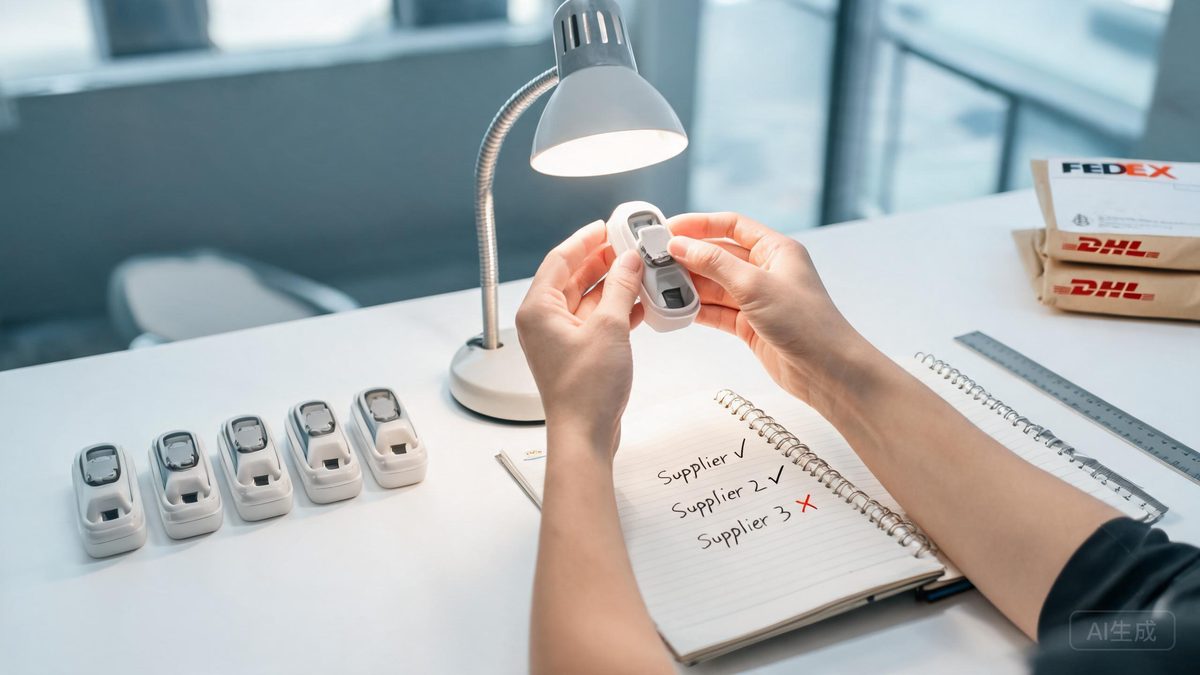
What Is a Sample Order from China?
A sample order is a small quantity request sent to a Chinese supplier before committing to mass production. Its purpose is to verify that the supplier can produce a product matching your specification — materials, dimensions, function, finish, logo, and packaging. Samples are the single cheapest way to de-risk a sourcing order: a $150 sample can prevent a $15,000 bad order. In China sourcing, the sample stage is where you confirm quality, communicate your spec precisely, and lock the benchmark for production QC.
Sample Types: Cost, Lead Time & Purpose
Not all samples are equal. Each type serves a different purpose at a different stage of the sourcing process.
| Sample Type | Cost | Lead Time | Purpose |
|---|---|---|---|
| Stock sample (existing inventory) | Free – $50 + shipping | 1 – 3 days | Quick quality & finish check |
| Custom sample (your logo/color) | $20 – $200 + shipping | 5 – 15 days | Branding, color, material verification |
| Pre-production (PP) sample | $50 – $500 + shipping | 7 – 20 days | Final spec confirmation before bulk |
Order stock samples first to shortlist suppliers, then custom samples to check branding, then a PP sample to lock the final spec. Many suppliers refund the sample fee when you place the bulk order — always ask.
Sample Shipping from China
Samples almost always go by express courier, not sea freight:
- DHL / FedEx / UPS express — $20–$80 for under 5 kg, 3–5 business days door-to-door. Includes customs clearance.
- Supplier courier account — many factories have a DHL/FedEx account and ship samples for free to win your business. Always ask.
- Economy express — $10–$30, 7–10 days, for non-urgent samples.
- Avoid sea freight for samples — 25–40 days defeats the purpose of sampling.
The 6-Step Sample Evaluation Checklist
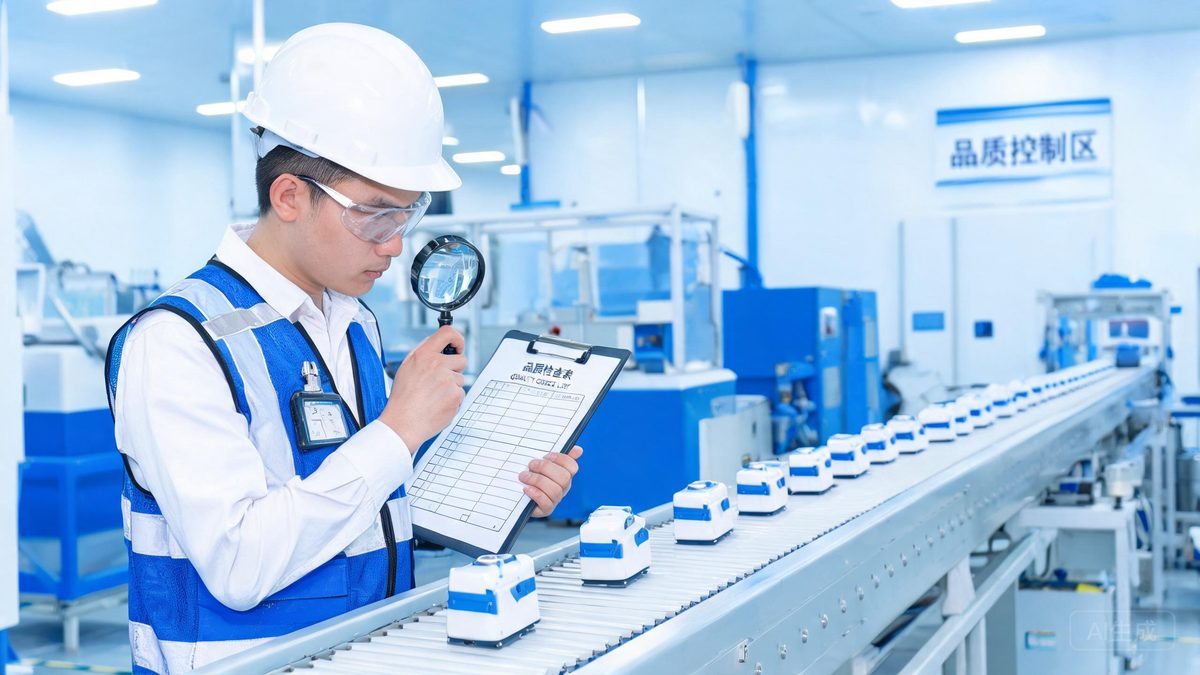
When the sample arrives, evaluate it systematically — not just by eyeballing it. Use this 6-step checklist:
- Visual inspection — check surface finish, color consistency, scratches, dents, smudges, and alignment. Compare against your approved product photos.
- Dimension & spec check — measure with calipers and a tape measure against your spec sheet. Tolerances matter: a 1 mm deviation on a precision part can ruin the fit.
- Functional test — use the product exactly as the end user will. If it's a lamp, plug it in and run it for 4 hours; if it's a lock, cycle it 50 times.
- Durability test — drop test (if applicable), load test, stress test, and water/UV exposure. A product that passes a visual check but breaks on day 3 is worthless.
- Packaging check — does the box protect the product? Is the branding correct? Does it survive a simulated 1 m drop?
- Labeling & marking check — verify logo position, barcode, compliance marks (CE, FCC, FDA), country of origin, and any required text.
Document everything. Take photos and measurements of every sample. If you later approve it as the golden sample, those records become your QC reference. Pair with our QC photo & video evidence guide for a defensible record.
Golden Sample & Approval Process
The pre-production (PP) sample is the most important sample of all. It is made to your final, exact specification — the same materials, dimensions, color, logo, and packaging that will be used in mass production. The approval process is:
- Supplier ships the PP sample to you.
- You run the 6-step evaluation and either approve, request changes, or reject.
- If changes are needed, the supplier makes a revised PP sample (1–2 weeks).
- You approve the final PP sample in writing (email is fine) — this becomes the golden sample.
- The golden sample is kept by both you and the factory as the reference standard for the entire order.
Never start mass production without a written PP approval. If the factory pushes back ("we'll start while you review"), hold firm — starting without approval removes your leverage if the bulk run is wrong.
Worked Example: PP Sample Saves a Kitchenware Order
A German buyer ordered 2,000 silicone food-storage containers from a Yiwu factory at $2.80/pc ($5,600 total). Here is how the golden sample worked:
- Stock sample ($15) arrived in 3 days — finish looked good, but the buyer noticed the silicone smelled strongly.
- Custom sample ($80) with the buyer's logo — still had the chemical smell. Buyer requested food-grade LFGB silicone (EU standard).
- PP sample ($150) with LFGB-grade silicone — no smell, passed the 6-step eval. Approved as the golden sample.
- Mass production QC — Yeatru's pre-shipment inspection compared 32 sampled units against the golden sample. Two units had a different (cheaper) silicone smell — factory had substituted material on part of the run.
- Result — factory reworked the affected 400 units at its own cost, re-inspected, and passed. The $150 PP sample + $180 inspection prevented a $5,600 return and an EU food-safety recall.
Common Sample Pitfalls
- Perfect sample, different mass production — the most common issue. The factory uses premium materials for the sample but cheaper ones for bulk. Defense: golden sample + AQL inspection.
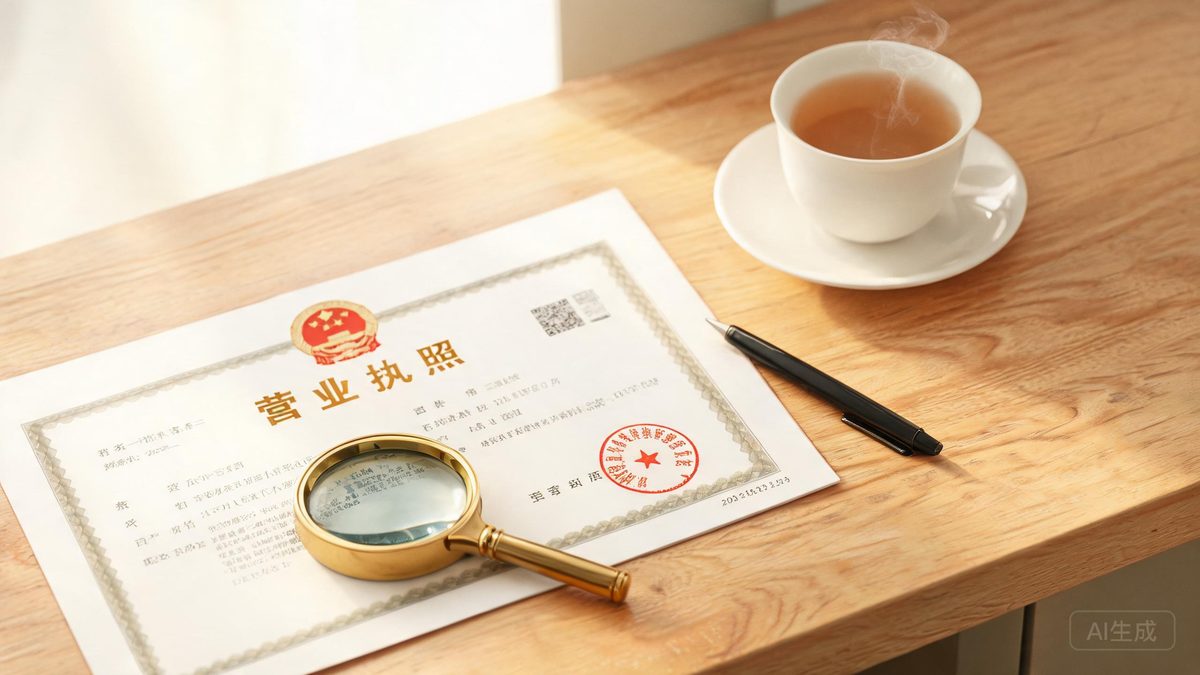
- Sample from another factory — some trading companies send you a sample from a different (better) factory than the one that will produce your order. Defense: order a factory audit or ask for the production license.
- Ignoring compliance in the sample — if your product needs CE/FCC/FDA, the sample must carry the correct marks and pass the relevant tests. Don't approve a sample that can't be legally sold.
- No written approval — "looks good, go ahead" in a chat is not enough. Email your written approval referencing the sample batch number.
How Yeatru Manages Sample Orders
Yeatru coordinates the entire sample pipeline:
- We request stock and custom samples from 3–5 matched factories and ship them to you in one consolidated DHL box (saves $50–$150 in shipping).
- We provide a spec sheet template so your PP sample is made to exact tolerances.
- We hold the approved golden sample at our Yiwu warehouse and use it as the reference for every QC inspection.
- We catch material substitutions and tolerance drift before your balance payment is released.
Frequently Asked Questions
1. How do I order a sample from a Chinese supplier?
Contact the supplier with your product spec and ask for three things: a stock sample for quality reference, a custom sample with your logo/color, and a pre-production (PP) sample to final spec. Pay the sample fee via PayPal or bank transfer, and ship via DHL/FedEx. Most suppliers reply within 24–48 hours.
2. How much does a sample from China cost?
Stock samples are usually free or $5–$50 plus shipping. Custom samples with your logo/color cost $20–$200. A pre-production (PP) sample made to final spec costs $50–$500. Sample fees are often refunded against the bulk order if you place it with that supplier.
3. How are samples shipped from China?
Samples under 5 kg ship via DHL or FedEx express for $20–$80 and arrive in 3–5 business days door-to-door. Many suppliers have a courier account and offer free shipping on samples to win your business. For heavier sample batches, use economy express or air freight.
4. What is a PP (pre-production) sample?
A PP sample is a sample made to your final production specification — exact materials, dimensions, color, logo, and packaging — produced right before mass production. You must approve it in writing before the factory starts the bulk run. The approved PP sample becomes the golden reference for QC.
5. What is a golden sample and how is it used?
The golden sample is the approved pre-production sample that sets the quality benchmark for the entire order. During mass-production QC, each inspected unit is compared against the golden sample for finish, dimensions, function, and labeling. It catches deviations where the factory changes materials or tolerances between sample and bulk.
6. Why does mass production differ from the sample?
Factories sometimes substitute cheaper materials, relax tolerances, or switch subcontractors between the sample and the bulk run to cut cost. That is why you must keep the golden sample and compare it against AQL pre-shipment inspection units — it is your best defense against quality drift.
Conclusion
Ordering and evaluating samples from China is the most cost-effective quality control step in sourcing. By progressing from stock sample → custom sample → PP sample, you verify quality at every stage and lock the golden sample that mass production is measured against. The silicone-container example shows how a $150 PP sample caught a material substitution during QC and prevented a $5,600 return and an EU food-safety recall. The key rule: never approve mass production without a written PP sample sign-off, and always back it up with a pre-shipment inspection. Request help with your sample order from Yeatru and we'll consolidate samples from 3–5 factories into one shipment.