What Are Food Contact Materials?
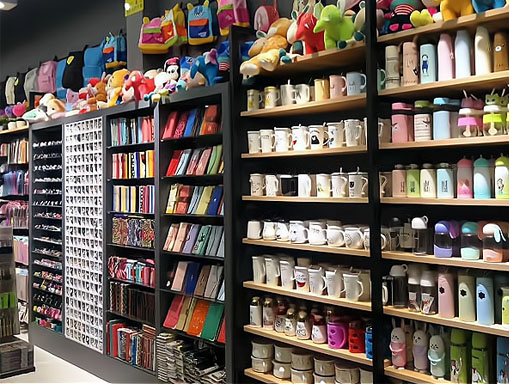
Food contact materials (FCM) are any materials that come into contact with food during production, processing, packaging, storage, transport, or serving — silicone spatulas, plastic food containers, stainless-steel bowls, bamboo cutting boards, ceramic mugs, and the inner lining of a food can. Because chemicals can migrate from the material into the food, every market regulates which substances are allowed and how much can migrate. The three frameworks that matter when sourcing from China are FDA 21 CFR (US), EU 1935/2004 + LFGB (EU/Germany), and GB 4806 (China domestic). Compliance is not optional: a failed test means a recalled product, a seized shipment, and potential legal liability.
The 3 Regulatory Frameworks
| Market | Framework | Key Standards | What It Requires |
|---|---|---|---|
| United States | FDA 21 CFR | Parts 175–189; FCN | Substances must be listed as food-contact-safe. No mandatory pre-market approval; supplier DoC + migration test. |
| EU / Germany | EU 1935/2004 + LFGB | EU 10/2011 (plastics), LFGB §30/31 | Overall & specific migration limits; good manufacturing practice; DoC; LFGB sensory test for Germany. |
| China (domestic) | GB 4806 series | GB 4806.1, .7 (plastics), .9 (metals), .11 (rubber/silicone) | Migration limits + labeling; mandatory GB mark for some categories. |
FDA 21 CFR (US Market)
FDA does not "certify" food contact products. Instead, 21 CFR Parts 175–189 list substances permitted for use in food contact materials. Part 177 covers polymers: for example, 177.1520 covers olefin polymers (PP, PE), and 177.2600 covers rubber articles intended for repeated use. New substances go through the Food Contact Notification (FCN) program. The manufacturer must confirm the raw material is an FDA-listed food-contact substance, and you rely on the supplier's letter of compliance plus third-party migration testing. For a children's sippy cup, you would need the PP resin to be FDA-listed and a migration test showing no BPA or phthalates above the limit.
EU 1935/2004 + LFGB (Germany/EU)
The EU framework regulation 1935/2004 sets the general principle that food contact materials must not transfer constituents to food in quantities that endanger human health. Material-specific regulations add detail: EU 10/2011 governs plastics and sets specific migration limits (SML) for substances like BPA (0.6 mg/kg food). Germany's LFGB (Lebensmittel- und Futtermittelgesetzbuch) goes further — Section 30 requires no harmful substances, and Section 31 requires a sensory test (no odor or taste transfer). German retailers often require an LFGB test report in addition to the EU DoC. See sourcing from China to Germany.
GB 4806 Series (China Domestic)
If the product is sold in China, it must comply with the GB 4806 series: GB 4806.1 (general requirements), GB 4806.7 (plastics), GB 4806.9 (metals, e.g. stainless steel 304/316), GB 4806.11 (rubber and silicone), GB 4806.4 (ceramics). China requires labeling on the product ("食品接触用" / "for food contact use") and, for some categories, a CCC/GB mark. Many factories already hold GB 4806 reports because they sell domestically — ask for them.
Material-Specific Requirements
| Material | US (FDA) | EU / Germany (LFGB) | China (GB 4806) | Key Limit |
|---|---|---|---|---|
| Silicone (LSR) | 21 CFR 177.2600 | EU 10/2011 + LFGB §31 sensory | GB 4806.11 | Overall migration ≤ 10 mg/dm² |
| PP / PE plastic | 21 CFR 177.1520 | EU 10/2011 | GB 4806.7 | BPA ≤ 0.6 mg/kg (EU) |
| Stainless steel | 21 CFR 175.300 (coating) | Framework 1935/2004 | GB 4806.9 | Cr & Ni migration limits |
| Bamboo / wood | No specific FCN; GRAS | National rules (e.g. Germany BfR) | GB 4806.12 | Melamine & formaldehyde limits |
| Ceramic / glass | CPG 7117.06/.07 (lead & cadmium) | 84/500/EEC (lead & cadmium) | GB 4806.4 | Pb ≤ 0.5 mg/L, Cd ≤ 0.25 mg/L |
How to Verify Compliance in Practice
- Confirm the raw material grade. Ask the factory for the raw material supplier, brand, grade, and batch number. Require food-grade grades (e.g., food-contact LSR silicone, food-grade PP). Never accept "industrial grade."
- Request existing test reports. Ask for FDA, LFGB, or GB 4806 test reports on file. Verify the report number on the issuing lab's website (SGS, Intertek, BV, TUV all have report-verification portals).
- Commission your own test. Send a pre-production sample to an accredited lab for migration testing. Cost: $150–$400 per material; $400–$800 for multi-material; $300–$600 for LFGB. Turnaround: 5–10 business days.
- Get a Declaration of Compliance (DoC). The factory issues a DoC stating the product meets the relevant standard. This is your legal defense in the destination market.
- Audit production for material substitution. During mass production, verify the factory uses the approved raw material batch. This is the #1 failure point. See product compliance inspection.
- Test mass-production samples. Before shipment, pull samples from the finished batch and run a migration test. A passing pre-production sample is worthless if the factory switched materials.
Worked Example: Silicone Kitchenware for the US & Germany
A buyer ordered 5,000 silicone baking mats for sale on Amazon US and in a German retail chain. The factory quoted $1.20/unit EXW. Before production, the buyer asked for the raw material batch: the factory specified Dow Corning LSR 7340 (a food-contact liquid silicone rubber). Testing cost:
- FDA 21 CFR 177.2600 migration test (US): $250
- LFGB §31 sensory + overall migration (Germany): $450
- Total testing: $700 (one-time, valid for the material/grade)
Both tests passed. During production, the buyer's inspector checked the raw material batch record and confirmed the factory was using Dow Corning LSR 7340 — not a cheaper industrial silicone. Pre-shipment samples passed a repeat migration test. Result: the product sold on both Amazon US and the German retailer without compliance issues. Testing cost was $0.14/unit spread over 5,000 units — a small insurance premium against a $6,000 product recall.
Common Red Flags
- Factory refuses to provide the raw material supplier or batch number.
- Test report is from an unknown lab or has no verifiable report number.
- Unit price is far below the food-grade material cost (e.g., a silicone mat at $0.40 when the silicone alone costs $0.60).
- "Food-grade" claim with no test report or DoC.
- Factory offers "FDA certificate" — FDA does not issue product certificates. A legitimate document is a letter of compliance or a third-party test report.
How Yeatru Helps
- Source only from factories with existing FDA/LFGB/GB 4806 test reports on file.
- Verify every test report number on the lab's website before we place an order.
- Audit the raw material batch during production to prevent substitution.
- Coordinate third-party migration testing on pre-production and pre-shipment samples.
- Collect the Declaration of Compliance and file it with your shipment documentation.
Frequently Asked Questions
1. What standards apply to food contact materials from China?
Three main frameworks: US FDA 21 CFR Parts 175–189 (food contact substances), EU Framework Regulation 1935/2004 plus German LFGB (Sections 30 & 31) and the material-specific EU regulations (e.g. EU 10/2011 for plastics), and China's GB 4806 series (GB 4806.1 general, GB 4806.7 plastics, GB 4806.11 rubber & silicone, GB 4806.9 metals).
2. What is LFGB and is it required for selling in Germany?
LFGB is Germany's food and feed code. Sections 30 and 31 govern food contact materials. Selling in Germany requires compliance with EU 1935/2004 and the material-specific EU regulations; LFGB Section 31 sensory testing is often required by German retailers and is stricter than the EU baseline. A Declaration of Compliance and test report are expected.
3. What is FDA 21 CFR for food contact materials?
FDA 21 CFR Parts 175–189 list substances permitted for food contact materials in the US. Part 177 covers polymers (e.g. 177.1520 olefin polymers like PP/PE, 177.2600 rubber). The manufacturer confirms the material is an FDA-listed food-contact substance; FDA does not "certify" the product, so you rely on the supplier's letter of compliance and third-party migration testing.
4. How much does food contact material testing cost?
Single-material migration testing costs $150–$400 per material at an accredited lab (SGS, Intertek, BV, TUV). Multi-material products (e.g. a silicone spatula with a wooden handle) are tested per material and cost $400–$800. Full LFGB sensory + overall migration is $300–$600. Testing takes 5–10 business days.
5. Can a Chinese factory's own test report be trusted?
A factory's in-house or self-issued test report is not sufficient for regulatory compliance. Always require a test report from an accredited third-party lab (SGS, Intertek, Bureau Veritas, TUV) with a traceable report number, and verify the number on the lab's website. Fake test reports are common.
6. What is the biggest risk when sourcing food contact materials from China?
The biggest risk is raw material substitution: the factory provides a food-grade sample for testing but mass-produces with cheaper industrial-grade material that fails migration limits (e.g. phthalates, BPA, heavy metals). Mitigate by auditing the raw material batch records during production and running a pre-shipment migration test on mass-production samples.
Conclusion
Food contact materials from China must be compliant with the destination market's standard: FDA 21 CFR for the US, EU 1935/2004 + LFGB for Germany/EU, and GB 4806 for China. Compliance is a three-step process: confirm the food-grade raw material, commission third-party migration testing ($150–$800), and audit production to prevent material substitution. A $700 test on a $6,000 order is cheap insurance against a recall. Ask Yeatru to verify your FCM supplier's test reports before you place an order.