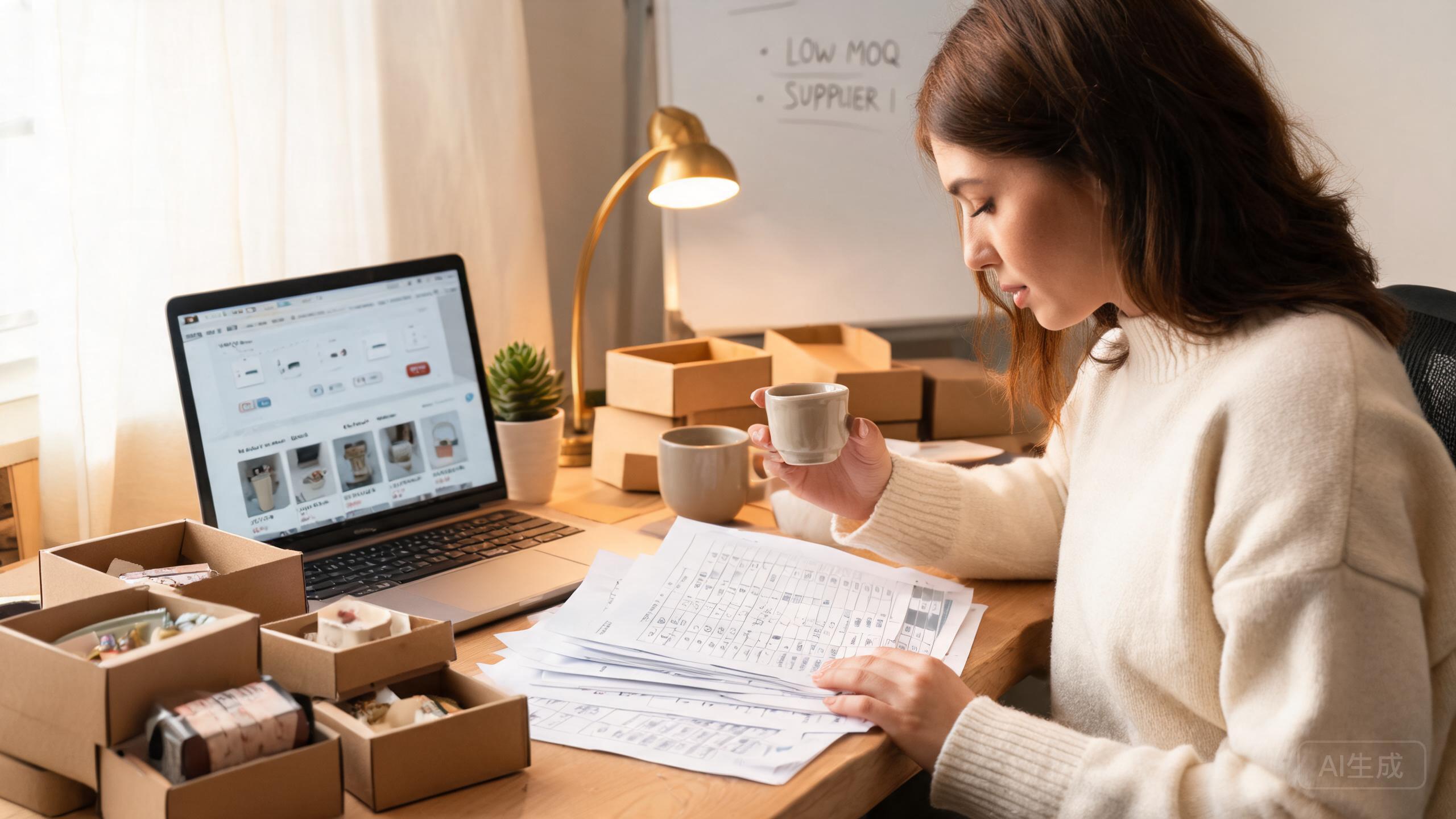
China sourcing for small businesses is a scaling problem, not a one-time purchase. The strategy that works for your first $2,000 order (samples, stock goods, air DDP) is different from what works for your tenth $25,000 order (OEM, private label, FCL). This guide maps the three phases of small-business sourcing — first order, orders 2-5, and orders 6-10 — with concrete pricing, a worked example showing a 35% unit-price drop, and the rules for when to switch from stock to OEM and from air to sea.
The Three Phases of Small-Business Sourcing
Most small businesses move through three distinct phases. Treating each phase the same is the most common mistake: a first-time buyer who tries to negotiate OEM pricing gets quoted inflated numbers, while a scaling business that keeps buying stock goods leaves 20-40% margin on the table.
| Phase | Order Size | Supplier Type | Shipping | Agent Fee | Key Goal |
|---|---|---|---|---|---|
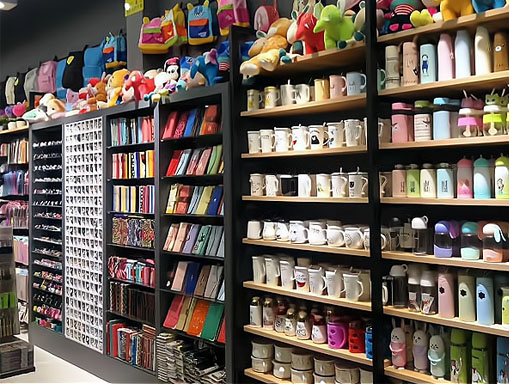
| 1st order | $1k - $3k (100-300 pcs) | RTS stock (Yiwu / 1688) | Air DDP | Flat $90-$300 | Validate demand |
| Orders 2-5 | $3k - $10k (500-2k pcs) | Trading co. or small factory | Sea LCL (over 300 kg) | Flat or 5-8% commission | Build relationship + AQL QC |
| Orders 6-10 | $10k - $50k (2k-10k pcs) | OEM factory (private label) | Sea FCL | 3-5% commission | Volume pricing + branding |
Notice the unit economics flip: in phase 1, shipping and fees can be 40-60% of landed cost; in phase 3, the factory unit price dominates and freight per unit drops to 5-10%.
Phase 1: The First Order (Validate, Don't Optimize)
Your first order exists to answer one question: will people buy this? Spend $1,000-$3,000 on 100-300 units of stock goods. Order samples from 2-3 suppliers ($20-$200 each), ship by air DDP ($4-$9/kg), and pay with PayPal for buyer protection. Use a flat-fee sourcing agent ($90-$300) to consolidate and run a photo QC if you cannot read Chinese.
Do not private-label on the first order. Tooling ($200-$1,500) and MOQs (300-1,000 units) tie up capital before you know the product sells. If the product flops, you are out $2,000, not $10,000. If it sells, you have 30+ days of data to justify a bigger, branded reorder.
Phase 2: Orders 2-5 (Build Trust and Add QC)
Once you have sold through the first batch, reorder 500-2,000 units from the best supplier. This is the phase where relationships start paying off: a supplier who has delivered once will quote you 5-15% below their list price for a repeat order. Ask for a 3% early-payment discount if you can pay 50% deposit instead of 30%.
Add two things now that you did not need in phase 1:
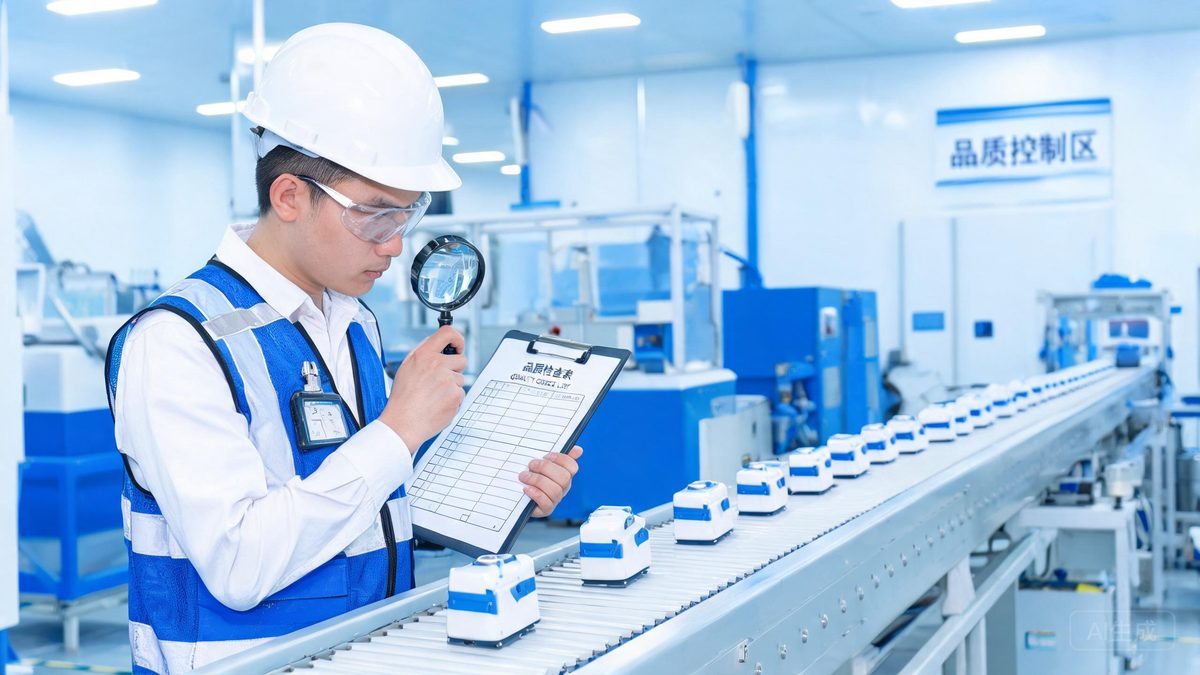
- AQL 2.5 pre-shipment inspection ($120-$250). At 1,000 units, a 5% defect rate is 50 units you cannot sell — a $200 inspection pays for itself.
- Sea LCL shipping for orders over 300 kg. LCL costs $300-$800 per shipment vs. $1,500-$4,000 for air DDP at 500 kg. The tradeoff is 25-40 days transit vs. 7-12.
At this stage, switch from air DDP to FOB + your own freight forwarder. DDP forwarders mark up freight 30-60%; managing your own forwarder cuts that margin.
Phase 3: Orders 6-10 (Volume Pricing and OEM)
When you reach 2,000-10,000 units per order, you have the leverage to go direct to an OEM factory. This is where the big savings happen. A private-label factory will quote 20-40% below RTS pricing because there is no trading-company margin and no finished-goods inventory carrying cost.
To get OEM pricing you need:
- A tooling deposit ($200-$1,500) for your custom mold or logo.
- An MOQ commitment of 300-1,000 units per SKU.
- A written spec sheet with tolerances, materials, and packaging.
- A pre-production sample (PPS) signed off before mass production.
Book a full container (FCL) once your order exceeds 15 CBM (about 5,000-10,000 small units). FCL is 30-50% cheaper per CBM than LCL and reduces damage risk because your cargo is not mixed with others.
Worked Example: $2,000 to $25,000 Order (35% Unit-Price Drop)
Let's track a small business selling stainless-steel water bottles as it scales from order 1 to order 8.
| Line Item | Order 1 (500 pcs, stock) | Order 8 (5,000 pcs, OEM) |
|---|---|---|
| Unit EXW price | $4.00 | $2.60 (-35%) |
| Units | 500 | 5,000 |
| Product EXW total | $2,000 | $13,000 |
| Private label / tooling | $0 | $800 |
| QC inspection (AQL 2.5) | $0 (photo check) | $220 |
| Shipping | $650 (air DDP, 100 kg) | $1,800 (sea FCL) |
| Agent fee | $180 (flat) | $450 (3.5% of $13k) |
| Duty (5% of EXW) | $100 | $650 |
| Total landed cost | $2,930 | $16,920 |
| Landed cost per unit | $5.86 | $3.38 |
The unit EXW price drops 35% ($4.00 → $2.60), and the landed cost per unit drops 42% ($5.86 → $3.38). At a $14.99 retail price, order 1 yields ~$9 gross margin per unit while order 8 yields ~$11.60 — and you are selling 10x the volume. The tooling and FCL costs pay for themselves in a single order.
When to Hire a Sourcing Agent
For orders under $3,000, a flat-fee agent ($90-$300) is optional — you can manage RTS suppliers yourself with PayPal protection. Above $5,000, a commission-based agent (3-5%) becomes worthwhile because they negotiate factory pricing, run AQL QC, and handle OEM tooling. On a $25,000 order, a 4% agent fee ($1,000) typically returns $2,500-$5,000 in negotiated savings and defect reduction. See our 2026 sourcing agent fee guide and how to vet an agent for details.
Scaling Mistakes to Avoid
- Scaling too fast: do not jump from 500 to 10,000 units before you have 90 days of sales data.
- Paying OEM prices for stock goods: if you are not getting private label, do not accept factory MOQs.
- Sticking with DDP too long: above 300 kg, FOB + your own forwarder saves 30-60% on freight.
- Skipping PPS approval on OEM orders: a signed pre-production sample is your only leverage if mass production is wrong.
- Single-supplier dependency: keep a backup supplier quoting even after you commit, so you can switch if quality slips.
Frequently Asked Questions
1. When should a small business hire a sourcing agent?
Hire an agent when your order exceeds $5,000 or you need OEM/private label. A 3-5% commission on a $25,000 order ($750-$1,250) typically returns 10-25% in savings through better pricing and QC. For orders under $3,000, a flat $90-$300 fee is more economical.
2. Can a small business buy direct from a Chinese factory?
Yes, but only above a volume threshold. Factories typically require 500-3,000 units per SKU for direct OEM orders and prefer buyers who communicate in Chinese or use an agent. Below 500 units, you will get better pricing and service from RTS suppliers or Yiwu trading companies.
3. How do I get volume pricing as a small business?
Combine multiple SKUs into one order, commit to a 6-12 month forecast, or pay 30-50% upfront. Volume pricing usually kicks in at 1,000+ units (5-15% off) and 5,000+ units (20-40% off). Use the savings to fund private labeling.
4. Should I private label my first order?
No. Private label requires $200-$1,500 in tooling and MOQs of 300-1,000 units. Validate demand with stock goods first (100-300 units), then private-label on the 3rd-5th order once you have 30+ days of sales data.
5. How much can a small business save by scaling?
Unit prices typically drop 20-40% from a 200-piece order to a 5,000-piece order. On a $25,000 order, that is $5,000-$10,000 in savings. Freight per unit also drops sharply when moving from air DDP to sea FCL.
6. What incoterm should a small business use?
Use EXW or FOB with a freight forwarder for orders over 300 kg (saves 40-60% vs DDP). Use DDP for orders under 300 kg or your first 2-3 orders. Never use CIF — it hides freight costs and gives the supplier control of the shipment.
Common Pitfalls to Avoid
- Skipping pre-shipment inspection. Once the container is sealed and at sea, defects cannot be returned to the factory. A $150 AQL 2.5 inspection catches $1,000+ in defects before they cross the Pacific.
- Using the wrong AQL level. AQL 2.5/4.0 is standard for consumer goods; 0.65 for medical/safety products, 4.0 for low-value commodities. The wrong level either over-inspects (wasting money) or under-inspects (missing defects).
- Inspecting at the factory without photo/video evidence. A verbal 'pass' report is worthless when you receive 200 broken units. Demand dated photos of every defect category and a sealed sample retained at the factory.
- No defect rework timeline in the contract. Specify that defects must be reworked within 3–5 days at the factory's cost, with a re-inspection before shipment. Without this, factories delay rework indefinitely.
- Confusing 'passed QC' with 'guaranteed quality'. AQL sampling statistically estimates defect rate — it does not guarantee zero defects. Budget 1–3% for post-shipment defects and include a defect-credit clause in the contract.
Conclusion
Small-business sourcing rewards patience: validate with a small stock order, build a relationship and add AQL QC in orders 2-5, then unlock volume pricing and OEM at orders 6-10. The worked example shows a 35% unit-price drop and 42% landed-cost-per-unit drop from order 1 to order 8. The key is matching your channel, shipping mode, and agent fee to the order size, and never scaling faster than your sales data justifies. For help moving from stock to OEM or negotiating volume pricing, contact Yeatru for a free quote within 24 hours. Related: China quality control inspection guide.